Brazilians Will Vote on the Future of Their Democracy, and Sovereignty
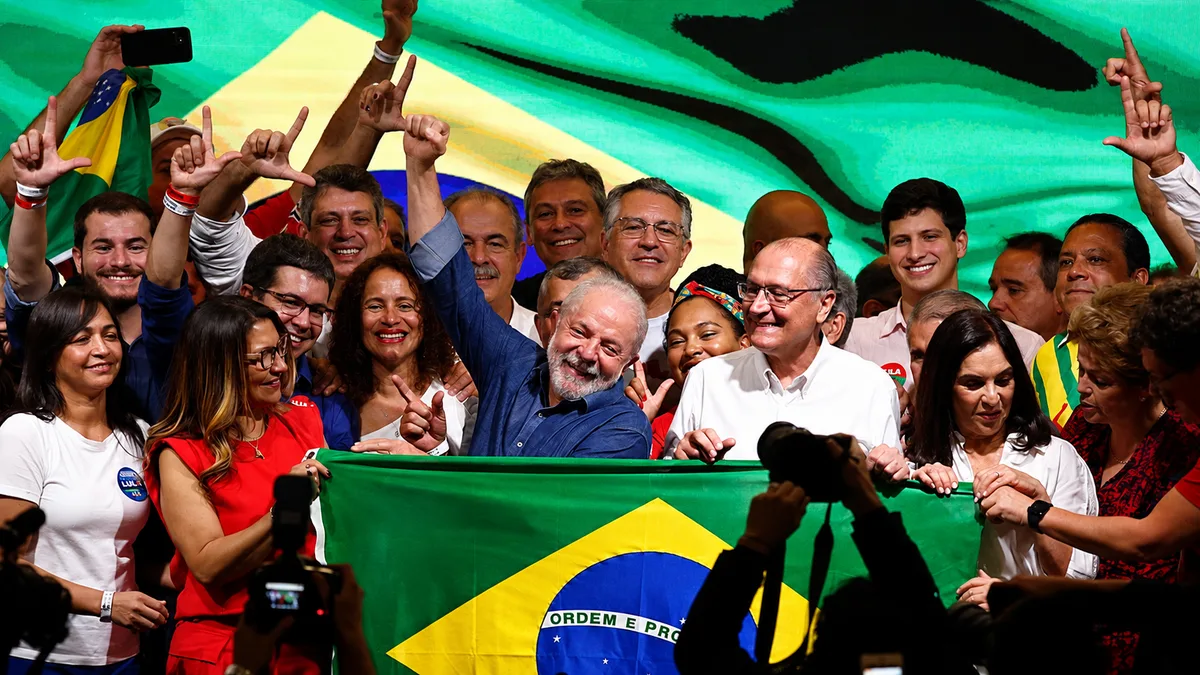
On October 5th, 2026, Brazil woke up to a surprise. Against all preliminary odds, Flávio Bolsonaro had finished first in the opening round of the presidential election, with 47.03% of valid votes.
Luiz Inácio Lula da Silva, the sitting president and one of the most dominant figures in Brazilian politics for more than two decades, followed with 45.16%.
Neither reached the majority needed to win. Brazil will vote again. So what should we know before the second round of elections happening October 25th?
At first glance, the result looks like another episode in a story that has reshaped Brazilian politics since 2018: Lula versus Bolsonaro, left versus right, Workers' Party versus the conservative movement.
But that reading misses the larger story.
The election taking place in 2026 is not happening in the same political system that existed when Jair Bolsonaro first became president, or even in the same system Lula returned to in 2023.
Over the last decade, power in Brazil has shifted. Congress has become more assertive. Political parties have fragmented and reorganised. Public trust has been repeatedly tested.
To understand what Brazilians chose on October 4th, and what they can choose in the second round, it is therefore necessary to go backwards before going forwards.
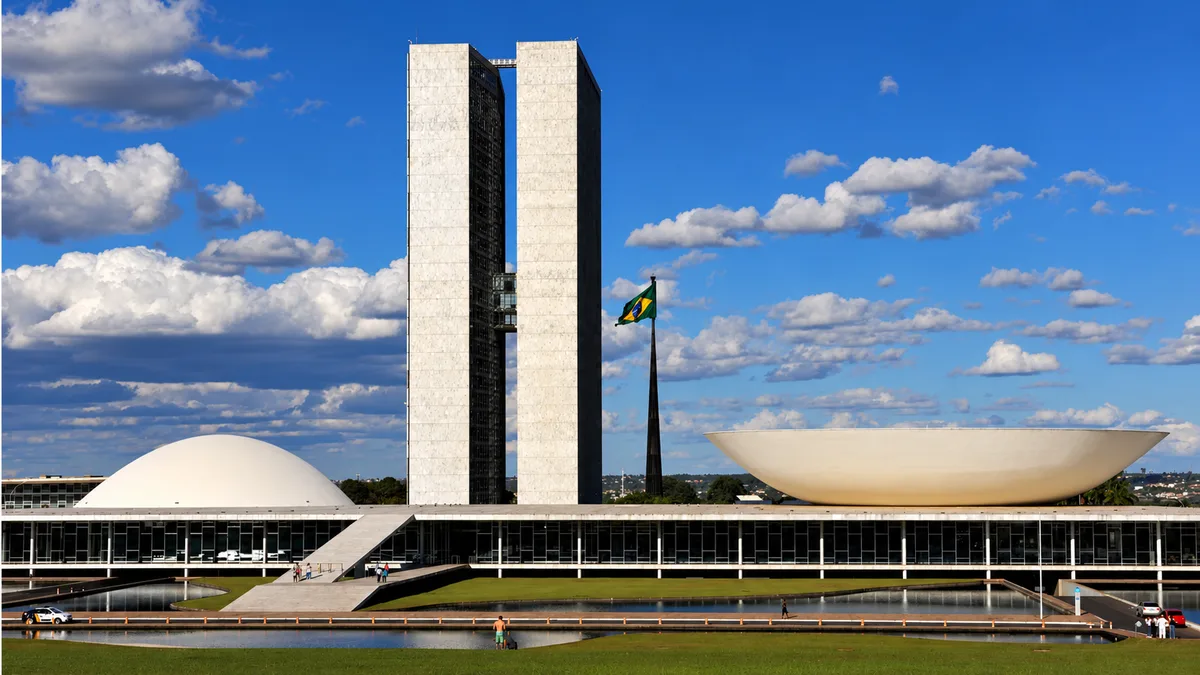
Brazil is a presidential federal republic ruled by three independent branches of power: Legislative, Executive, and Judiciary.
On paper, the separation seems straightforward. The Executive governs, the Legislative makes laws, and the Judiciary interprets them. In practice, Brazilian politics is much more interconnected.
Starting with the country's architect: the Legislative power. At the federal level, this branch is exercised by the National Congress, divided into two chambers: the Chamber of Deputies, with 513 seats, and the Federal Senate, with 81 members.
Together they design the country's legal framework by debating and approving laws, overseeing the Executive and authorising the federal budget.
All 513 deputies are renewed every four years alongside the presidential election. Senators, by contrast, represent the states equally: every state and the Federal District elects three. Their mandates last eight years, with the Senate alternating between renewing one-third and two-thirds of its seats. In 2026, 54 of the 81 seats were contested.
The Executive branch is led by the president and cabinet of ministers. But a Brazilian president cannot govern alone.
Brazil’s fragmented multiparty system produces what political scientists call coalition presidentialism: presidents normally need alliances with several parties in Congress to approve legislation and sustain their agenda.
Which brings us back to October 4th.
Brazilians have not yet decided who the next president will be. But they have already decided much of the Congress that the president will have to negotiate with.
The PL (Partido Liberal), the party most closely associated with the Bolsonaro movement, won 121 seats in the Chamber. Lula’s PT (Partido dos Trabalhadores) and its federation partners PCdoB and PV elected 88 deputies. In the Senate, the PL won 19 of the 54 seats contested.
That does not guarantee Bolsonaro control of Congress, but it changes the political environment considerably. A Flávio Bolsonaro presidency would begin with greater ideological proximity to much of the legislature, while a Lula victory would require broader coalition-building.
The second round will choose the president. The first has already helped determine how much political room that president will have.
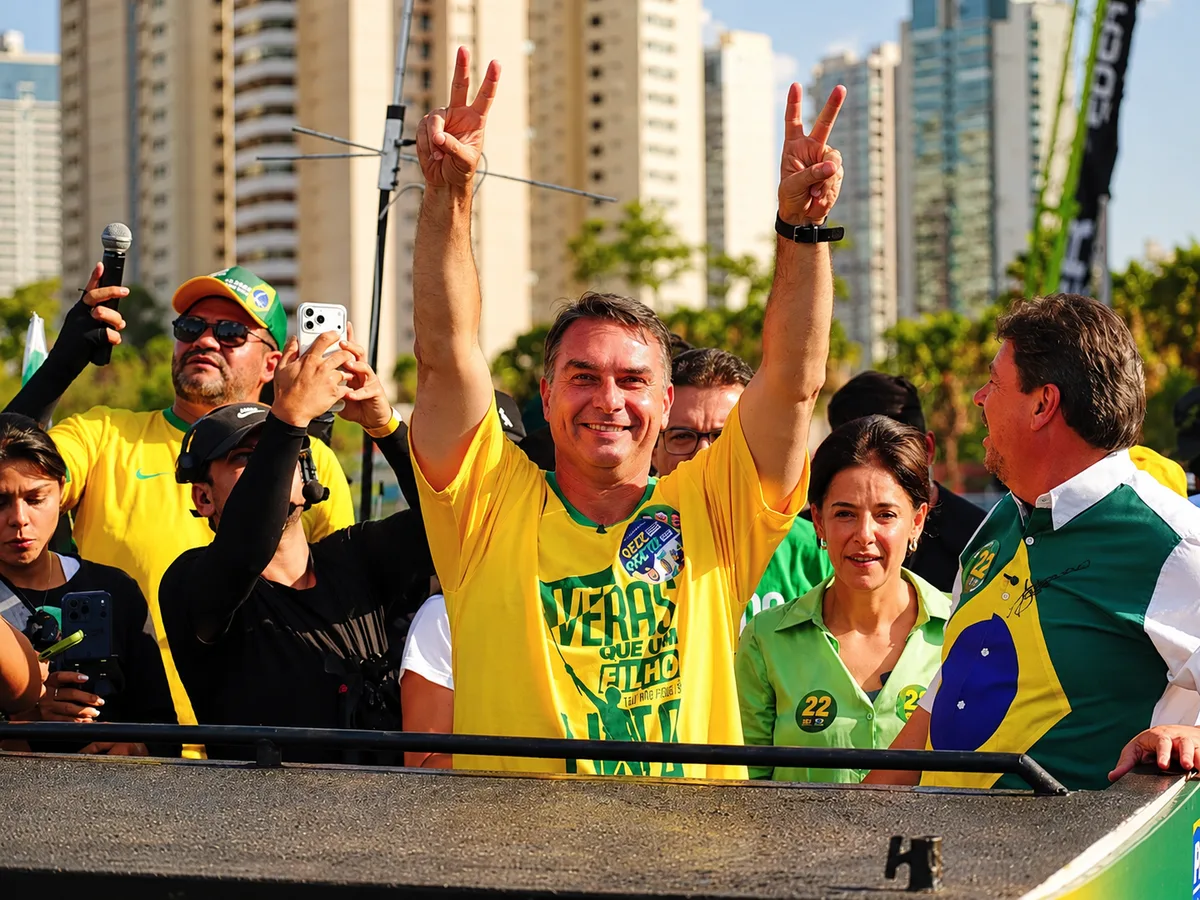
Brazil’s current polarization did not begin with Bolsonaro.
One of the clearest turning points came in 2013, when protests triggered by public-transport fare increases spread across the country. Within weeks, the demonstrations had expanded into broader anger over corruption, public services, government spending and political representation.
The movement was ideologically mixed, bringing left-wing groups, anti-corruption movements, conservatives and politically unaffiliated citizens onto the streets.
What followed was a period of mounting political instability. Brazil entered a severe recession in 2014–2016, while Operation Car Wash (Lava Jato) exposed corruption schemes involving Petrobras, major construction companies, and politicians from several parties. In 2016, President Dilma Rousseff was impeached and removed from office.
The result was not simply a shift from left to right. It was a crisis of political representation.
Jair Bolsonaro entered that space.
Running for president in 2018, he positioned himself as an outsider despite having served in Congress for almost three decades. His campaign combined strong anti-PT sentiment, conservative positions on social issues, anti-corruption rhetoric, and promises of a tougher approach to crime and public security.
His presidency then brought the conflict into Brazil’s institutions themselves.
Bolsonaro repeatedly challenged the credibility of Brazil’s electronic voting system and clashed with the Supreme Federal Court and Electoral Court. Scholars studying this period describe these confrontations as part of a broader process of democratic erosion.
The tensions culminated around the 2022 election, when Lula defeated Bolsonaro by one of the narrowest margins in Brazilian presidential history.
Bolsonaro refused to explicitly concede, while supporters continued contesting the legitimacy of the result. On January 8th, 2023, one week after Lula’s inauguration, Bolsonaro supporters invaded and vandalised Congress, the Supreme Federal Court and the presidential palace in Brasília.
In September 2025, Brazil’s Supreme Federal Court convicted Bolsonaro for his role in a broader plot to overturn the 2022 election and prevent Lula from taking office, sentencing him to 27 years and three months in prison.
Yet Bolsonaro’s defeat and conviction did not end the movement built around him.
The 2026 election has made that particularly clear. Flávio Bolsonaro’s (his son) first-place finish, together with the Liberal Party's strong congressional performance, shows that Bolsonarismo has become larger than Jair Bolsonaro himself.
Brazil is no longer dealing only with the political legacy of one former president, but with a durable political identity.
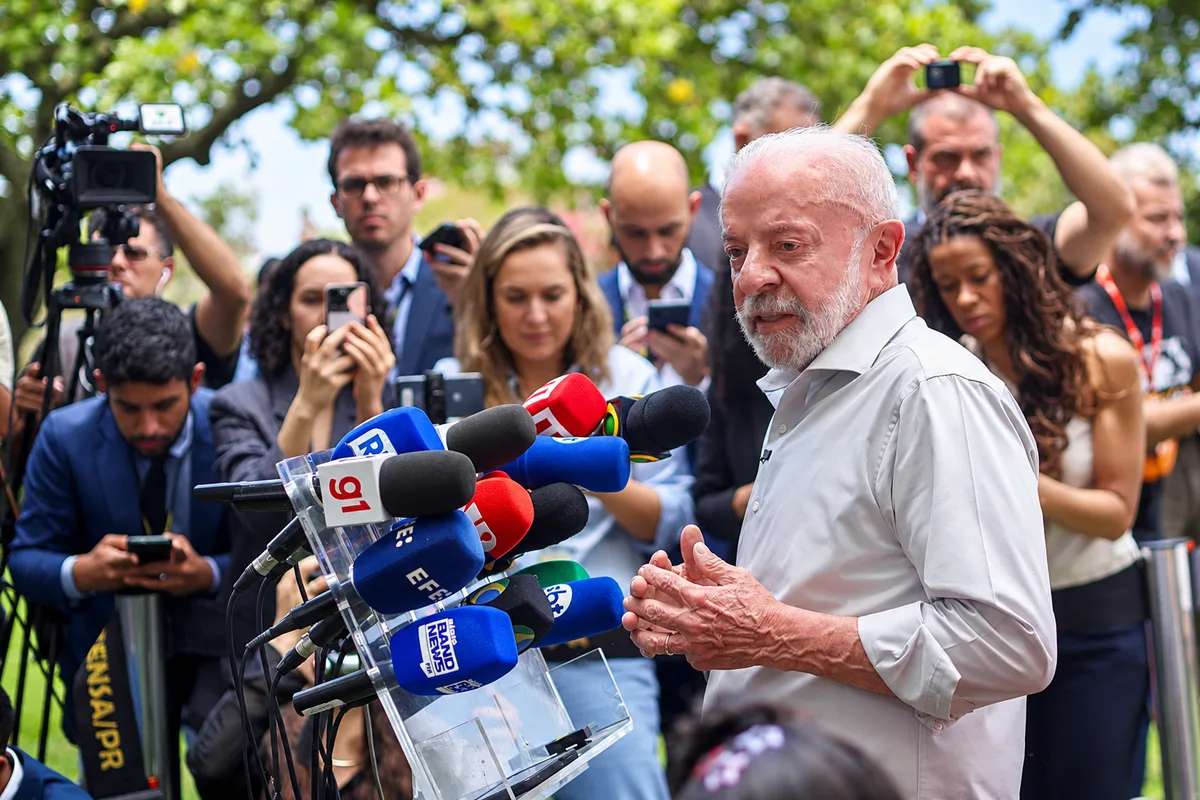
If Lula's return to power is being judged in 2026, the most concrete question is whether his government delivered on the promises that brought him back in 2022.
In 2023, the government restored a permanent minimum-wage adjustment formula linking annual increases to inflation and previous GDP growth. This protects purchasing power and allows the minimum wage to rise in real terms when the economy expands.
The government also relaunched Bolsa Família, Brazil’s main cash-transfer programme for low-income households. Together with a strengthening labour market and other social policies, poverty fell from 31.6% in 2022 to 27.4% in 2023, while extreme poverty dropped from 5.9% to 4.4%—around 8.7 million people leaving poverty in one year.
Employment also strengthened. By the second quarter of 2026, unemployment had fallen to 5.4%, one of the lowest levels recorded in the current IBGE series.
However, the record is not without weaknesses. Public debt remains high, fiscal pressures limit the government’s room to spend, and cost-of-living and public-security concerns remain politically significant.
The IMF has warned that further fiscal adjustment will be needed to stabilise the debt trajectory.
Lula’s third term therefore presents a mixed picture: measurable gains in wages, social protection, employment and poverty reduction coexisting with fiscal fragility and persistent economic and security concerns.
Yet even this mixed domestic record alone does not fully explain why Lula finished second on October 4th. To understand it, we must go beyond Brazil’s borders.
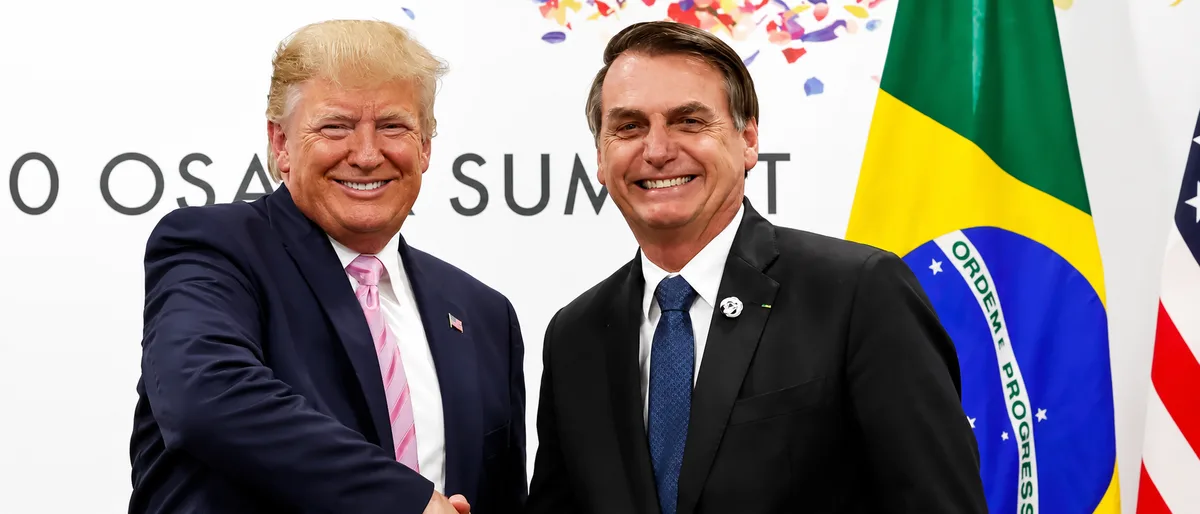
By 2026, Brazil’s election had acquired an unusually international dimension.
In July 2025, Donald Trump’s administration imposed an additional 40% tariff on selected Brazilian products, bringing tariffs on some goods to 50%.
What made the decision unusual was its stated justification: the White House explicitly linked the measure to Brazil’s prosecution of Jair Bolsonaro and the actions of Supreme Court Justice Alexandre de Moraes.
Trump described the case against Bolsonaro as political persecution, while his administration also imposed restrictions and sanctions on Moraes.
A Brazilian judicial dispute had become a bilateral diplomatic conflict.
Trade pressure continued into 2026, with new US measures affecting around 23.1% of Brazilian exports to the United States.
The effect on the election, however, is harder to quantify. Lula responded by framing the dispute around national sovereignty and multilateralism, while Flávio Bolsonaro has positioned himself much closer to Trump and the American conservative movement.
That difference matters because Brazil is not choosing its next president in isolation. It is Latin America’s largest economy, an important member of BRICS and a major supplier of food, energy and critical minerals.
The election therefore sits at the intersection of two disputes: one over what kind of Brazil should emerge from the political crises of the last decade, and another over where Brazil should position itself in an increasingly divided international system.
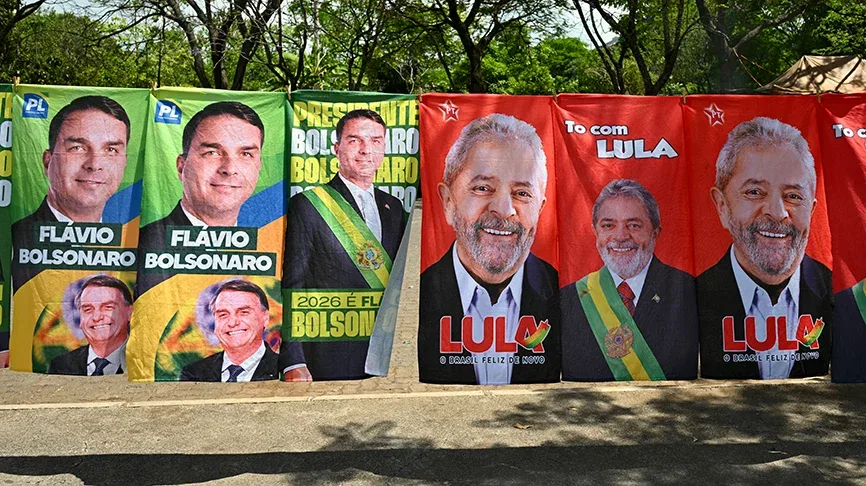
This brings us back to where the story began.
On October 25th, Brazilians will formally choose between two candidates. But the decision reaches far beyond who occupies the presidential office.
Much of the political landscape has already been decided. The first round produced a Congress considerably more favourable to conservative forces and demonstrated that Bolsonarismo has become an institutional force beyond Jair Bolsonaro himself.
Lula would need to negotiate extensively with a legislature considerably to his right. Flávio Bolsonaro would begin with greater ideological proximity to many of its largest parties, although Brazil’s fragmented party system would still require coalition-building.
Internationally, the contrast is also significant. A Lula government would broadly continue Brazil’s tradition of seeking autonomy between competing powers, working simultaneously with Washington, Beijing, BRICS and other multilateral institutions. A Flávio Bolsonaro government has indicated a considerably closer political relationship with the Trump administration and the wider international conservative movement.
That is why reducing the runoff to left versus right misses what is actually at stake.
Brazil is entering a new phase: a stronger Congress, a consolidated conservative movement, continuing institutional tension, and an international environment in which domestic political disputes can quickly become geopolitical ones.
The first round told us how much Brazil has changed.
The second will decide who gets to govern that new Brazil—and where that Brazil chooses to stand in the world.
SOURCES
Assembleia Nacional Constituinte. 1988. Constituição da República Federativa do Brasil de 1988. Presidência da República, October 5.
https://www.planalto.gov.br/ccivil_03/constituicao/constituicao.htm.
Câmara dos Deputados. 2026. “PL Sai na Frente na Eleição da Câmara dos Deputados, com 121 Eleitos.” Agência Câmara de Notícias, October 5.
https://www.camara.leg.br/noticias/1309192-pl-sai-na-frente-na-eleicao-da-camara-dos-deputados-com-121-eleitos/.
Congresso Nacional. 2023. “Lei nº 14.601, de 19 de Junho de 2023.” Presidência da República, June 19.
https://www.planalto.gov.br/ccivil_03/_ato2023-2026/2023/lei/l14601.htm.
Congresso Nacional. 2023. “Lei nº 14.663, de 28 de Agosto de 2023.” Presidência da República, August 28.
https://www.planalto.gov.br/ccivil_03/_ato2023-2026/2023/lei/l14663.htm.
Couto, Cláudio Gonçalves, Fernando Luiz Abrucio, and Marco Antonio Carvalho Teixeira. 2026. “O Caleidoscópio Eleitoral de 2026: Eleições Congressuais, Federalismo e Disputa Presidencial.” Estudos Avançados 40 (117).
https://doi.org/10.1590/s0103-4014.2026.40117.002.
Instituto Brasileiro de Geografia e Estatística (IBGE). 2024. “In 2023, Poverty in the Country Drops to Lowest Level Since 2012.” Agência de Notícias IBGE, December 4.
https://agenciadenoticias.ibge.gov.br/en/agencia-news/2184-news-agency/news/42113-in-2023-poverty-in-the-country-drops-to-lowest-level-since-2012.
Instituto Brasileiro de Geografia e Estatística (IBGE). 2026. “Desemprego.” Pesquisa Nacional por Amostra de Domicílios Contínua, second quarter 2026.
https://www.ibge.gov.br/explica/desemprego.php.
International Monetary Fund. 2026. “IMF Executive Board Concludes 2026 Article IV Consultation with Brazil.” International Monetary Fund, July 23.
https://www.imf.org/en/news/articles/2026/07/23/pr26257-brazil-imf-executive-board-concludes-2026-article-iv-consultation.
Limongi, Fernando, and Argelina Figueiredo. 1998. “Bases Institucionais do Presidencialismo de Coalizão.” Lua Nova: Revista de Cultura e Política, no. 44: 81–106.
https://doi.org/10.1590/S0102-64451998000200005.
Mainwaring, Scott. 2022. “Democracy in Brazil: Change, Continuity, and Crisis.” Latin American Research Review 57 (4): 936–947.
https://doi.org/10.1017/lar.2022.82.
Ministério do Desenvolvimento, Indústria, Comércio e Serviços (MDIC). 2026. “Alcance das Medidas Tarifárias dos Estados Unidos sobre Exportações Brasileiras.” Governo Federal, July 24.
https://www.gov.br/mdic/pt-br/assuntos/noticias/2026-periodo-eleitoral/julho/alcance-das-medidas-tarifarias-dos-estados-unidos-sobre-exportacoes-brasileiras/.
Reuters. 2026. “Brazil Election to Reshape Trade with US, with Tariffs and Minerals at Stake.” Reuters, October 9.
https://www.reuters.com/world/americas/brazil-election-reshape-trade-with-us-with-tariffs-minerals-stake-2026-10-09/.
Scherer-Warren, Ilse. 2014. “Manifestações de Rua no Brasil 2013: Encontros e Desencontros na Política.” Caderno CRH 27 (71): 417–429.
https://doi.org/10.1590/S0103-49792014000200012.
Senado Federal. 2026. “PL Terá Maior Bancada em Início de Legislatura no Senado Desde 1988.” Agência Senado, October 4.
https://www12.senado.leg.br/noticias/materias/2026/10/04/pl-tera-maior-bancada-em-inicio-de-legislatura-no-senado-desde-1988.
Supremo Tribunal Federal. 2025. “STF Fixa Penas de 16 a 27 Anos para Condenados por Tentativa de Golpe de Estado.” STF Notícias, September 11.
https://noticias.stf.jus.br/postsnoticias/stf-fixa-penas-de-16-a-27-anos-para-condenados-por-tentativa-de-golpe-de-estado.
Tatagiba, Luciana, and Andreia Galvão. 2019. “Os Protestos no Brasil em Tempos de Crise (2011–2016).” Opinião Pública 25 (1): 63–96.
https://doi.org/10.1590/1807-0191201925163.
The White House. 2025. “Addressing Threats to the United States by the Government of Brazil.” Executive Order 14323, July 30.
https://www.whitehouse.gov/presidential-actions/2025/07/addressing-threats-to-the-us/.
Tribunal Superior Eleitoral. 2026. “Flávio Bolsonaro (PL) e Lula (PT) Vão Disputar o 2º Turno para a Presidência da República.” Tribunal Superior Eleitoral, October 5.
https://www.tse.jus.br/comunicacao/noticias/2026/Outubro/flavio-bolsonaro-e-lula-vao-disputar-o-2o-turno-para-a-presidencia-da-republica.