This Republic Changed Europe, Now It Faces Change Itself
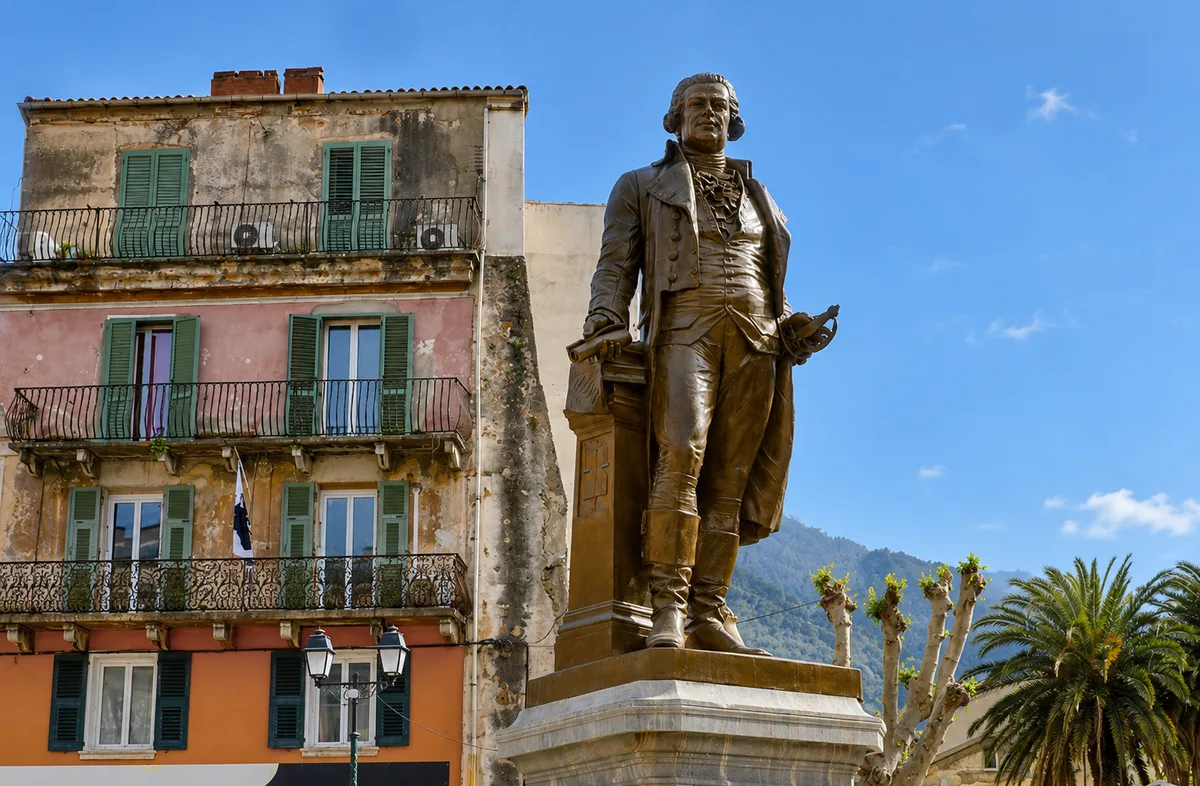
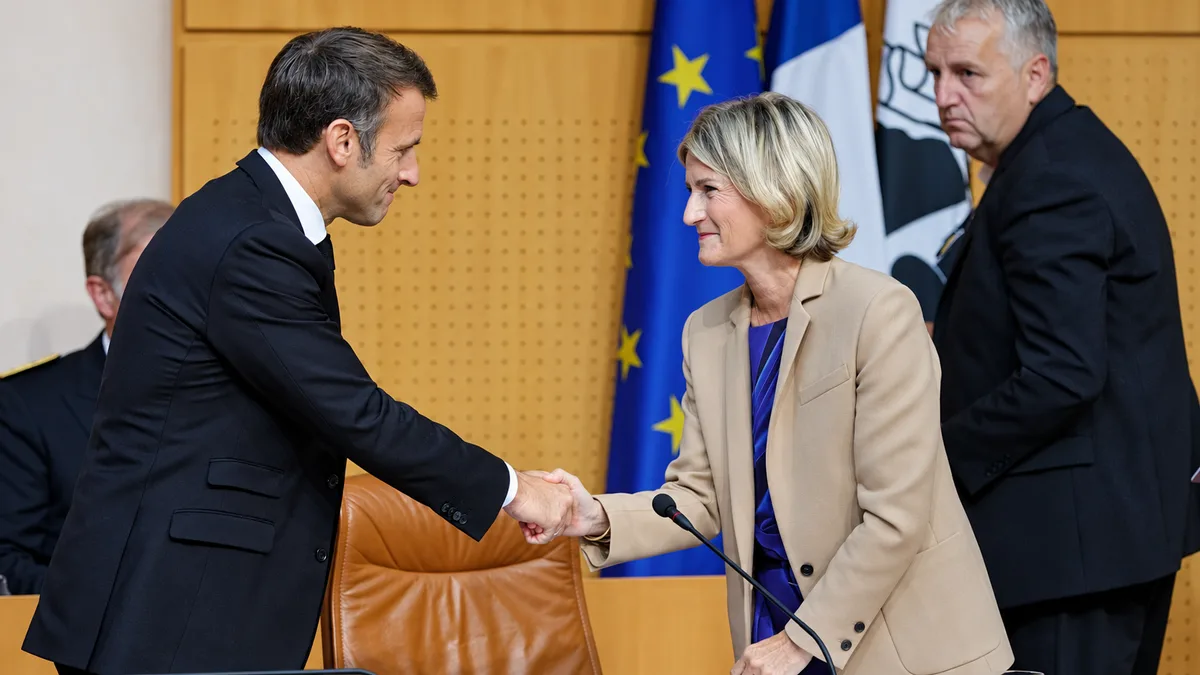
On 23 June 2026, the French National Assembly voted for a constitutional bill to make Corsica autonomous.
Autonomy is not independence: the bill, titled ‘for an autonomous Corsica within the Republic’, would keep the island French, but allow its assembly to adapt some national laws to the island and, in certain areas, make its own rules, while justice, defence and foreign affairs would stay with Paris.
It passed by 271 votes to 202, and the Rassemblement National (RN), France's main far-right party, voted against it almost as one: 120 of its 122 deputies. The Senate takes up the bill at the end of this month.
Corsica is an island that sits in the Mediterranean, south-east of mainland France and just north of Sardinia. It is a mountain in the sea: most of its 360 communes are villages scattered across a rugged interior, while a third of its 355,000 inhabitants live in and around its two main cities, Ajaccio and Bastia.
It has been French since 1769, but since 1991 it has had a special status that sets it apart from every other French region. Many Corsicans still want to go further.
In 2022, Marine Le Pen, the RN's candidate, was openly hostile to Corsican autonomy. When the government promised to discuss autonomy after riots shook the island, she asked on social media whether there could be "a more catastrophic message."
Yet that same year, Corsica gave her 58% of its votes in the presidential runoff, the reverse of the national result. How can an island that fought for centuries to govern itself vote for a candidate so opposed to its autonomy?
The answer says something not only about Corsica, but about the rise of the far right far beyond its shores.
Corsica's history is one of conquest and colonisation, but also of a constant fight for cultural and political sovereignty, a sovereignty the island has only held for a few short years.
The Greeks arrived in 565 BCE, followed by the Carthaginians and the Romans, who stayed for some five centuries. After them came Vandals, Byzantines, Ostrogoths, Lombards and Saracens. Pisa ruled the island from the late 11th century until Genoa drove it out in 1284 and began a harsh rule that lasted for centuries.
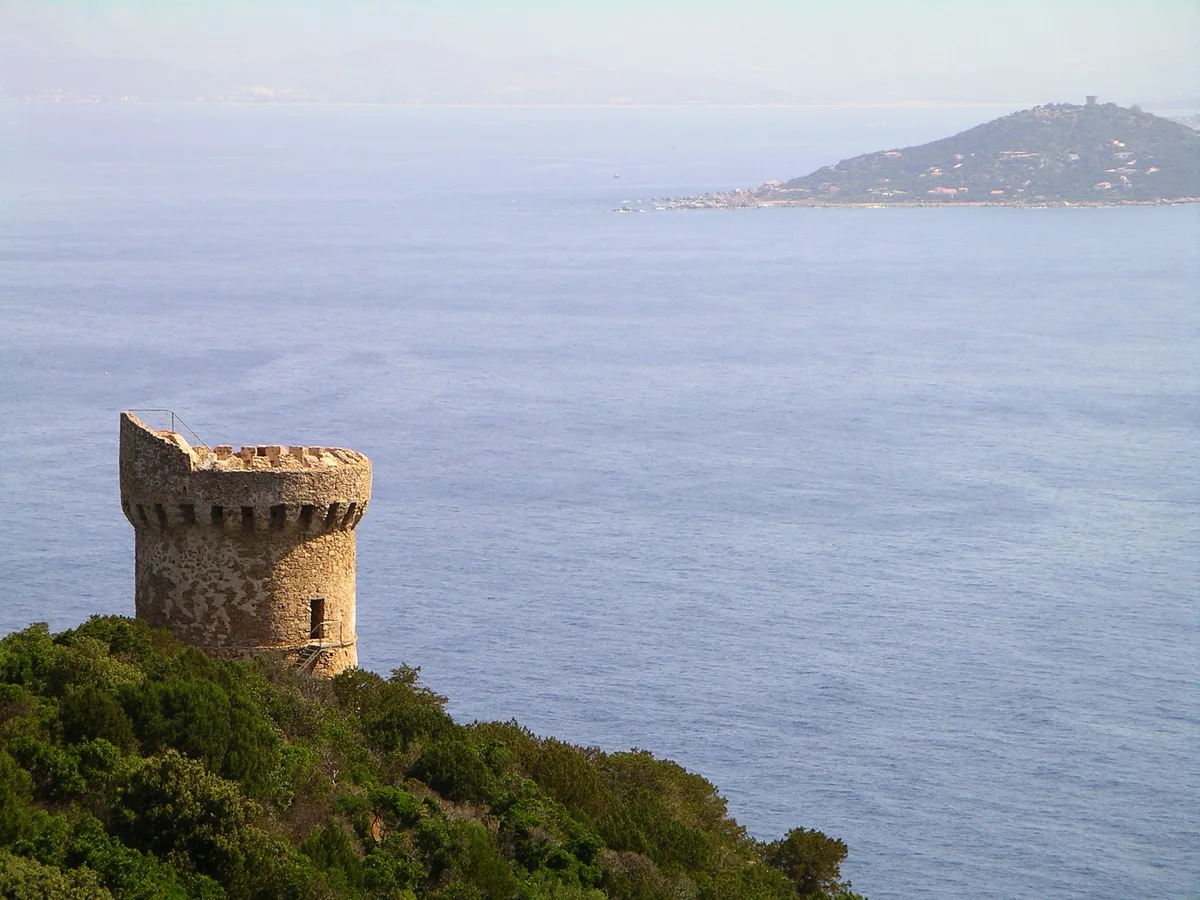
Between 1530 and 1620, Genoa ringed the coast with watchtowers against Barbary pirates. They still stand today, reminders of how rarely Corsica has belonged to itself.
With little to expect from distant rulers, Corsicans relied on one another: on family and village networks, the partitu or clan, and on a code of honour that could end in vendetta. It was a society holding itself together without a state.
In 1729, it rose against Genoa. Winning its freedom would take a quarter of a century. Losing it would take just fourteen years.
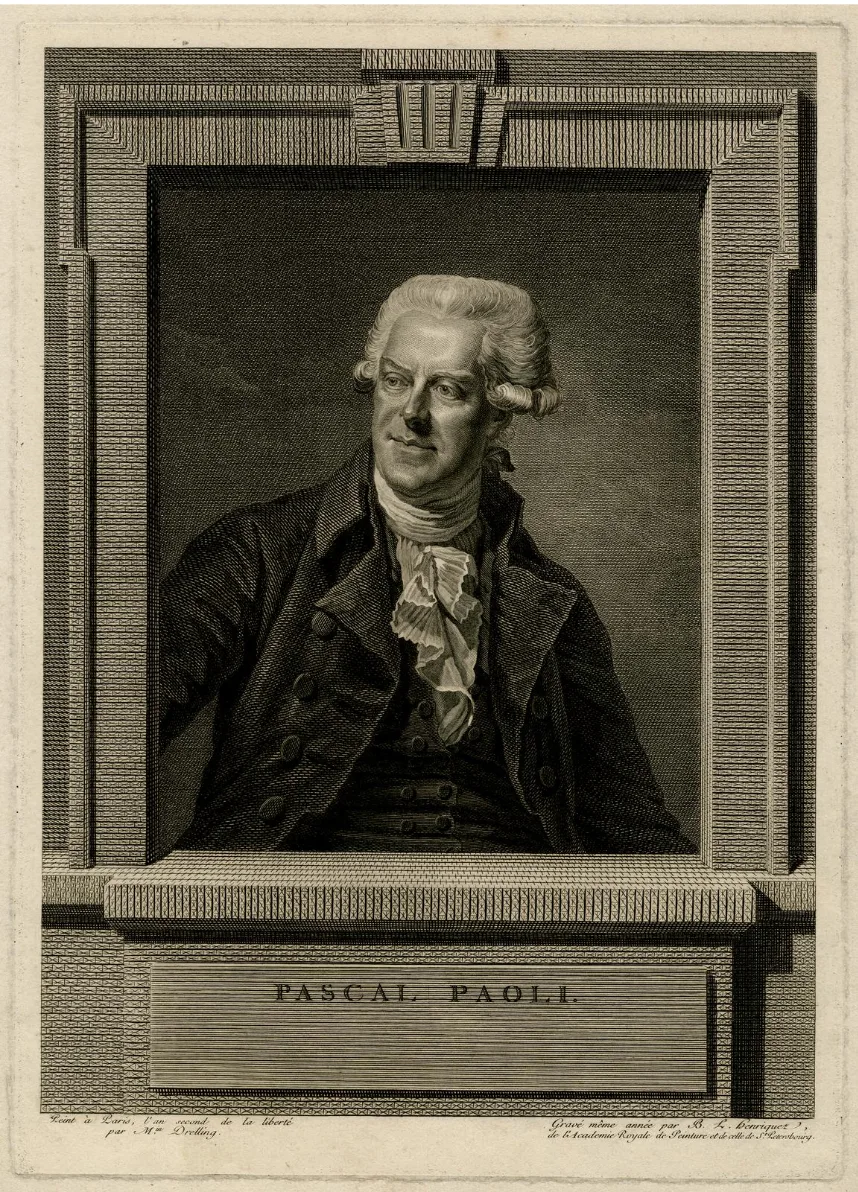
In 1755, the rebels elected Pasquale Paoli to lead them, and Corsica gave itself something almost unheard of: a written constitution adopted by a sovereign people, decades before the American and French revolutions would.
It has been described as the real first written constitution. Every man could vote, with no property qualification, unlike in the early United States. And it did not come from books alone: Corsican villages had elected their own leaders and run their own communes for centuries.
Europe noticed. In The Social Contract (1762), Rousseau predicted that this small island would one day astonish Europe. A few years later, the Corsicans asked for his help, and he began a constitutional project for them, convinced they had not yet caught the vices of older nations.
In 1765, he gave a letter of introduction to a young British Scot, James Boswell, who went to see the island for himself. Boswell's Account of Corsica (1768) made Paoli a celebrity in Britain, and across the Atlantic, Americans named towns after him.
But admiration was not protection. In May 1768, Genoa ceded the island to France. The British public was outraged, but the government, divided and distracted, did almost nothing.
On 8 May 1769, Paoli's army was crushed at Ponte Novu, a Genoese bridge over the river Golu. Hundreds of Corsicans died there; Voltaire wrote that they built a rampart of their own dead so they could reload behind it. It was on that bridge that the Corsican Republic died.
In 1769, the year Corsica fell to France, a boy was born in Ajaccio: Napoleone di Buonaparte.
Paoli had given the island a constitution, and Napoleon would give France an empire embodying everything the little republic had resisted: a powerful state, ruled from far away. Corsica now had two founding fathers, pulling in opposite directions.
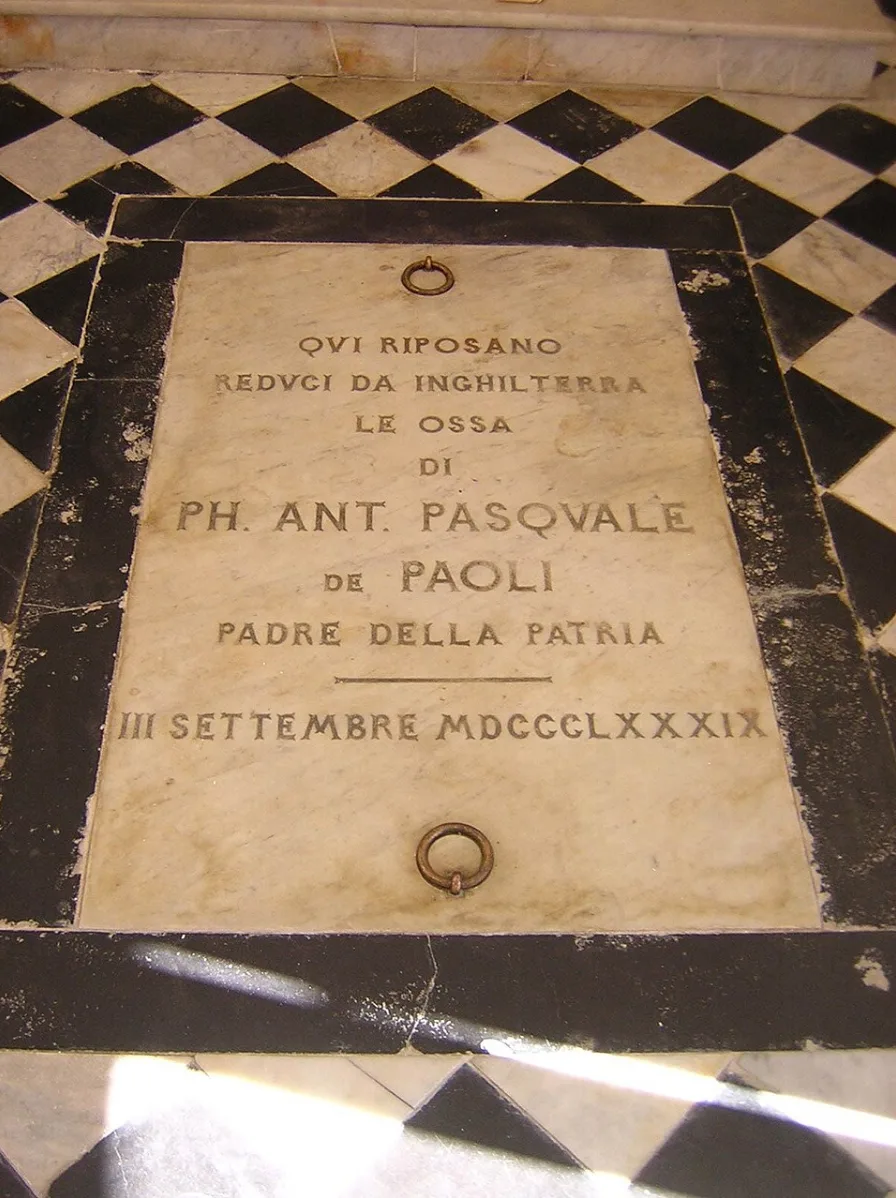
Paoli tried once more. After two decades of exile in London, he returned home, broke with revolutionary France, and turned to the country that had once abandoned him. In June 1794, Corsica became a kingdom under the British crown, with its own constitution. It lasted barely two years. Paoli died in exile in London in 1807. His bones came home only in 1889, to a tombstone in Morosaglia written in Italian, the language of a Corsica that was fading away.
By then, the island was being taught to forget its own voice. From 1880, French was to be the only language used in school, and children caught speaking Corsican could be handed the disque, a token of punishment.
Shortly after, the two world wars killed an estimated 20,000 Corsicans, and nearly half a million emigrated, many into the service of France's empire. By 1950, Corsicans made up 1% of France's population but 20% of its colonial administrators. In the mountain villages, the old way of life came to mean poverty. The island that had once astonished Europe had become a place people left.
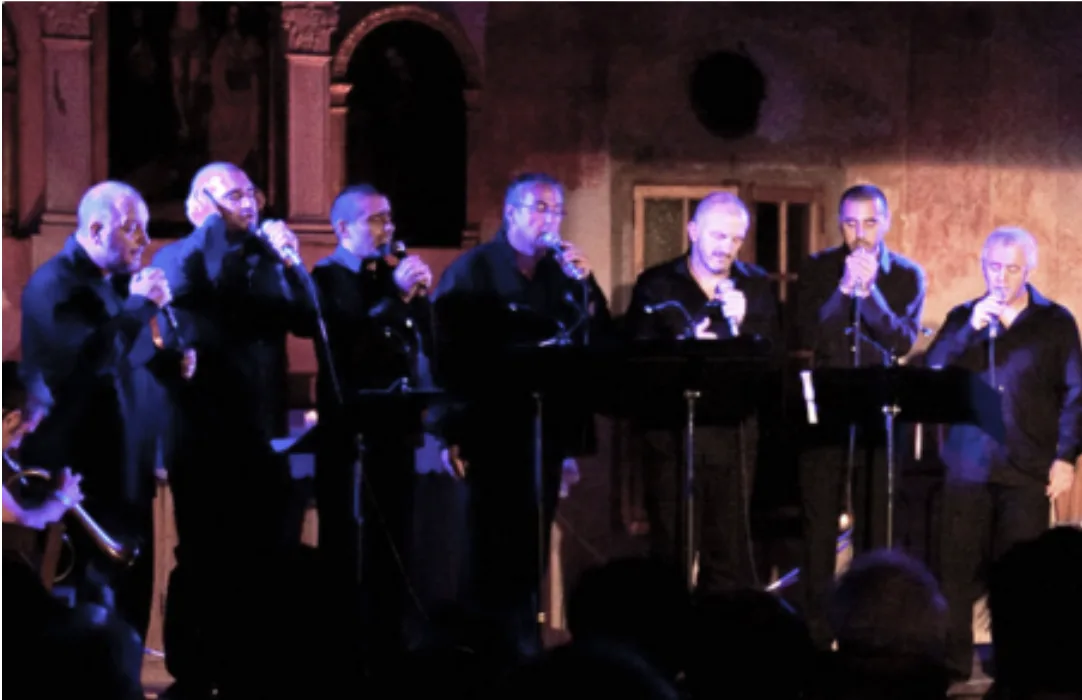
The voices came back in the late 1960s. Inspired by the movement against the Vietnam War and by Algeria's independence, Corsican students in French universities rediscovered an identity their parents had been taught to set aside. The anger had a concrete cause, too: in 1962, most of the funds from the state's first development programme for Corsica went to 18,000 pieds-noirs returning from Algeria, not to islanders.
What followed was the Riacquistu, the "reconquest" of the language, the village customs and, above all, the songs. In 2009, UNESCO placed the paghjella on its list of heritage in urgent need of safeguarding.
Born from anticolonial struggles, the movement looked beyond its own shores. Corsican singers sang for other peoples fighting for their land and language: Canta u Populu Corsu with "Palistina," Vitalba with "Fiure di Palestina," and L'Arcusgi, with the Basque-titled "Askatasunera."
In June 2025, the Assemblée de Corse voted to recognise the State of Palestine, described as a first for a French local authority. The vote was symbolic and contested; the island's right boycotted it.
There was a darker side. The FLNC (National Liberation Front of Corsica) used explosives to demand independence, nationalist factions fought one another, and the assassination of the prefect Claude Érignac in 1998 turned much of the public against the movement. Around 2010, an encyclopedia could still describe registered nationalists as 6% of voters. In 2021, nationalist lists won about 70%.
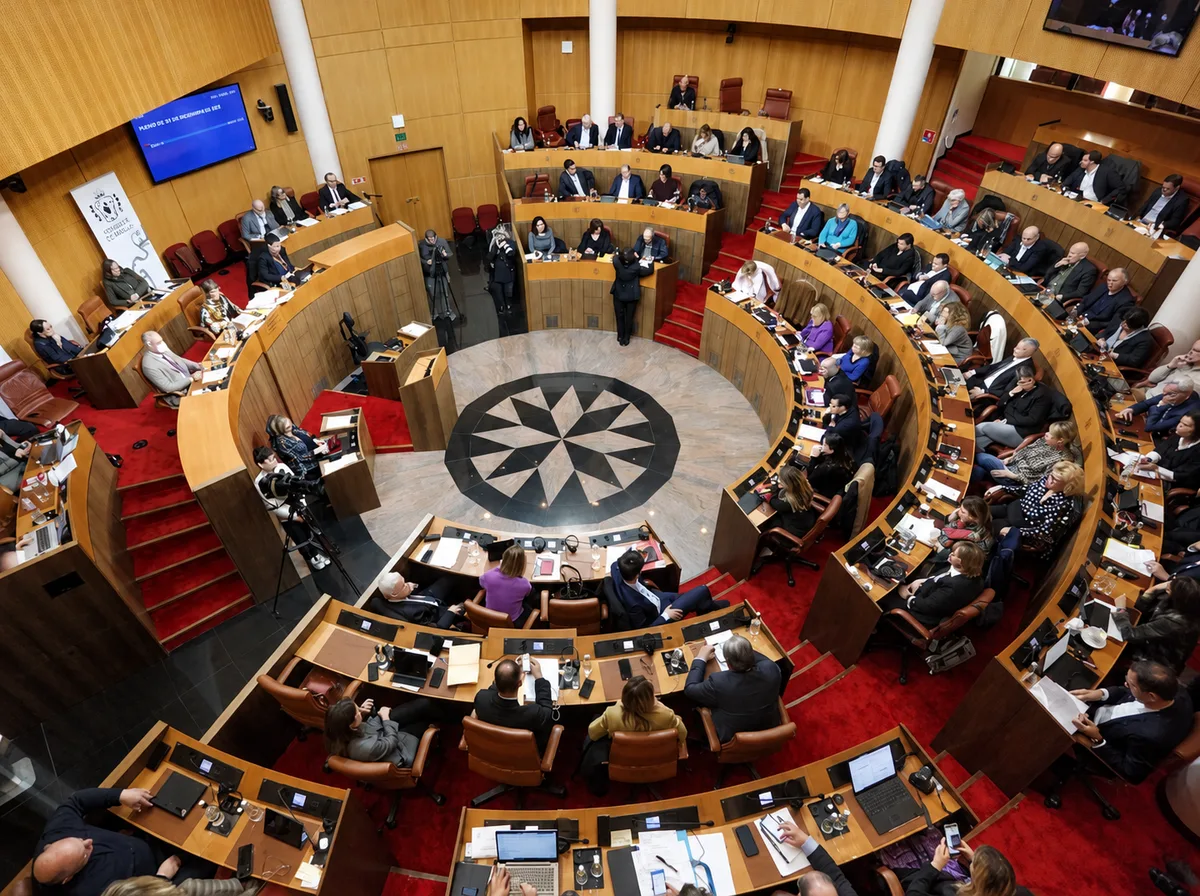
At first sight, the numbers make no sense. In the 2021 territorial elections, nationalist lists won about 70% of the vote, while the RN took only 4%.
Less than a year later, the same island gave Marine Le Pen 58% in the presidential runoff, and in 2024, Jordan Bardella's list came first in the European elections with nearly 41%. The 2024 legislative elections sit in between: the RN came first in all four Corsican constituencies in the first round, then lost every single runoff.
The explanation is less about Corsicans changing their minds than about which Corsicans turn up. A statistical study of all 541 polling stations found that about two-thirds of Le Pen's first-round voters had not voted in the 2021 territorial elections.
Meanwhile, about half the nationalist electorate stays home during French presidential elections. Those nationalists who do vote are no more likely to choose Le Pen than anyone else.
In other words, there are two Corsicas, and they vote in different elections. One sees the Assemblée de Corse as its real parliament: the heirs of Paoli's republic, for whom a French presidential election can feel like someone else's vote.
The other looks to Paris: the Corsica of Napoleon, more connected to French national politics than to the island's own institutions. Political scientists call regional elections "second-order": less important to voters than national ones. In Corsica, for nationalists, the hierarchy is reversed.
Some questions remain open. Researchers have pointed to newcomers from the mainland, to concerns about immigration and rapid population growth, and to the clan networks that still shape local politics. None of these has been proven to explain the RN vote on its own.
Corsica offers three lessons for anyone trying to understand the far right's rise.
First, a far-right "victory" is not always a population converting: before reading an election map, ask who turned up.
Second, the far right does best where politics feels distant; in Corsica, it wins the elections decided in
Paris and fails on the island's own.
Third, it doesn't own the fears it feeds on; where another political force speaks to questions of identity and belonging, it struggles.
But I believe there is something more, harder to measure.
Centuries of foreign rule, and the memory of a republic that astonished Europe and lasted only fourteen years, have left a bitter aftertaste of what could have been. That wound can open in two directions.
In some, it becomes solidarity with other peoples fighting for their land and their language. In others, it hardens into fear of the newcomer: when your own identity is nearly erased, immigration can feel like one more dispossession, an echo of a colonial past. This is why an island whose assembly recognises the State of Palestine can also give Marine Le Pen 58% of its votes.
The Senate's vote on autonomy will not resolve this tension. But the question it raises goes beyond Corsica: whether a people's memory of domination becomes a bridge to others or a wall against them.
What first made me want to write this was an A Filetta concert in support of Lebanon, my home country. Hearing those voices sing for my people made me want to tell the story of theirs, beyond the clichés.
This is only a short entry into the Corsican story, but I hope it makes you want to learn more about an island that could be seen as a political laboratory because of its complicated history and its beautiful culture.
SOURCES
Alta Frequenza. 2026. "À Ajaccio, les pontes du Rassemblement National sont venus faire campagne pour Marine Le Pen et marteler leur vision de l'autonomie de la Corse." October. https://www.alta-frequenza.corsica/a-ajaccio-les-pontes-du-rassemblement-national-sont-venus-faire-c ampagne-pour-marine-le-pen-et-marteler-leur-vision-de-lautonomie-de-la-corse
Antiwar Songs. n.d. "Palistina – Canta u Populu Corsu."
https://www.antiwarsongs.org/canzone.php?id=6918&lang=en&evid=1
Assemblée nationale. 2026. "Analyse du scrutin n°7454," 23 June.
https://www.assemblee-nationale.fr/dyn/17/scrutins/7454
Carrington, Dorothy. 1973. "The Corsican Constitution of Pasquale Paoli (1755–1769)." The English Historical Review 88 (348): 481–503. https://www.jstor.org/stable/564654
Cole, J. (2011). Ethnic groups of Europe : An encyclopedia. Santa Barbara, Calif.: Abc-Clio.
Corse Net Infos. 2024a. "Législatives 2024 en Corse : raz-de-marée du RN, découvrez les résultats définitifs du premier tour."
https://www.corsenetinfos.corsica/Legislatives-2024-en-Corse-Raz-de-maree-du-RN-decouvrez-les-re sultats-definitifs-du-premier-tour-dans-votre_a78927.html
Corse Net Infos. 2024b. "Résultats législatives 2024 : découvrez les élus du second tour en Corse." https://www.corsenetinfos.corsica/Resultats-legislatives-2024-decouvrez-les-elus-du-second-tour-en Corse_a79062.html
Corse Net Infos. 2025a. "L'Assemblée de Corse reconnaît l'existence de l'État de Palestine." https://www.corsenetinfos.corsica/L-Assemblee-de-Corse-reconnait-l-existence-de-l-Etat-de-Palestine _a85335.html
Corse Net Infos. 2025b. "Démographie : la Corse portée par le flux migratoire," December. https://www.corsenetinfos.corsica/Demographie-la-Corse-portee-par-le-flux-migratoire_a88351.html
Encyclopédie d'histoire numérique de l'Europe (EHNE). n.d. "L'École républicaine a-t-elle éradiqué les langues régionales ?" Sorbonne Université.
https://ehne.fr/fr/eduscol/l'ecole-republicaine-a-t-elle-eradique-les-langues-regionales
Fondation Jean-Jaurès. 2017. "Les nationalistes à la conquête de la Corse ?"
https://www.jean-jaures.org/publication/les-nationalistes-a-la-conquete-de-la-corse/
France Bleu. 2024. "Élections européennes : le Rassemblement national en tête en Corse." https://www.francebleu.fr/infos/elections/elections-europeennes-le-rassemblement-national-en-tete-en -corse-7841260
France 3 Corse ViaStella. 2017. "Ponte Novu : les nationalistes commémorent le 8 mai 1769." https://france3-regions.franceinfo.fr/corse/haute-corse/ponte-novu-nationalistes-commemorent-8-mai 1759-1249677.html
France 3 Corse ViaStella. 2022. "Résultats présidentielle 2022 en Corse : Marine Le Pen l'emporte avec 58,08 % des voix."
https://france3-regions.franceinfo.fr/corse/resultats-presidentielle-2022-en-corse-marine-le-pen-l-emp orte-avec-58-08-des-voix-2530976.html
France 3 Corse ViaStella. 2026a. "Autonomie de la Corse : quelle est la position des candidats à la présidentielle 2027 ?"
https://france3-regions.franceinfo.fr/corse/autonomie-de-la-corse-quelle-est-la-position-des-candidats a-la-presidentielle-2027-3365797.html
France 3 Corse ViaStella. 2026b. "Autonomie de la Corse : le contre-projet de Marine Le Pen rejeté par l'assemblée nationale."
https://france3-regions.franceinfo.fr/corse/autonomie-de-la-corse-le-contre-projet-de-marine-le-pen-re jete-par-l-assemblee-nationale-3370252.html
France 3 Corse ViaStella. 2026c. "Réélection des deux sénateurs de la Corse au Sénat : quelle incidence sur le débat à venir sur l'autonomie de l'île ?"
https://france3-regions.franceinfo.fr/corse/reelection-des-deux-senateurs-de-la-corse-au-senat-quelle-i ncidence-sur-le-debat-a-venir-sur-l-autonomie-de-l-ile-3424772.html
France 3 Corse ViaStella. 2026d. “Que contient précisément le texte final sur l’autonomie de la Corse qui sera voté à l’Assemblée nationale ?” https://france3-regions.franceinfo.fr/corse/que-contient-precisement-le-texte-final-sur-l-autonomie-de-la-corse-qui-sera-vote-a-l-assemblee-nationale-3367075.html
Hublet, François, and Jean-Toussaint Battestini. 2022. "D'où vient Le Pen en Corse ?" Le Grand Continent, 15 May. https://legrandcontinent.eu/fr/2022/05/15/dou-vient-le-pen-en-corse/
ICI (France Bleu). 2025. "Motion sur la Palestine : l'Assemblée de Corse prise dans une tempête politique."
https://www.ici.fr/infos/politique/motion-sur-la-palestine-l-assemblee-de-corse-prise-dans-une-tempet e-politique-4421890
Journal de la Corse. 2026. "Elezzione Municipale 2026 / L'exception corse." https://www.journaldelacorse.corsica/articles/4451/elezzione-municipale-2026-lexception-corse
Library of Congress, Folklife Today. 2023. "Homegrown Plus: Spartimu's Vocal Polyphony from Corsica," April.
https://blogs.loc.gov/folklife/2023/04/homegrown-plus-spartimus-vocal-polyphony-from-corsica/
Long, Luke. 2021. "The Corsican Crisis in British Politics 1768–1770." Global Intellectual History 6 (5): 641–671. https://doi.org/10.1080/23801883.2019.1640176
Meeks, Joshua. 2015. "Counter-Revolutionary Corsica: Pasquale Paoli and Diplomacy in the British Mediterranean." Age of Revolutions, 14 December.
https://ageofrevolutions.com/2015/12/14/counter-revolutionary-corsica-pasquale-paoli-and-diplomacy -in-the-british-mediterranean/
Ministère de l'Intérieur. Official election results (2021 territorial, 2022 presidential, 2024 European and legislative elections). https://www.resultats-elections.interieur.gouv.fr
Musée de la Corse. n.d. "Pasquale de Paoli (1725–1807)."
https://www.museudiacorsica.corsica/en/expositions/pasquale-de-paoli-1725-1807-2/
Ottavi, P. (2014). École et sentiment identitaire en Corse, sous la IIIe république. Carrefours de l’éducation, n° 38(2), pp.65–79. doi:10.3917/cdle.038.0065.
Reif, K. and Schmitt, H. (1980). Nine second-order national elections – A conceptual framework for the analysis of European election results. European Journal of Political Research, 8(1), pp.3–44. doi:10.1111/j.1475-6765.1980.tb00737.x.
RetroNews (Bibliothèque nationale de France). 2020. "1769 : Le jour où la Corse devint française," 15 July.
https://www.retronews.fr/conflits-et-relations-internationales/echo-de-presse/2020/07/15/1769-le-jour ou-la-corse-devint-francaise
Smithsonian Magazine. 2026. "The Spirited Revolutionary Who Led the Fight for Independence in Corsica Also Inspired America's Colonial Rabble-Rousers."
https://www.smithsonianmag.com/history/spirited-revolutionary-led-fight-independence-corsica-inspi red-america-colonial-rabblerouser-180988408/
Stampa Paese. 2025. "La Corse reconnaît officiellement l'État de Palestine : une première symbolique en France."
https://stampa-paese.com/actus-faits-divers-informations-locales-politique-societe/article/la-corse-rec onnait-officiellement
Sunemu. n.d. "Top 100 des chansons corses" ("Fiure di Palestina," Vitalba; "Askatasunera," L'Arcusgi). https://www.sunemu.net/top-100
Voltaire. 1768–69. Précis du siècle de Louis XV.
Wills, Matthew. 2018. "The Real First Written Constitution." JSTOR Daily, 3 August. https://daily.jstor.org/the-real-first-written-constitution/