Korea Doesn’t Have Bad Presidents. It Has a Bad Presidency.
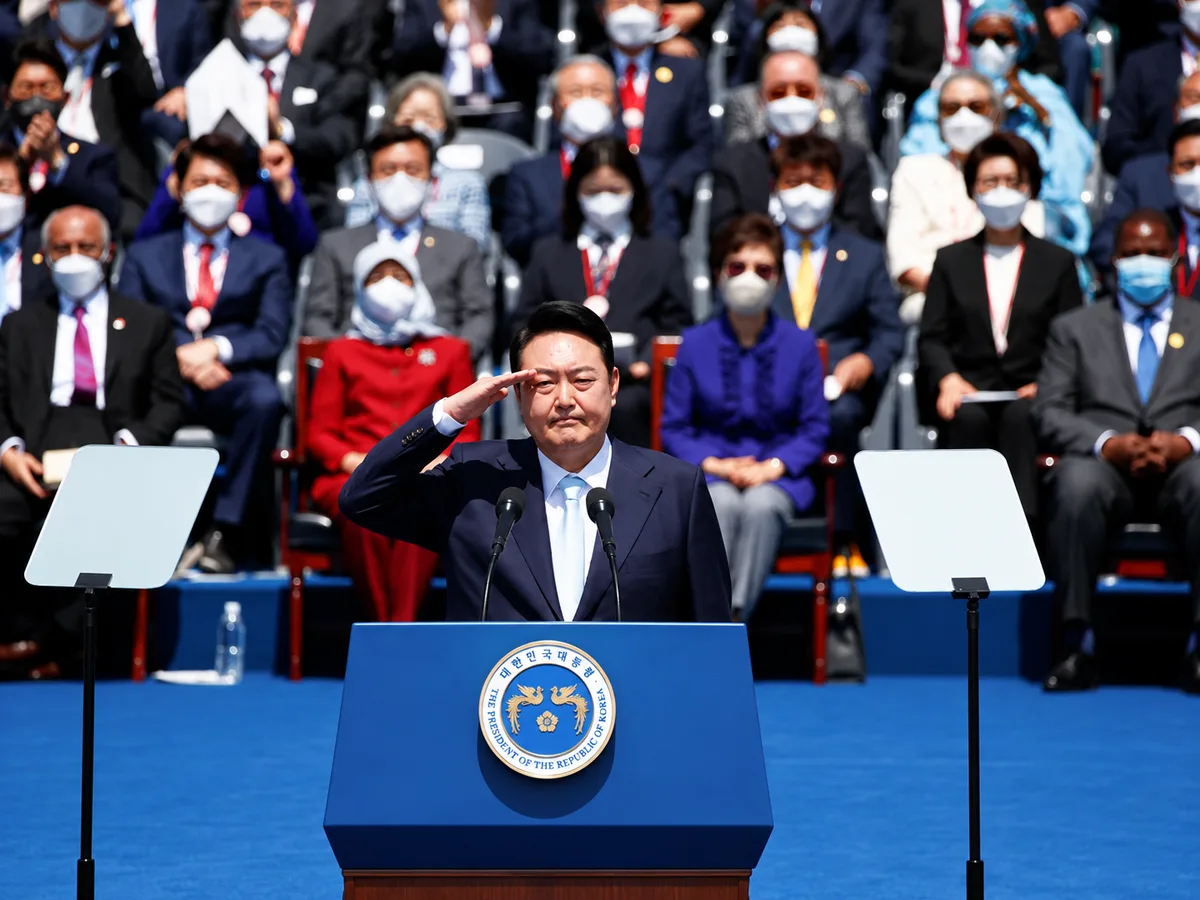
Of South Korea’s thirteen former presidents, seven have been assassinated, imprisoned, impeached, or have died by suicide.
Count those forced from power by revolution or coup, and the number rises to ten.
Count those whose children went to prison, and it reaches twelve.
The lone exception, Moon Jae-in, is currently under indictment.
Every time a South Korean president’s approval rating falls, Koreans ask the same question: How will this one end?
The same question is being asked about Lee Jae-myung, Korea’s current president, after recent data from the Gallup Korea polls showed 37% approval and 51% disapproval. This is a drop from the beginning of his term, when he was elected after Yoon’s removal, and approval hovered in the 60s for most of his first year.
The drop comes from his unpopular handling of real estate policy, controversial cabinet nominations, and management of defense regarding North Korea. As a result, Koreans have started comparing him with past presidents.
However, by historical standards, he is doing fine. In terms of approval rating, he ranks fifth of nine among post-1987 Korean presidents at the same point in the term. So then why are Koreans already comparing him to previous presidents?
What the comparisons really bring up is something Koreans already know: their presidencies rarely end well.
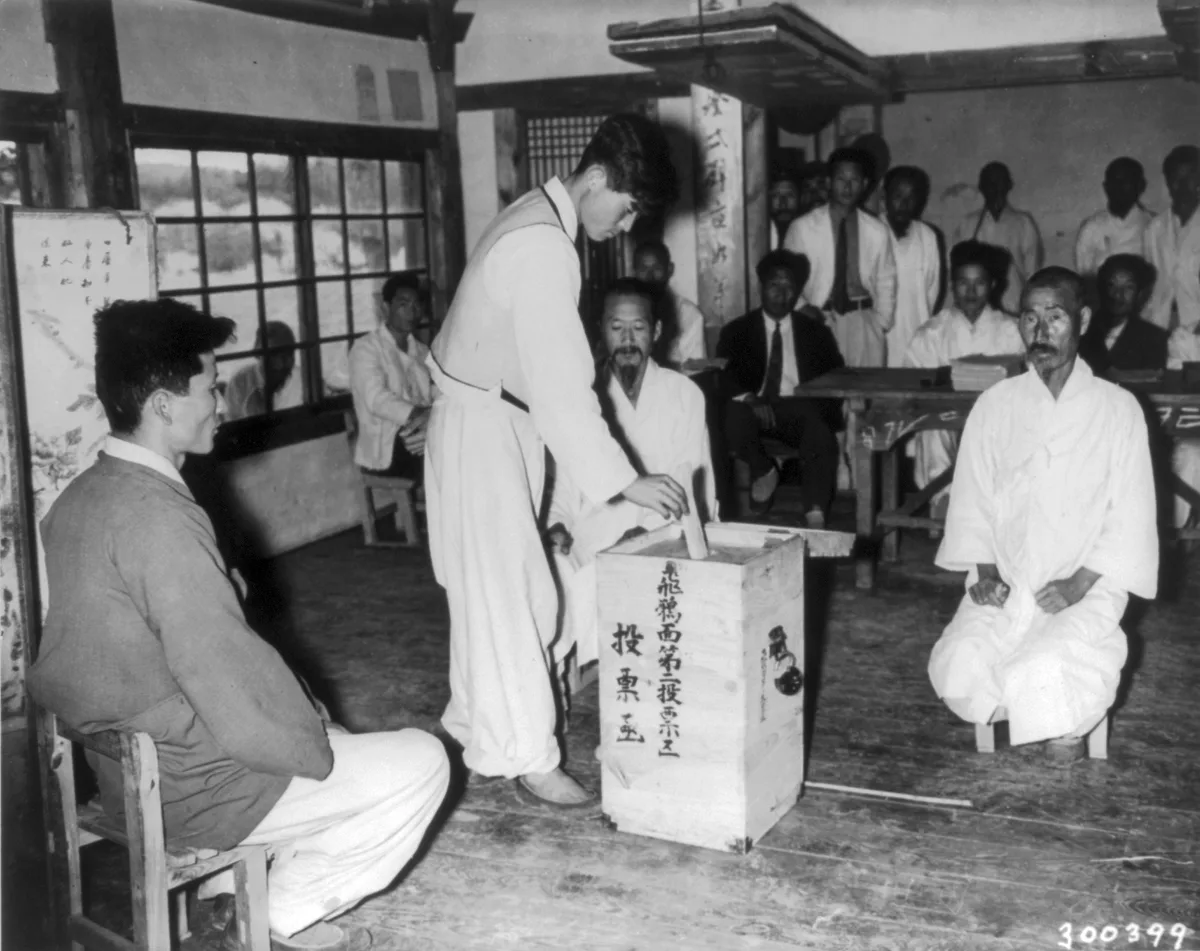
What many people forget is how brand-new Korean democracy is. After North Korea and South Korea officially became permanently split states in 1948, South Korea’s “democracy” started off under an authoritarian era.
The first president was Syngman Rhee, who was eventually forced out in 1960 by a student revolution. The revolution was in response to Rhee’s autocratic rule, corruption, and blatant electoral fraud. Rhee eventually fled into exile in Honolulu, Hawaii.
Then came Park Chung-hee, who took over the government with a military coup and dictated over Korea until 1979. He was later assassinated by his own intelligence chief, Kim Jae-gyu.
Kim later testified in his defense that he did it for democracy and the nation’s freedom. Some dispute this, arguing that it was a result of power struggles within the regime. Park’s legacy remains fiercely debated in South Korea. His supporters credit him with launching the ‘Miracle on the Han River,’ the rapid industrialization that lifted the country out of poverty. However, his critics point to the high cost that came with such economic development: violent human rights violations and long-term economic inequality.
His death was followed by another military coup orchestrated by Chun Doo-hwan, the most violent and authoritarian dictator in South Korean history. He is mainly known for two things: the repression of freedoms and the Gwangju Massacre.
Chun suspended the constitution, dissolved the National Assembly, jailed and tortured political opposition, and censored universities and the press. Then came the Gwangju Massacre in May 1980. Citizens of Gwangju rose against Chun’s newly expanded martial law, and the military responded by sending in paratroopers who beat, stabbed, and shot protesters and bystanders.
Over ten days, the crackdown killed at least 165 civilians by the official count, with many estimating the count to be far higher. With the city cut off and the domestic press censored, most Koreans were told it was a communist-inspired riot, and the truth spread only after foreign journalists smuggled out footage that was broadcast abroad and later circulated secretly inside Korea.
Chun’s power came to an end as a result of the June Democratic Struggle. The mass protests were in response to two events: the government’s attempted cover-up of a university student dying from police torture and a university student being fatally struck by a tear gas canister during a protest.
Soon the regime was trapped as Seoul was about to host the 1988 Olympics. The world was watching, and the US was pressing Chun not to use the army as he had in Gwangju. By then, Chun had already given his power undemocratically to his close ally and fellow coup leader, Roh Tae-woo.
The transition to democracy began with Roh announcing that the government would accept direct presidential elections. The new constitution was drafted in October, 1987, introducing direct elections and the single five-year term, designed to prevent another Park or Chun situation.
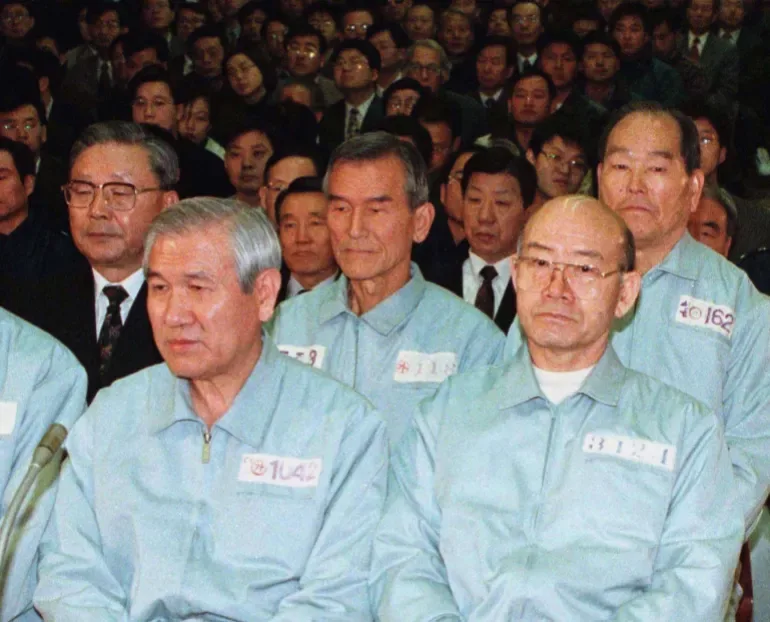
Eventually, Kim Young-sam became the first civilian president and had Chun and Roh arrested for the coup, Gwangju Massacre, and other corruption scandals. However, Kim’s term came to an end with his son being jailed and the Asian financial crisis forcing Korea into an IMF bailout, ending his term with approval in the single digits.
After Kim Young-sam came Kim Dae-jung, whose election was the first peaceful transfer of power to the opposition in South Korean history. Kim led the recovery from the IMF crisis and pursued the “Sunshine Policy” of engagement with North Korea, which led to the first inter-Korean summit in 2000 and his Nobel Peace Prize.
His legacy was later tarnished due to his sons’ bribery convictions and the “cash-for-summit” scandal, which revealed that hundreds of millions of dollars were secretly sent to the North before the summit.
Although both Kim Young-sam’s and Kim Dae-jung’s terms ended only with controversy, the rest of Korean presidents (excluding Moon) were met with either impeachments, imprisonment, or even suicide.
Roh Moo-hyun, a self-taught human rights lawyer, was the next president. In 2004, the opposition-controlled National Assembly impeached Roh for publicly backing his party before legislative elections, which violated the legal requirement that presidents stay politically neutral. However, the Constitutional Court reinstated him two months later, ruling that the violations were not serious enough to remove him from office.
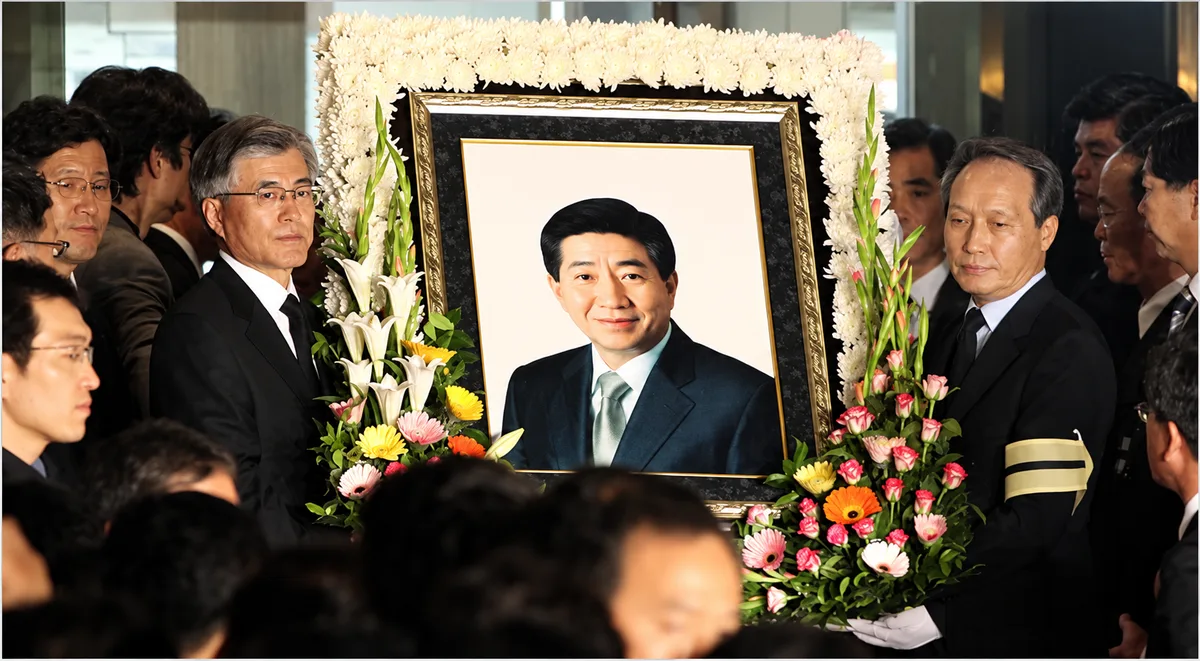
After leaving office, the next president, Lee Myung-bak, investigated his family for bribery. Roh, the previous president, later died by suicide in 2009. Citizens sympathized with Roh, with many now seeing the investigation as revenge to tarnish his legacy, eventually causing Roh’s suicide.
Furthermore, a Gallup Korea retrospective poll ranked Roh Moo-hyun the best former president, which is a striking turnaround for someone who has the lowest second-year approval of any democratic-era president.
Lee Myung-bak, the president after Roh, was a former Hyundai CEO and Seoul mayor elected on promises of economic growth. Within months, his approval plummeted due to mass protests over US beef imports.
Soon, his term faced more hardship due to North Korea’s sinking of the warship Cheonan and the shelling of Yeonpyeong Island, with citizens criticizing the government for being too weak and slow to respond, and politicizing the tragic events.
Although Lee Myung-bak finished his term, the nail in the coffin was his 2018 conviction for bribery and embezzlement.
Soon came Park Geun-hye, the first female president and the daughter of the previously mentioned former president Park Chung-hee. Her government’s response to the 2014 Sewol ferry disaster, which killed 304 people, mostly high schoolers, significantly damaged public trust.
Then in 2016, it emerged that her confidant Choi Soon-sil (with no official position) had massive influence over state affairs and extracted money from conglomerates (chaebols). Such corruption led to her approval plummeting, resulting in the peaceful candlelight protests. Eventually, she was impeached and imprisoned.
Then came Moon Jae-in, who was Roh Moo-hyun’s former chief of staff. He was known for the summits held with Kim Jong Un and helping broker the 2018 US-North Korea summit. Some of his prosecutorial reforms and high housing prices damaged his approval, but he left office with a relatively high approval rating.
Yoon Suk-yeol, a former prosecutor who led the cases against Park Geun-hye and Lee Myung-bak, took office after Moon Jae-in. He beat Lee Jae-myung, the current president, by less than one percentage point, the narrowest margin in Korean history.
His term was marked by the 2022 Itaewon crowd crush and controversies regarding his wife. The nail in the coffin was his failed coup attempt to declare martial law, citing “anti-state forces.” Lawmakers forced their way past troops into the Assembly and voted unanimously to lift the martial law within hours. Soon he was impeached and imprisoned.
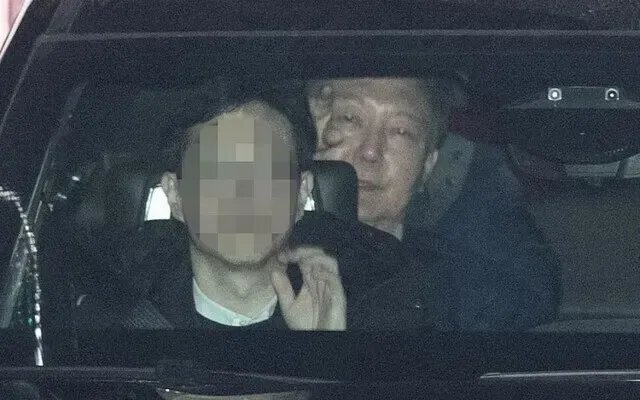
History shows a clear pattern. The harder question is why it keeps repeating.
There are a few common arguments for why Korean presidents have had such grim endings. The first argument is regarding the 1987 constitution. The constitution left enormous power in one office as the president appoints the cabinet, prosecutors, police chiefs, and heads of state companies, and the ruling party usually follows the president’s lead.
Jörg Michael Dostal, a professor at Seoul National University, argues that the concentration of power severely undermines other institutions, especially the National Assembly. Furthermore, each change in presidency completely restructures public institutions based on loyalty. Due to weak checks and balances, problems pile up unseen and are poured out all at once after the term ends.
A great example of this is how Park Geun-hye’s confidant, Choi Soon-sil, who was a private citizen with no official position, was able to influence state affairs simply due to her closeness to the president.
Another argument is that the conglomerates of South Korea outgrew democracy. These conglomerates, also known as chaebols, such as Samsung, Hyundai, Lotte, and LG, have immense economic and political influence in South Korea. This is a legacy of Park Chung-hee’s developmental state. The government chose which conglomerates to support with loans and licenses, and the companies paid back in political funds.
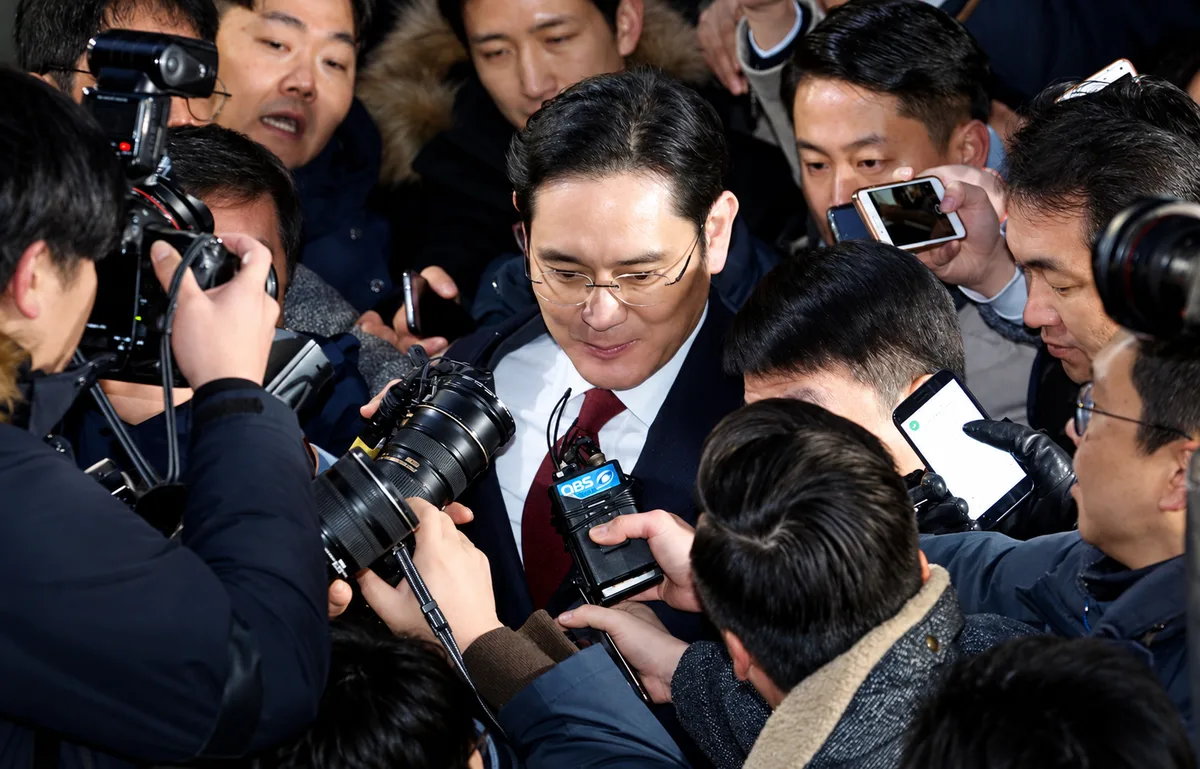
David C. Kang, a former political scientist and Korea specialist at the University of Southern California, described the situation as one of “mutual hostages”: a small set of government business elites have been bound together since 1961, each depending on the other. Examples include Chun and Roh Tae-woo’s slush funds, Samsung’s role in the Park Geun-hye scandal, and Lee Myung-bak’s bribery conviction.
The final argument is regarding revenge politics. Korean prosecutors historically held unusually concentrated power, and each new administration has investigated the one before it. This cycle continued and eventually led to the death of Roh Moo-hyun.
Kang Won-taek, professor at Soongsil University, said: “It has become a bad political habit for presidents in South Korea to try to gain support by punishing the former president.”
No single batch of arguments captures Korea’s troubled presidential history, and many more could be added. But few people understand that history as personally as Lee Jae-myung.
He survived a knife attack in 2024 and spent years as a defendant while leading the opposition. Now he presides over a government that has prosecuted his predecessor. He has seen the cycle from both perspectives.
Lee’s approval ratings will rise and fall, but the most important question is whether he will join Korea’s long line of disgraced presidents or become the exception.
SOURCES
Asia Economy. 2025. “President Lee Jae-myung’s Approval Rating at 62% Six Months into Term... Third Highest in History.” Asia Economy, December 5. https://view.asiae.co.kr/en/article/2025120510480387645.
Associated Press. 2026. “South Korea’s Supreme Court Upholds Prison Sentence for Yoon in First Martial Law Case.” Associated Press, July 9. https://www.local10.com/news/world/2026/07/09/south-koreas-supreme-court-upholds-prison-sentence-for-yoon-in-first-martial-law-case/.
Dostal, Jörg Michael. 2023. “South Korea: The Lasting Pitfalls of the ‘Imperial Presidency.’” The Political Quarterly. https://politicalquarterly.org.uk/blog/south-korea-the-lasting-pitfalls-of-the-imperial-presidency-journal-article/.
Herald Business. 2026. “Moon Averaged 75% Approval in His Second-Year First Quarter; Lee’s Trajectory After Press Conference Draws Attention.” Herald Business, Sept. 19. https://biz.heraldcorp.com/article/10878799.
Kang, David C. 2002a. “Bad Loans to Good Friends: Money Politics and the Developmental State in South Korea.” International Organization 56 (1): 177–207. https://library.fes.de/libalt/journals/swetsfulltext/13351114.pdf.
Korea JoongAng Daily. [Year]. “Roh Moo-hyun Best Former President, Yoon the Worst: Gallup Korea Poll.” Korea JoongAng Daily, [Month Day]. https://www.koreajoongangdaily.com/korea/roh-moo-hyun-best-former-president-yoon-the-worst-gallup-korea-poll/11941249.
Korea JoongAng Daily. 2025. “Breaking the Cycle of Political Retaliation.” Korea JoongAng Daily, [Month Day]. https://www.koreajoongangdaily.com/korea/breaking-the-cycle-of-political-retaliation/12125751.
Korea JoongAng Daily. 2026. “Lee’s Approval Rating Falls to New Low of 37 Percent: Gallup Korea.” Korea JoongAng Daily, [Month Day]. https://www.koreajoongangdaily.com/korea/lees-approval-rating-falls-to-new-low-of-37-percent-gallup-korea/12881988.
Malay Mail. 2026. “South Korea Court Hands Ex-President Yoon Suk Yeol Life Sentence over Failed Martial Law Bid.” Malay Mail, February 19. https://www.malaymail.com/amp/news/world/2026/02/19/south-korea-court-hands-ex-president-yoon-suk-yeol-life-sentence-over-failed-martial-law-bid/209650.
Press Democrat. 2009. “South Koreans Remember Roh.” The Press Democrat, May 25. https://develop.pressdemocrat.com/2009/05/25/south-koreans-remember-roh.
The Korea Times. 2026. “Lee’s Approval Rating Remains at 37%: Poll.” The Korea Times, October 9. https://www.koreatimes.co.kr/southkorea/politics/20261009/lees-approval-rating-remains-at-37-poll.