Ukraine Is Turning the Tables on Russia Harder Than You Think
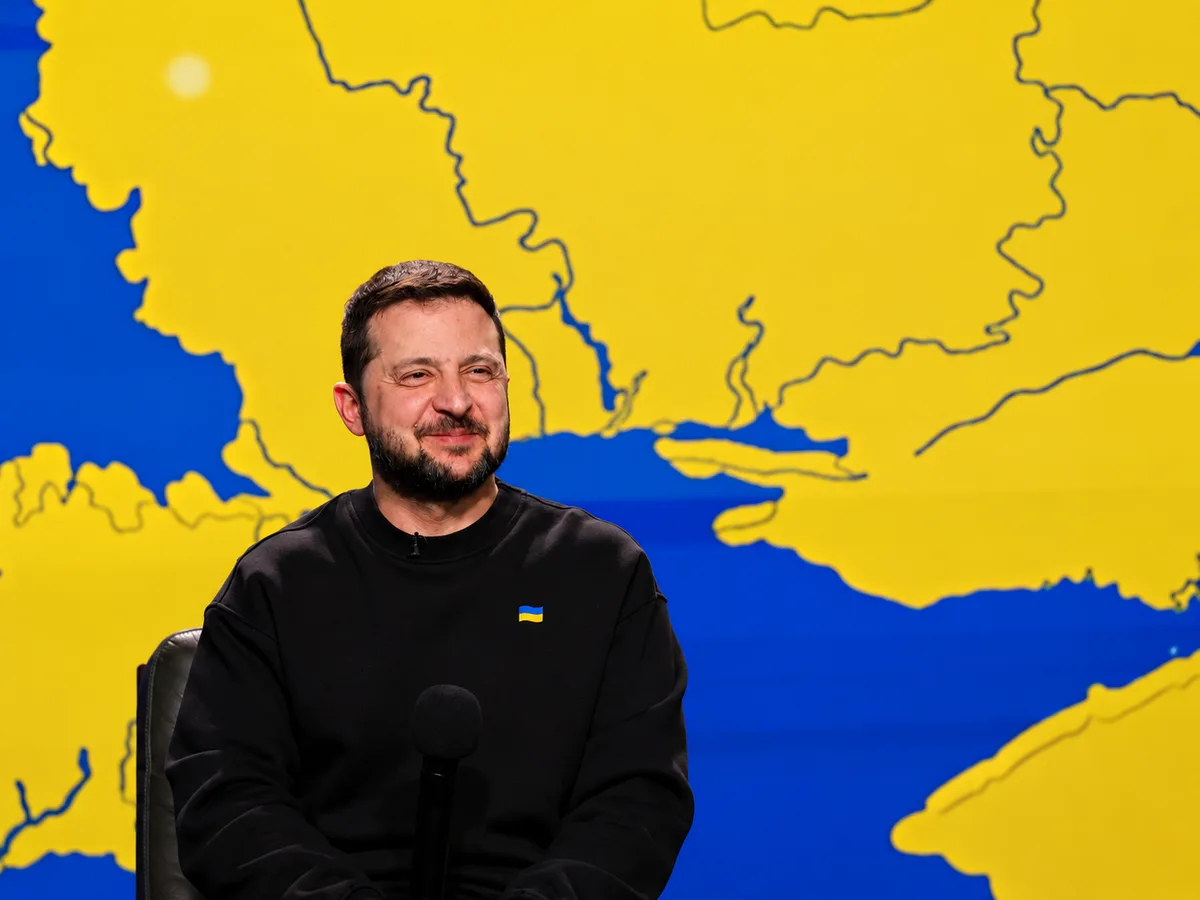
The world justified Russia’s oppression of Ukraine’s independence until it could no longer do so when the amount of Ukraine’s occupied territory amounted to one-fifth of the whole nation.
Zaporizhzhia. Luhansk. Donetsk. Donbas. Kherson.
The media has associated parts of these five Eastern Ukrainian oblasts with words like “shelled” and “taken”. Operation Vivaldi challenges the idea that these regions will forever remain in Russian hands, and even though it is not Ukraine’s first counteroffensive mission, it might be the most successful so far.
Operation Vivaldi is like the four horsemen of the apocalypse, but with a modern twist: conquest, war, drones, and artificial intelligence.
What led up to Vivaldi is a long history of Russia’s war on Ukraine. Contrary to popular belief, this did not start with Russia’s full-scale invasion in February of 2022, but dates all the way back to February of 2014, when Russia annexed Ukraine’s Crimean Peninsula.
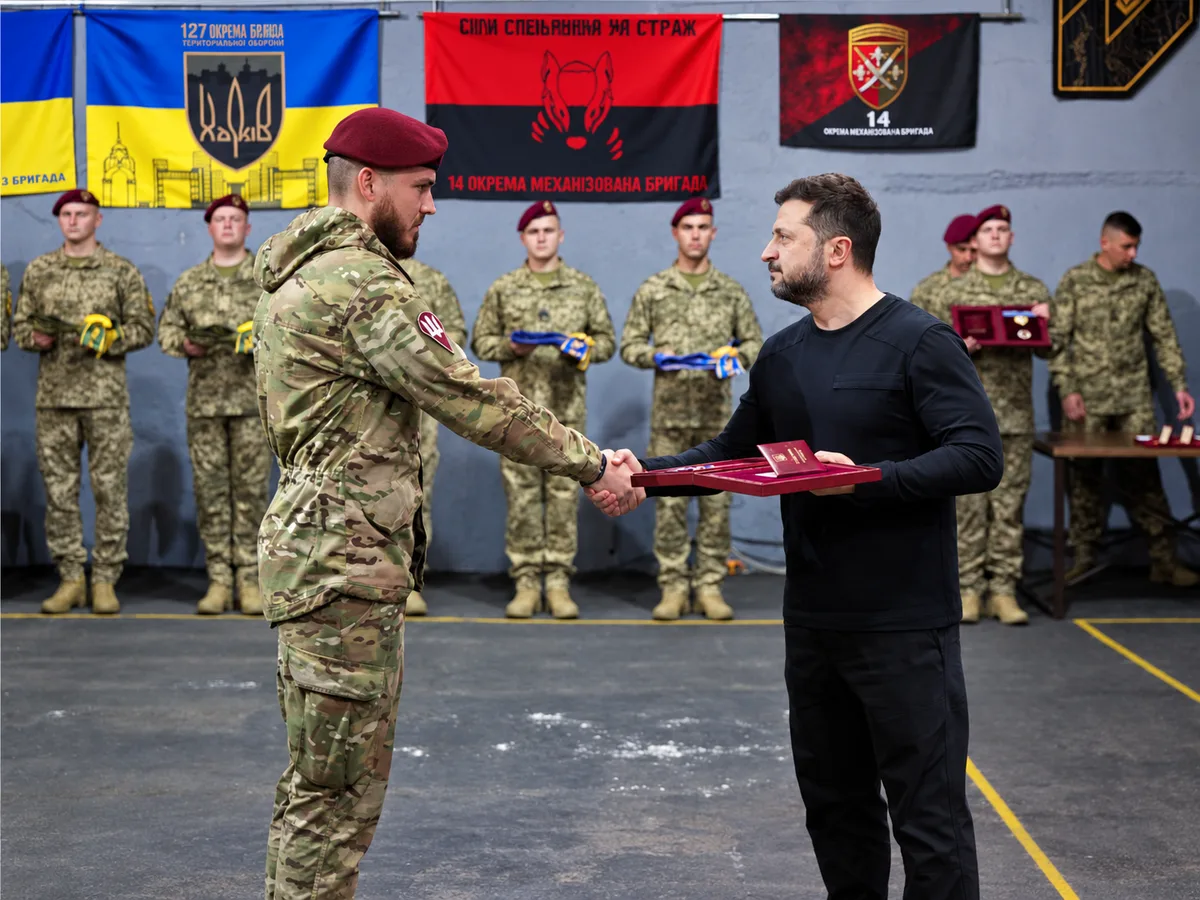
Vivaldi has not only allowed the Third Battalion of the Ukrainian Armed Forces to take back 176 square kilometers of occupied territory in the Lyman, Donetsk region, but also revolutionized the world’s understanding of what modern warfare looks like.
Sending robots, otherwise known as unmanned ground vehicles (UGVs), to ambush Russian forces in Eastern Ukraine, the Ukrainian Third Battalion targeted bridges and military bases used for transportation and storage of Russia’s military equipment. For every one Ukrainian losing their life for the success of this operation, 30 Russian soldiers have perished.
The operation has shown the world that while Russia has been stuck in its Soviet ways of mass military sacrifice, Ukraine has learned to leverage technology, innovation, and creative solutions to yield the same, if not better, results in a faster timeframe. With Ukraine’s 30+ million population against Russia’s 140+ million population, it is the true epitome of “quality over quantity”.
Ukraine’s defense lessons prompt the global community to ask itself whether Russia’s “mighty military” is truly the world’s second-best. An even more important question is, was it ever? Or was it yet another illusion that Russian propaganda spent decades promoting?
In June 2022, the Security Services of Ukraine launched a counteroffensive mission to liberate Zmiinyy Ostriv (in Ukrainian, “Snake Island”), an island located in the Black Sea. Using Neptune missiles, Ukraine sank Russia’s “Moskva” battleship, becoming the first country in history to sink a missile cruiser in active combat.
Following this victory, Ukraine’s Army used helicopters flying at low altitudes to deliver assault groups and surround Russian forces, ultimately regaining control of Snake Island.
This was a strategic game, allowing Ukraine to hold sway over trade routes and target Russian battleships moving through the Black Sea. Without having a navy and instead relying on drone technology, Ukraine was already becoming a leader in modern warfare.
Operation Spider Web, unveiled in June 2025, also shocked the global community with its innovative and unpredictable offensive tactics.
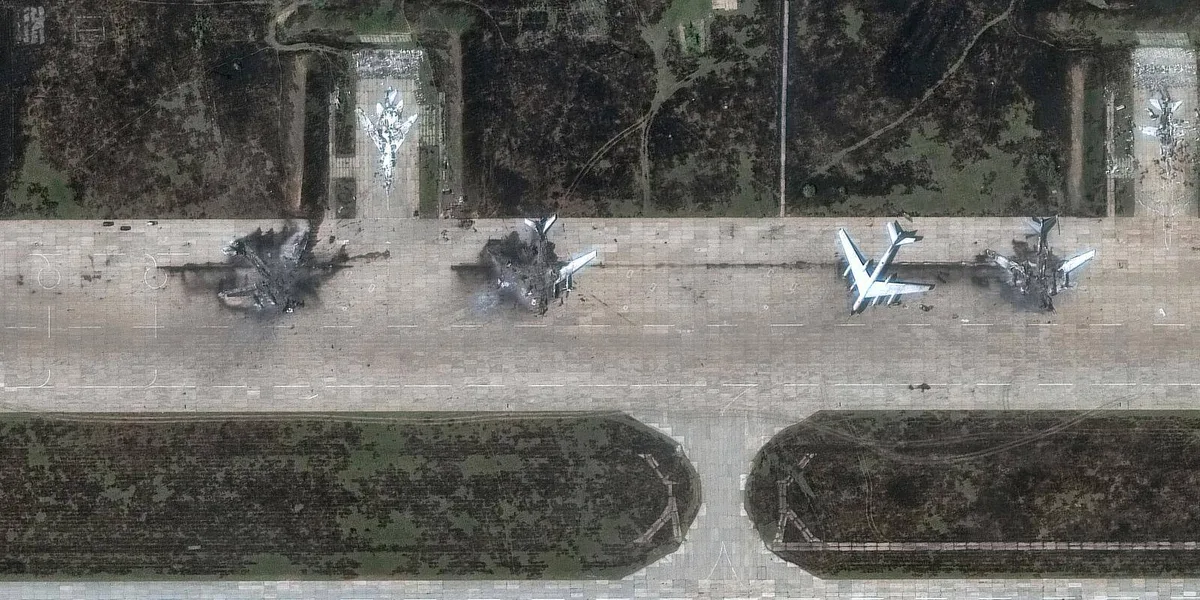
The Security Services of Ukraine loaded inconspicuous trucks with containers holding 117 remotely operated drones. They tricked Russian civilians into driving them through Russian territory and parking them near four military bases, and then operated the drones out of the trucks.
What was interesting about this operation is that the drones, having gone through Artificial Intelligence training, were able to recognize Russian aerodromes and choose the targets on their own. The results taught the world that Ukraine is capable of responding to its oppressors: Russia ended up with four damaged military airbases, 41 destroyed fighter planes, and seven billion dollars that it lost in a war of its own choosing.
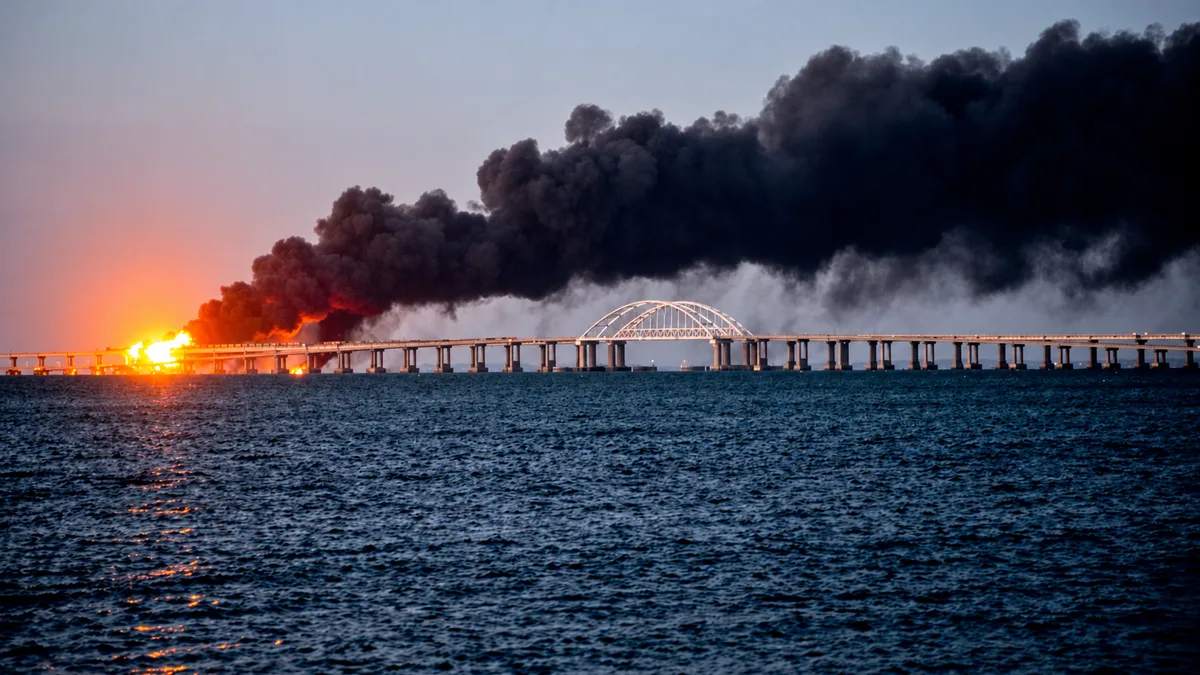
The Crimean Bridge was “the most protected target in the world,” as Russian authorities claimed, and yet Ukraine has managed to breach its defenses not once, but twice. In October 2022, a truck exploded on the bridge connecting mainland Ukraine to the Peninsula, surprising the Russian forces and the contrabandists who were driving the truck.
The bridge is important to the Kremlin for two reasons: first, Russia uses it as a primary hub for military equipment and troop transportation to the Southern Ukrainian front, and second, Putin sees it as a personal symbol of Russia’s “grasp” over Ukraine.
Russian officials were furious, since they spent more than 3.7 billion dollars building the bridge in the first place. The Security Forces of Ukraine waited, allowing Russia to reconstruct the bridge, and then, in 2023, attacked again.
Sea Baby drones, each carrying up to a ton of explosives, flew 0.6 meters above water, hiding amongst waves as Russian artillery tried to defend the Crimean Bridge. The drones executed an offensive on the bridge’s pillars, destroying one section of the road and causing severe damage to the railway tracks.
Russia then fortified the illegally built bridge with fleets, air and sea defense systems, and patrolling personnel in expectation of continued Ukrainian strikes on the infrastructure.
Operation Spider Web demonstrated how Russian civilians could be manipulated into aiding Ukrainian resistance, while the liberation of Snake Island and the destruction of the Crimean Bridge showcased the potential of new drone technologies.
Ukraine has taken all of these valuable lessons from its previous operations against Russia and incorporated them into a new effort: Vivaldi.
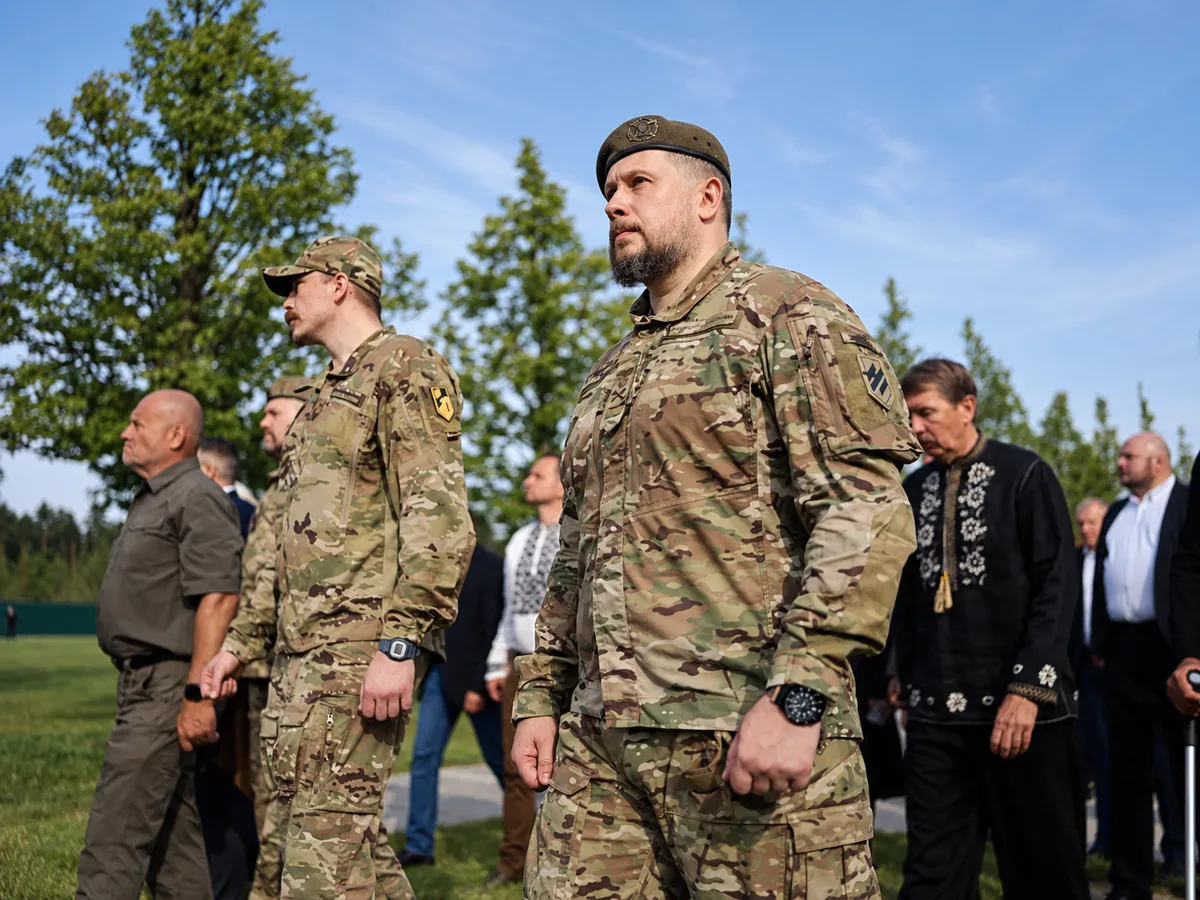
Since Vivaldi’s launch in May 2026, the Ukrainian Armed Forces have leveraged silence as a psychological warfare tactic, provoking panic among Russian civilians and thus augmenting the pressure on Russian army officials to uncover Ukraine’s goals.
However, Ukrainian commanders remained quiet about their gains by neutralizing 20,000 Russian drones and dismantling surveillance networks, which fooled Russian intelligence and contributed to the “element of surprise”.
It wasn’t until September 2026, when Ukraine’s achievements in regaining occupied territory became impossible to ignore, that Commander of the Third Battalion, Andriy Biletskiy, revealed the details of the operation.
For its offensive tactics, Ukraine transformed old Soviet-style tanks into UGVs, packing them with explosives and driving them into Donetsk. This marks the first time in history that this type of offensive technique has been used in warfare.
Meanwhile, in its struggle to predict Ukraine’s next “Vivaldian” move, Russia has lost more than 3000 soldiers. The robot offensive was a plan to disrupt Russian defenses before Ukrainian troops advanced: Ukraine deployed UGVs behind the Russian frontline, cutting off communication and command posts, allowing Ukrainian Armed Forces to take Russian soldiers by surprise while they lost access to supplying and coordinating drones.
Vivaldi’s commanders revealed that the operation required Ukraine’s Armed Forces, Security Services, and technology experts to work together to mislead Russians, though due to the unfinished nature of the operation, they could not reveal the exact details of the deceit.
For now, all the world knows is that Ukraine played the Russian military like a Vivaldian symphony.
Ukrainian troops commented that this operation was also psychological, because while the enemy thought it was meeting reinforcements, the unmanned vehicles blew up its strongest fortifications.
The objective of the operation was to inhibit Russia’s advance on Ukrainian territories, specifically the Sloviansk and Kramatorsk areas from the north, disrupting Russia’s plans to build a “fortress belt” around the warzone. This has also inadvertently inhibited Russia’s plans of forcing Ukraine into a peace deal that involves territorial concessions.
Vivaldi’s outcome is undebatable: Ukraine took more than 250 Russian soldiers captive, liberated five civilian provinces in the Lyman area from Russian occupation, and saved countless Ukrainian lives.
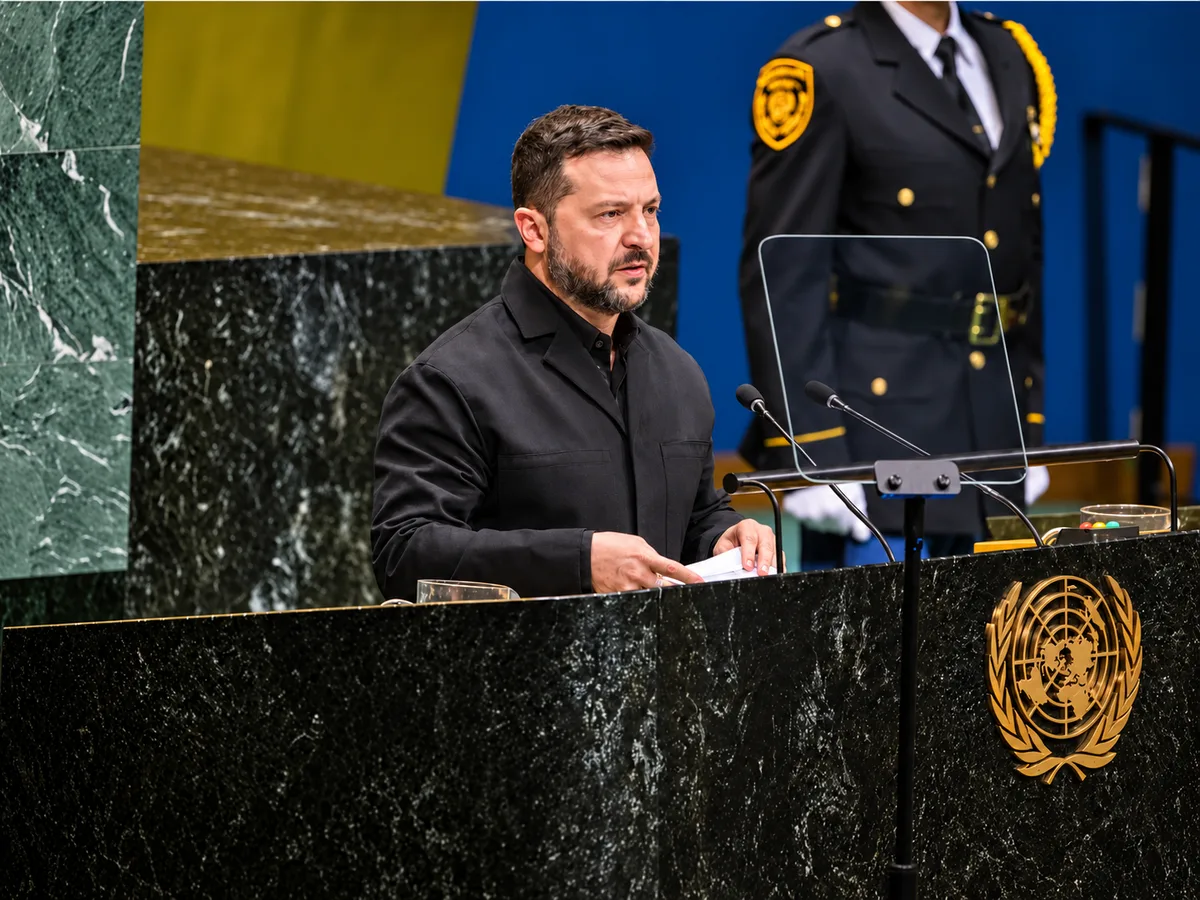
With its rapidly evolving technologies like UGVs and innovative military and intelligence capabilities, Ukraine is doing everything it can to safeguard European borders and global democracy.
What is missing from this equation for victory is increased Western financial, economic, and humanitarian assistance.
Because of this operation, Ukraine has shown the world that it is a leading developer of new military technology and strategy on the international stage. It has successfully undermined Russia’s credibility in the eyes of the global community and advanced its position as not only a fighter for democracy, but also as a formidable opponent.
This progress sets a historical precedent where Ukraine’s technological experience and warfare knowledge will contribute to other countries’ strategic operations, including military development and intelligence.
The United States has already begun implementing Ukraine’s defense tactics, including the rapidly developing technology used in drone warfare, as well as the lessons learned while launching counter-offensive operations against a nuclear power.
The war on Ukraine impacts the military, the defense sector, and the broader democratic principles of the United States, and thus, every American must care about what happens to a country that has symbolically become the heart of Europe.
Besides its immeasurable global impact, Operation Vivaldi is also important to Ukraine individually. It sparks hope that Ukrainian forces might be able to take back the Russian-occupied territories that rightfully belong to Ukraine, restoring peace to regions that have grown accustomed to listening to sirens every night.
As the leading army commander Andriy Biletsky commented: “Our operation is called Vivaldi because the composer had four seasons. And this? This is just the first one.”
No one yet knows when the next “season” of Vivaldi is set to begin, but one thing is certain: Winter is coming, and with it, so is Ukraine’s retribution.