France Is Burning. But Who Lit the Match?
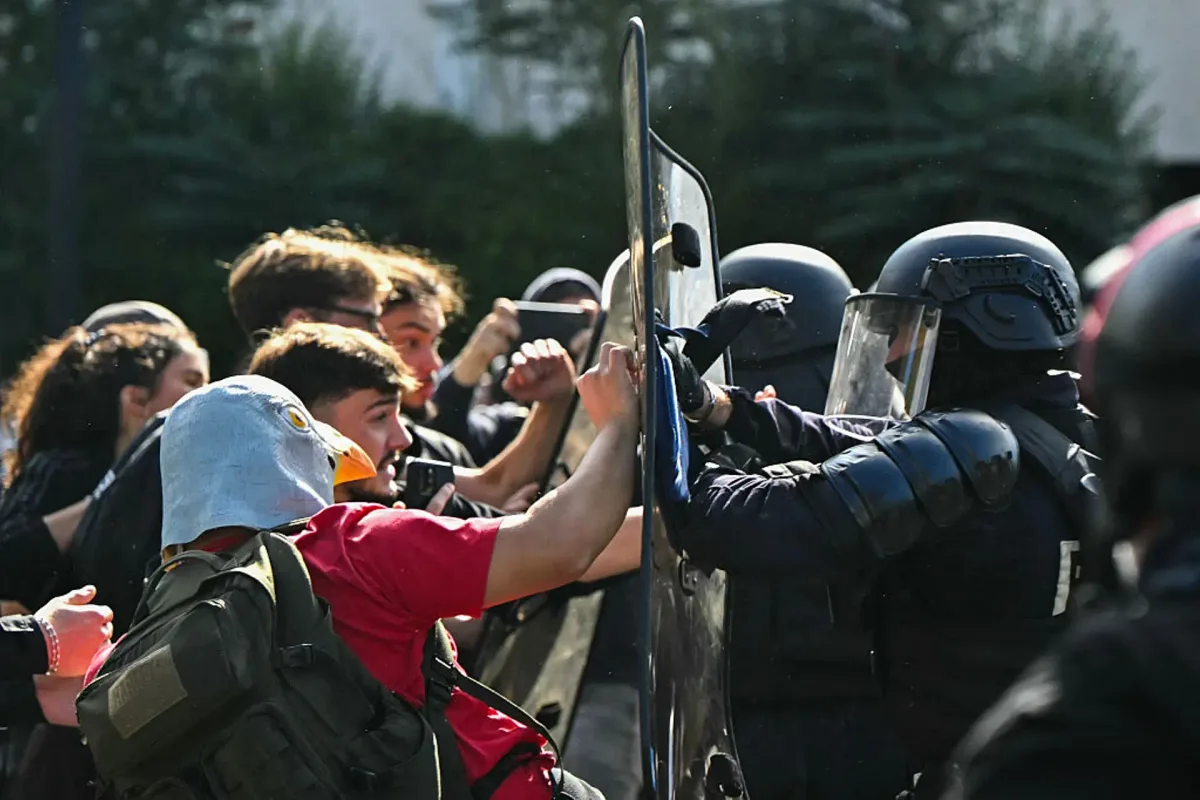
For the past few weeks, France has revived its revolutionary identity by displaying immense violence, from stores being looted to protesters losing their hands and, most notably, the town hall of Limoges burning down.
The unrest began in the suburbs of Paris, at Saint-Exupéry, on September 17, when students blocked their high school, demanding improved infrastructure and more teachers.
From then on, their voice was heard; people joined in, including teachers, trade union workers, and yellow vest activists, as we started to see a convergence of different issues amongst various sectors.
The weekly protests of October and November have led to around 5,000 arrests, representing 86% of all EU yearly protest arrests, while total costs run into the billions.
People are battling to solve a social crisis, calling for an increase in the education budget, capping petrol prices, and raising the minimum wage. On the other side, the president and most of the right wing call it economic suicide, with the debt being at an all-time high of 5% annually.
With hundreds of thousands taking to the streets and showing no signs of stepping down, France has become the focal point of a wave of social unrest across Europe.
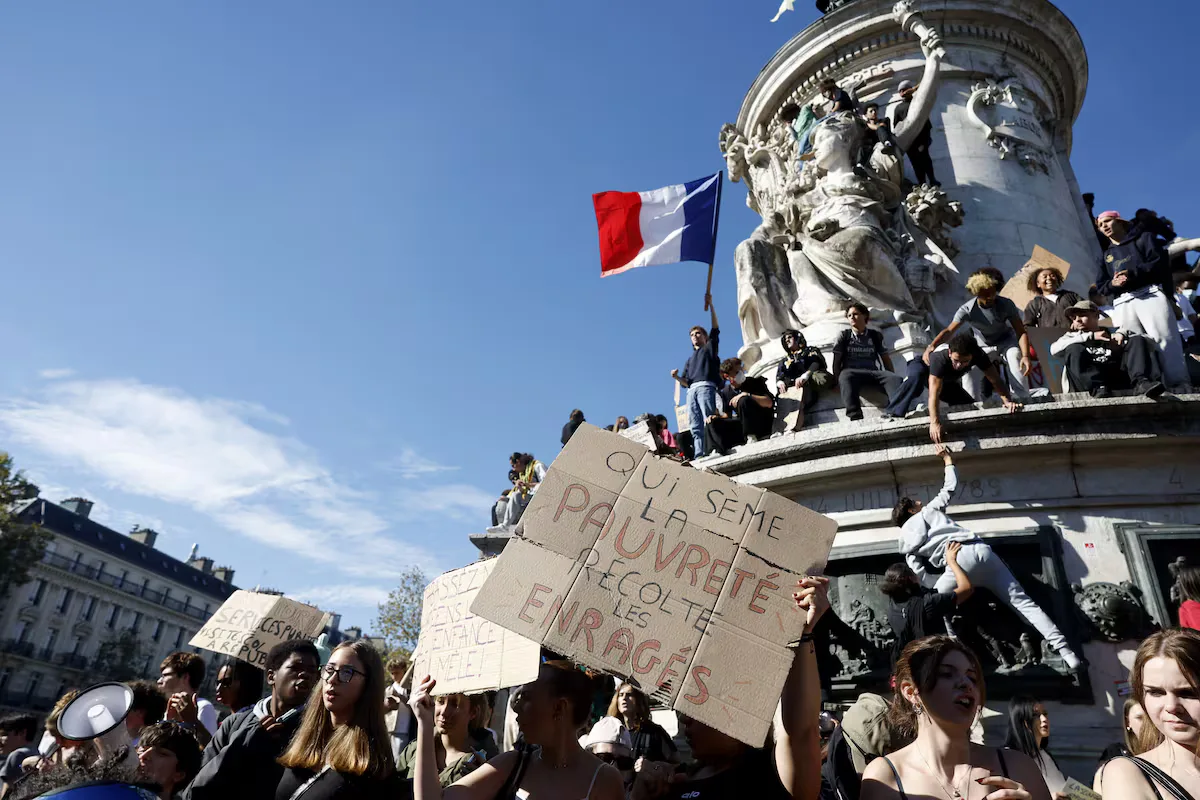
The importance of these demonstrations goes beyond the violence between protesters and the police. The constant stream of videos and photos of burning vehicles, looted stores, and fights may dominate public attention and social media, but they do not necessarily explain why it is occurring in the first place.
This media focus omits the issues' roots: the economic grievances, political frustrations, and institutional failures that can precede them.
The hierarchy of the political issues carries particular significance as the country approaches the 2027 presidential elections.
These protests have exposed profound tensions surrounding economic inequality, the legitimacy of political institutions, and, as in most countries, the declining trust between citizens and the government.
So, to understand this 2026 student-led French protest, let’s get a look at the chronology of events and how claims and actions are portrayed and should be understood.
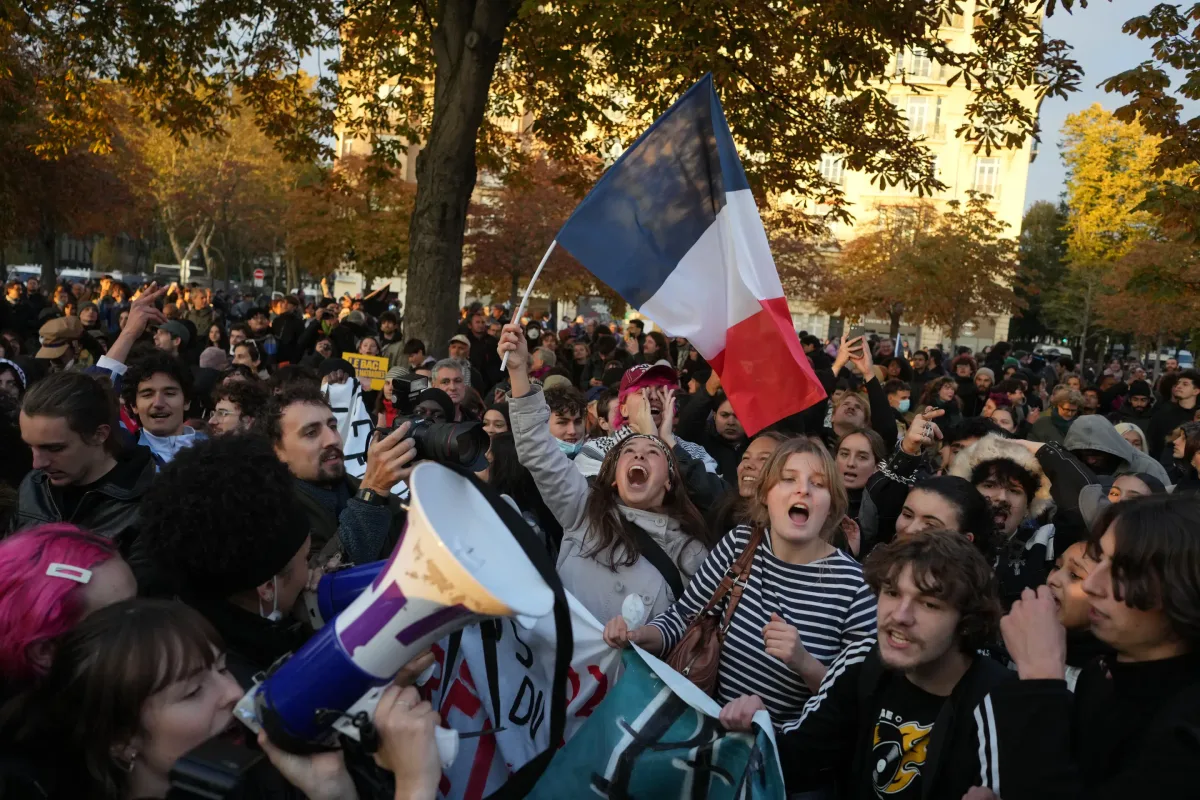
Yet counting demonstrations, arrests, and damaged buildings is only part of the story. For the past few weeks, protesters and left-wing politicians have been talking about institutional and social violence.
The Brazilian theologian Dom Helder Camara developed a theory of three forms of violence: institutional, revolutionary, and repressive. He argues that violence can develop through a cycle: institutional violence produces social injustice, revolutionary violence emerges in resistance to it, and repressive violence is used by governments to restore or preserve public order and suppress that resistance.
Applied to France, his framework offers a different way of comprehending the complexities of the unrest, its roots, and its legitimacy.
On the 31st of August, the eve of the start of the academic year, the Education Minister Edouard Geffray declared, "Teacher shortages will be marginal this year." Yet, less than two weeks afterwards, two union surveys found that 53% and 65%, respectively, of responding secondary schools lacked at least one teacher.
On the 8th of September, the OECD’s 2025 PISA results also revealed that French 15-year-olds had reached record lows in mathematics and reading, with the country performing below the OECD average. Students progressively reported on social media the deterioration of their schools and complained of unfair time schedules.
Meanwhile, the government’s 2027 budget planned to eliminate 1,588 permanent teaching positions on the grounds of declining student demographics. However, classrooms in France have never been as full, as classes average 30.5 students nowadays compared to 27.5 in 2000.
For students, teachers, and protesters, these figures illustrate a deeper institutional failure: a public education system deteriorating and struggling to guarantee equal opportunities, particularly for children of disadvantaged backgrounds.
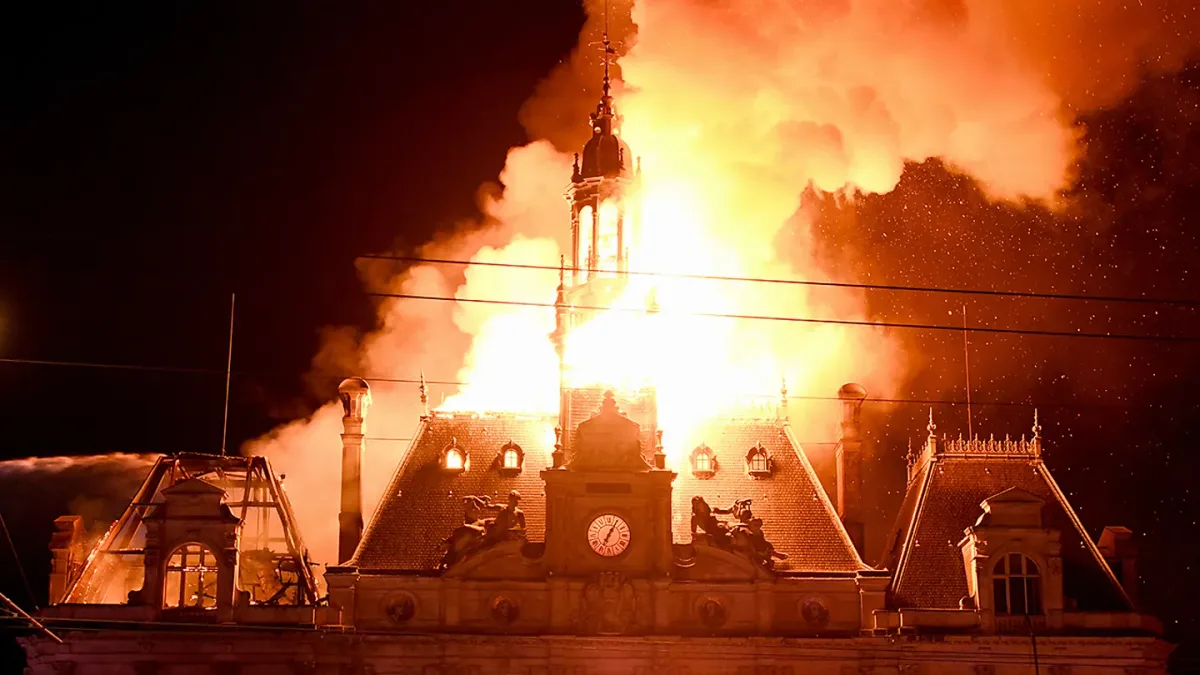
On 17 October, 1,200 people were detained nationwide as demonstrations quickly escalated into widespread violence across France.
According to Fondation IFRAP's high-end estimate, the damages and economic losses from the weekend of 17–18 October could reach €1.1 billion, including €910 million in property damage.
By late October, nearly 2,500 businesses had reportedly been affected, with more than 1,100 reported as heavily looted, ransacked, or burned. On 17 October, 297 security personnel were injured in Paris, according to the Paris Police Prefecture, while public buildings were attacked, most notably Limoges town hall, which was set ablaze.
The Interior Minister, Laurent Nuñez, blamed organised ultra-left activists, while Jean-Luc Mélenchon, a leading figure of La France Insoumise, accused the police of deliberately provoking clashes.
For some participants, confrontation may appear to be a last resort after years of strikes and demonstrations that they believe have failed to influence government policy.
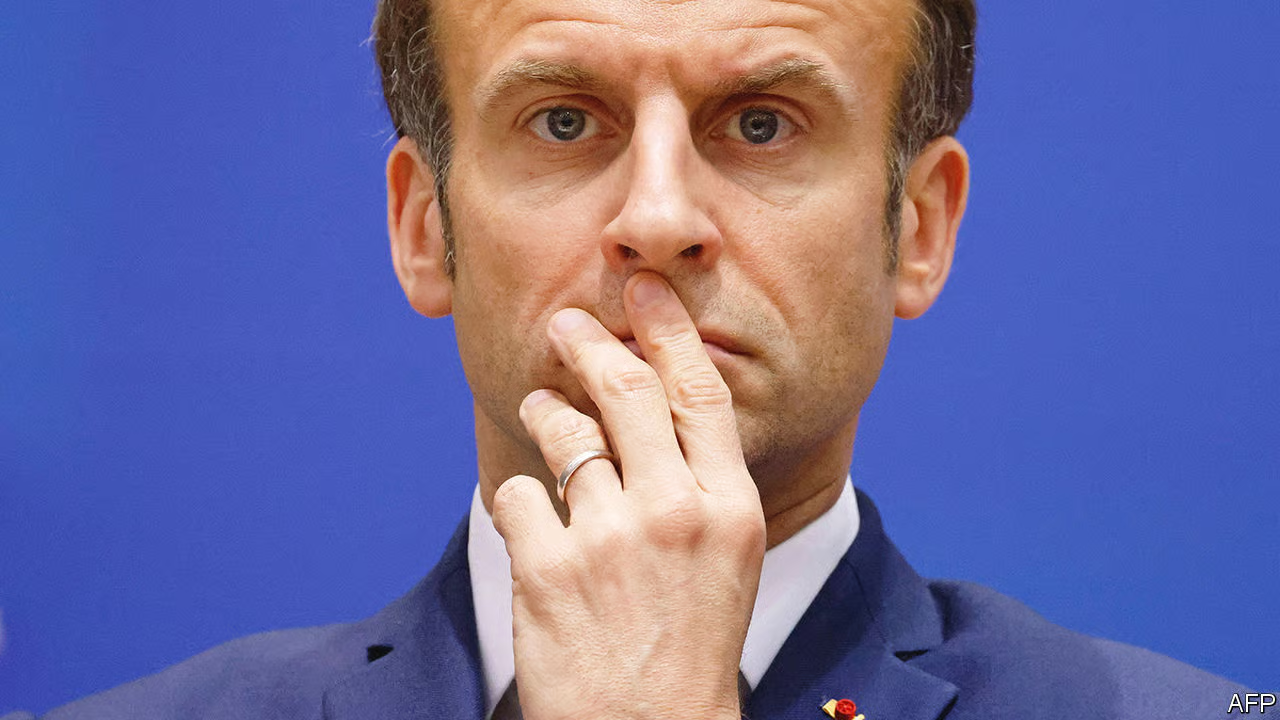
The unrest also reflects the deep crisis of democratic legitimacy that Macron faces since his coalition lost its parliamentary majority in the 2024 snap legislative elections. The left-wing alliance won the largest number of seats but fell short of an absolute majority, while Macron continued to govern through minority governments.
The unrest exposed a dispute over democratic legitimacy. In 2023, Macron had declared that “the crowd has no legitimacy” against elected representatives. On 22 October 2026, he called for demonstrations not organised by trade unions to be banned wherever possible, arguing that public order must be restored. Jean-Luc Mélenchon accused the government of responding to social crises through police violence, while LFI lawmakers condemned the proposed restrictions on demonstrations as an attack on civil liberties.
By the end of October, French authorities had placed 7,950 people in custody, a large majority being minors. 2,735 faced prosecution. The Interior Minister deployed a massive police force, around 70,000 officers on 24 October, to contain what he described as “urban violence," while the Justice Minister, Gérald Darmanin, requested procureurs for a firm criminal response.
The police also started to come under scrutiny as more than 200 students were injured; some lost their hands or eyes or even broke their jaws. By now, authorities had opened 161 investigations into alleged police violence.
The government maintains a strong position as they argue that force is necessary to protect public order. Critics question whether mass arrests, massive use of weapons, and restrictions on protests risk escalating the very unrest they are intended to contain.
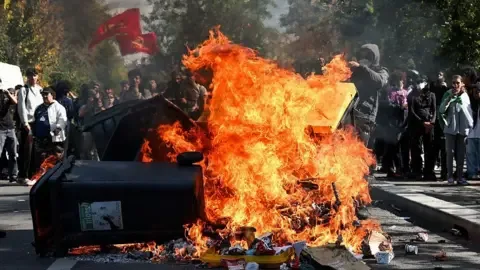
“Le feu aux poubelles, ça fait peur aux ordures"—"Burning bins frightens the trash."
This slogan represents and captures the debate: how does a burning bin provoke more outrage than
Whilst the media shows images of looting and clashes, the institutional failures that brought students into the streets have received far less attention so far.
As France approaches its presidential election, the focus may ultimately be less about what is asked of students and workers and more about a burning attack on civil liberties.
SOURCES
Goanec, Mathilde. 2026. “La mobilisation dans les lycées monte en puissance, portée par la banlieue parisienne.” Mediapart, September 29. https://www.mediapart.fr/journal/france/290926/la-mobilisation-dans-les-lycees-monte-en-puissance-portee-par-la-banlieue-parisienne.
Goanec, Mathilde, and Camille Polloni. 2026. “Un « maintien de l’ordre » brutal répond à la mobilisation lycéenne.” Mediapart, October 1. https://www.mediapart.fr/journal/france/011026/un-maintien-de-l-ordre-brutal-repond-la-mobilisation-lyceenne.
Hamon, Coralie. 2026. “Plus d’un milliard d’euros de dégâts, 2500 magasins touchés… Le lourd bilan des violences du 17 octobre pour les commerçants.” Le Figaro, October 27. https://www.lefigaro.fr/actualite-france/violences-urbaines-plus-de-2-500-commerces-degrades-en-france-20261027.
Jequier-Zalc, Pierre, and Camille Polloni. 2026. “Manifestations lycéennes : l’étrange confiscation des pancartes par la police.” Mediapart, October 8. https://www.mediapart.fr/journal/france/081026/manifestations-lyceennes-l-etrange-confiscation-des-pancartes-par-la-police.
Organisation for Economic Co-operation and Development (OECD). 2026. PISA 2025 Results (Volume I): France. Paris: OECD. https://www.oecd.org/en/publications/pisa-2025-results-volume-i-country-notes_2d4ff9ea-en/france_6d229453-en.html.
Polloni, Camille. 2026. “Mouvement lycéen : un début de semaine encore rythmé par les tensions et les violences policières.” Mediapart, October 6. https://www.mediapart.fr/journal/france/061026/mouvement-lyceen-un-debut-de-semaine-encore-rythme-par-les-tensions-et-les-violences-policieres.
Polloni, Camille, and Laura Wojcik. 2026. “Manifestations lycéennes : deux plaintes pour agression sexuelle déposées contre des policiers.” Mediapart, October 13. https://www.mediapart.fr/journal/france/131026/manifestations-lyceennes-deux-plaintes-pour-agression-sexuelle-deposees-contre-des-policiers.
Reuters. 2026a. “Injuries and Arrests as French High School Student Protests Spread.” September 30. https://www.reuters.com/world/dozens-injured-french-student-protests-over-school-resources-2026-09-30/.
Reuters. 2026b. “France Boosts Police Presence, Hoping to Prevent Repeat of Riots.” October 23. https://www.reuters.com/world/europe/french-businesses-events-close-with-more-weekend-protests-expected-2026-10-23/.
Reuters. 2026c. “Macron Condemns Violent Incidents as French Students Vow to Keep Up Protest Pressure.” November 10. https://www.reuters.com/world/french-authorities-condemn-violent-incidents-students-vow-keep-up-protest-2026-11-10/.
Reuters. 2026d. “Riots in France: How Anti-Government Protests Spiraled Out of Control.” November 14. https://www.reuters.com/world/europe/riots-france-how-anti-government-protests-spiralled-out-control-2026-11-14/.
Servière, Samuel-Frédéric. 2026. “Violences des 17 et 18 octobre 2026 : une facture qui approche le milliard d’euros.” Fondation IFRAP, October 20. https://www.ifrap.org/etat-et-collectivites/violences-des-17-et-18-octobre-2026-une-facture-qui-approche-le-milliard-deuros.