The End of Macronism: What Comes Next?
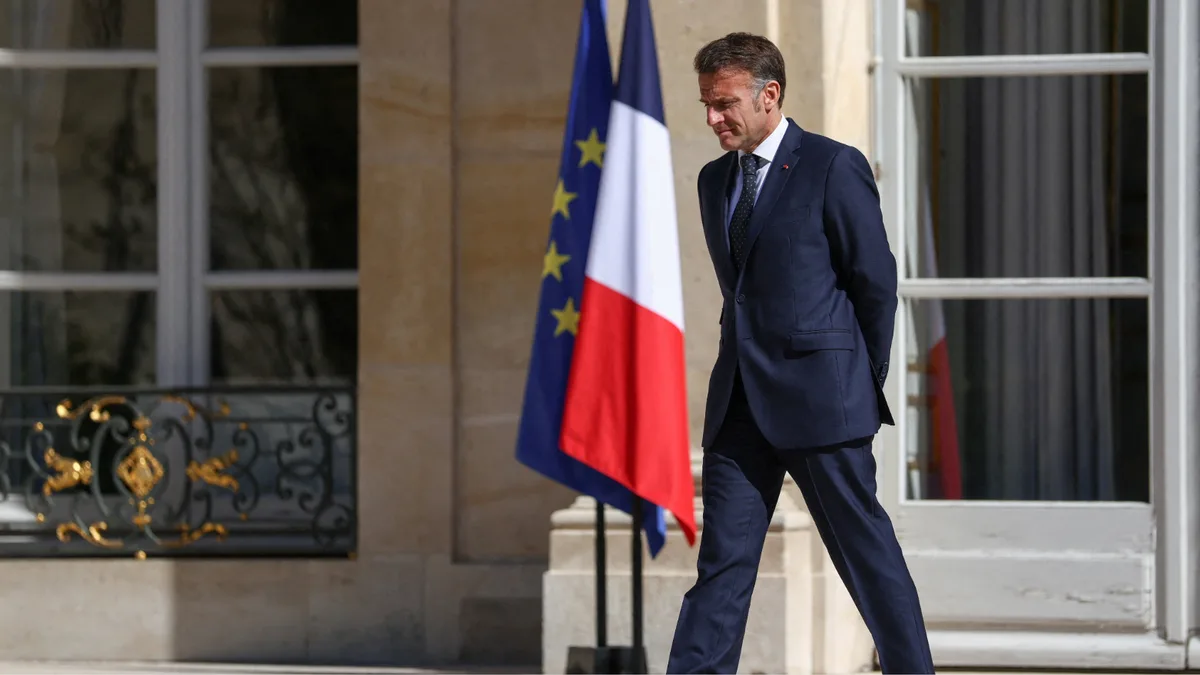
Almost a decade after Macron promised to overcome France's traditional left–right divide, the country finds itself increasingly pulled towards two opposing political visions. As the 2027 presidential election approaches, the political centre that brought Emmanuel Macron to power in 2017 is losing its grip, while the radical left and far right are gaining ground.
Between the radical left's promise of a transformed France and the far right's call to reclaim national sovereignty, the question is no longer simply who should govern, but what kind of country do the French want to choose?
When Emmanuel Macron founded his party En Marche! in April 2016, he presented it as an alternative to France's traditional political parties. Neither left nor right, his movement promised a combination of economic liberalism with social progressivism, and a strong commitment to European integration.
On paper, Macron’s policies seemed promising for France. But almost ten years later, that promise looks increasingly distant. So what happened?
Macronism has gradually unravelled, weakened by internal divisions, declining popularity, and now, the absence of a clear successor. Over his two terms, his reforms fuelled public discontent. Replacing the wealth tax (ISF) with a narrower tax on real estate wealth (IFI) reinforced perceptions that his policies favoured the wealthy, while his 2023 pension reform, raising the retirement age from 62 to 64, also sparked nationwide protests.
But the political turning point came in June 2024, when Macron dissolved the National Assembly following his party’s defeat in the European elections. This decision further exposed the fragility of his political project, leaving France with a fragmented parliament and no stable majority.
Today, that discontent has yet to subside. What began as protests over conditions in France’s education system has since developed into a wider national movement against the rising living costs and declining quality of public services.
With Macronism losing ground, two political movements are positioning themselves as alternatives: La France Insoumise (LFI), led by Jean-Luc Mélenchon, and the Rassemblement National (RN), led by Marine Le Pen and party president Jordan Bardella.
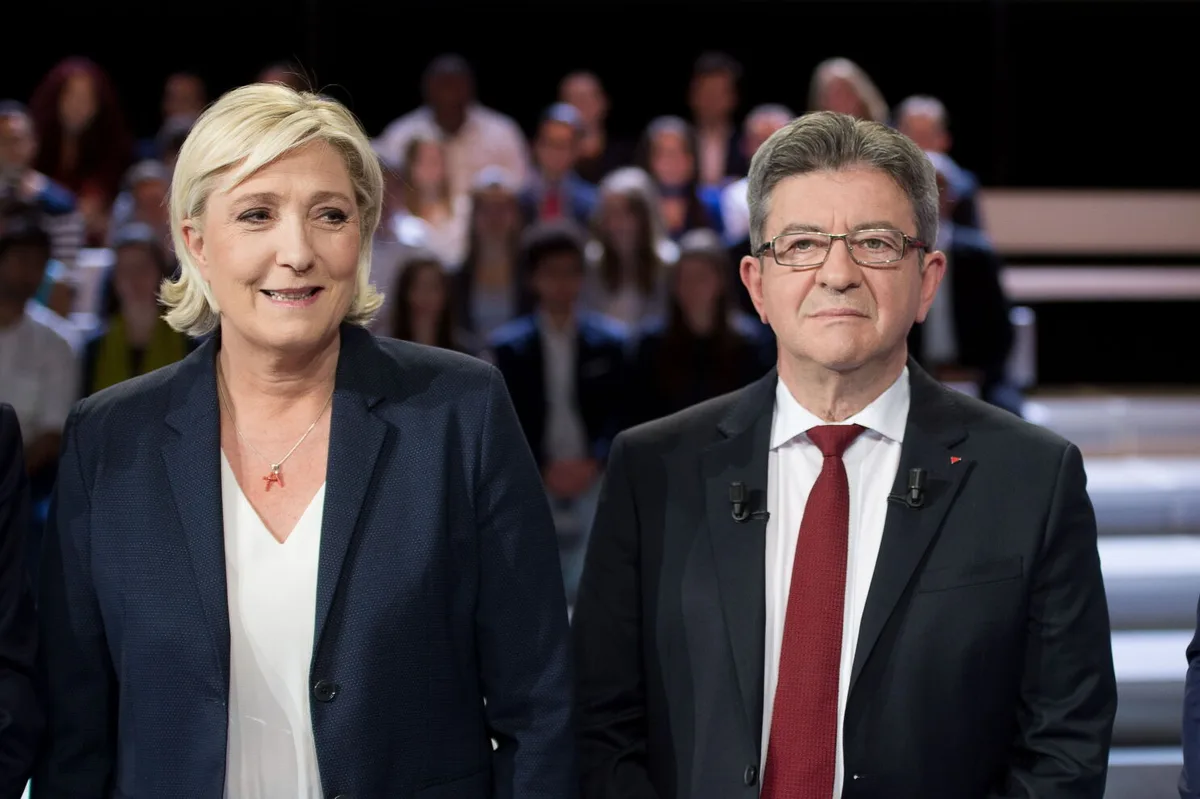
As Macron’s centrist project weakens, the far-right and far-left movements are increasingly competing to fill the space. Both parties present themselves as alternatives to the political establishment.
An average of first-round surveys on 5 November 2026 placed Marine Le Pen at 34.8% and Jean-Luc Mélenchon at 17.1%, making them the two highest-polling figures in the field, ahead of Édouard Philippe (14.3%) and Raphaël Glucksmann (12.9%).
But what exactly are they offering, and what kind of choices do they offer for France?
For Mélenchon, the answer begins with what he calls a “New France”. His recently published programme, L’Avenir en commun, presents itself as a response to two major challenges: the social emergency and what the party describes as a crisis of human civilisation, driven by climate change and the return of widespread war.
LFI, Mélonchon’s party, wants to move towards 100% renewable energy by 2060, phase out fossil fuels and nuclear power, and create 500,000 agricultural jobs. Its economic proposals are equally as ambitious: raising the net monthly minimum wage to €1,700, increasing taxes on wealthier households and restoring retirement at 60 for those with 40 years of contributions. In short, LFI wants a more interventionist state, one that redistributes wealth and takes a leading role in shaping the economy.
On the other side of the spectrum, the RN offers a very different vision, centering on national sovereignty, immigration restrictions and reducing public expenditure.
Le Pen has proposed €140 billion in net savings by 2032, alongside tax cuts of at least €30 billion. The party also advocates priorité nationale, which would give French citizens preferential access to certain benefits, and wants to reduce France’s contribution to the EU budget.
Despite their opposing ideologies, both movements are benefiting from the same sentiment: a growing desire for change and a rejection of the political status quo.
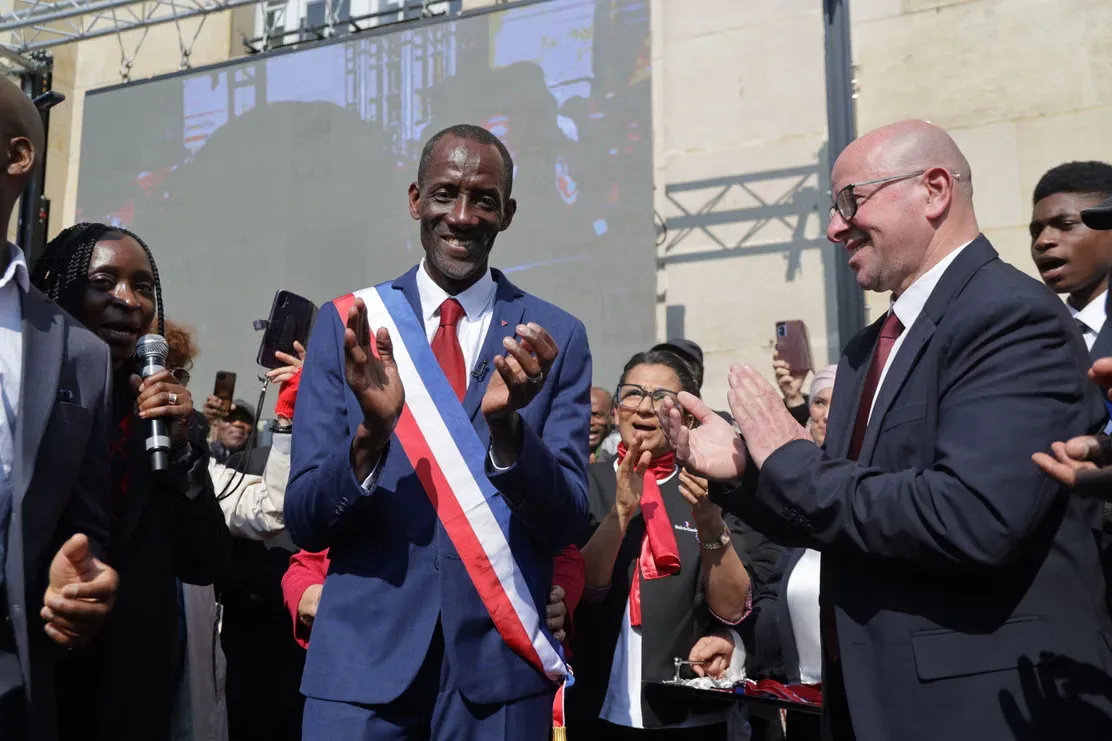
Campaign programmes are one thing; putting them into practice is another. So how have these parties performed when given the opportunity to govern?
The RN has an increasingly growing representation in local governments, particularly following the March 2026 municipal elections, which brought the party around 70 new mayors. However, its first decisions have not always matched its campaign promises.
An investigation by Le Monde found that almost all newly elected RN mayors had increased their own salaries, as well as cut funding for cultural organisations and taken action against trade unions.
This is exactly what happened with the newly elected RN mayor of Carcassonne, Christophe Barthès, which could offer an early indication of the party's priorities.
Meanwhile, LFI also had wins in the March 2026 municipal elections, winning in Saint-Denis under Bally Bagayoko and Roubaix under David Guiraud. These victories give the party an opportunity to put its policies into practice, although it is too early to assess its record in local government.
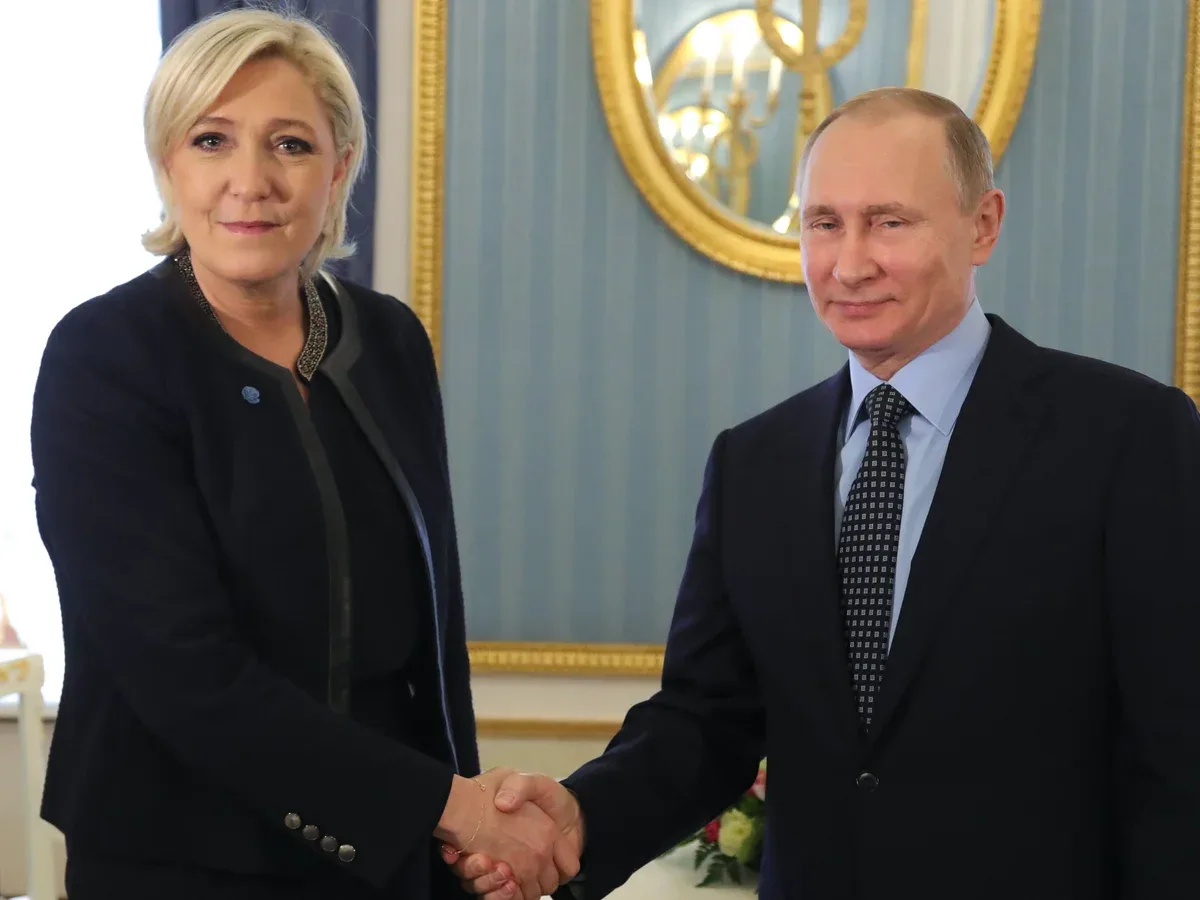
As one of the EU’s largest member states and a major diplomatic and military power, a change of government in France could have consequences for both European cooperation and international relations. Both the RN and LFI place national sovereignty at the centre of their foreign policy, but they have different ideas about what that should mean in practice.
For the RN, this means reducing the influence of European institutions and giving greater priority to national interests. Marine Le Pen has proposed cutting France’s contribution to the EU budget by more than €11 billion from 2027, a move that could weaken funding for several European policies. Her position on Ukraine also raises questions.
Marine Le Pen has historically maintained close political ties with Vladimir Putin, meeting him at the Kremlin in 2017 and repeatedly expressing support for closer relations with Moscow. According to Le Monde, RN representatives in the European Parliament also frequently opposed resolutions condemning Russian actions before the invasion of Ukraine in 2022.
Although Le Pen has allegedly since distanced herself from the Russian president, her party's historical relationship with Moscow continues to raise questions about its future approach to European security and support for Ukraine.
LFI also challenges the current direction of European integration, but from a different perspective. Mélenchon does not propose leaving the EU, but instead, he wants France to challenge or disregard European rules that obstruct his domestic programme, particularly on economic and environmental policy. He also advocates withdrawing France from NATO, first from its integrated military command and eventually from the organisation itself.
On Ukraine, LFI emphasises diplomacy, calling for a ceasefire, the withdrawal of Russian troops and negotiations for a lasting peace, while leaving its position on military assistance less clear.
The differences could have significant consequences for France’s relationships with its European partners. It will also determine how the country intends to position itself in an increasingly uncertain international order.
Ultimately, the choice France faces in 2027 is not simply who comes after Macron, but which vision of the country, and its future, voters are willing to choose.
SOURCES
BBC News. (2017, May 7). Emmanuel Macron: Who is France's new president? https://www.bbc.com/news/world-europe-39845905
Chastand, J.-B. (2026, October 8). Présidentielle 2027 : Les propositions radicales et les chiffres flous de Marine Le Pen sur le budget de l’Union européenne. Le Monde. https://www.lemonde.fr/politique/article/2026/10/08/presidentielle-2027-les-propositions-radicales-et-les-chiffres-flous-de-marine-le-pen-sur-le-budget-de-l-union-europeenne_6790175_823448.html
Chastand, J.-B., & Lesueur, C. (2026, September 22). Le RN prend ses distances avec la Russie sans clarifier sa position sur l’Ukraine : Un exercice d’équilibriste à l’approche de l’élection présidentielle de 2027. Le Monde. https://www.lemonde.fr/politique/article/2026/09/22/le-rn-prend-ses-distances-avec-la-russie-sans-clarifier-sa-position-sur-l-ukraine-un-exercice-d-equilibriste-a-l-approche-de-l-election-presidentielle-de-2027_6779933_823448.html
Davet, G., & Lhomme, F. (2026, September 30). From Macron’s original promise to the unraveling of an ideal. Le Monde. https://www.lemonde.fr/en/politics/article/2026/09/30/from-macron-s-original-promise-to-the-unraveling-of-an-ideal_6758119_5.html
Damgé, M., & Sénécat, A. (2017, May 7). Les points-clés du programme d’Emmanuel Macron. Le Monde. https://www.lemonde.fr/les-decodeurs/article/2017/05/07/les-points-cles-du-programme-d-emmanuel-macron_5123781_4355770.html
Geoffroy, R., & Vaudano, M. (2022, April 20). Quels sont les liens de Marine Le Pen avec la Russie de Vladimir Poutine ? Le Monde. https://www.lemonde.fr/les-decodeurs/article/2022/04/20/quels-sont-les-liens-de-marine-le-pen-avec-la-russie-de-vladimir-poutine_6122903_4355770.html
Guillou, C. (2026, May 10). Au Rassemblement national, les nouveaux maires ciblent l’Europe, la culture et les syndicats : « Ils y vont plus franchement ». Le Monde. https://www.lemonde.fr/politique/article/2026/05/10/au-rassemblement-national-les-nouveaux-maires-ciblent-l-europe-la-culture-et-les-syndicats-ils-y-vont-plus-franchement_6687664_823448.html
Landler, M., & Le Stradic, S. (2026, November 7). France’s fourth Saturday of protests. The New York Times. https://www.nytimes.com/2026/11/07/world/europe/france-fourth-saturday-protests.html
La France insoumise. (n.d.). Découvrir le programme : L’Avenir en commun. https://melenchon2027.fr/programme/decouvrir/
Sondage Présidentielle. (n.d.). Sondage Présidentielle. https://sondage-presidentielle.fr/en