France Is Not Burning. It Is Arguing.
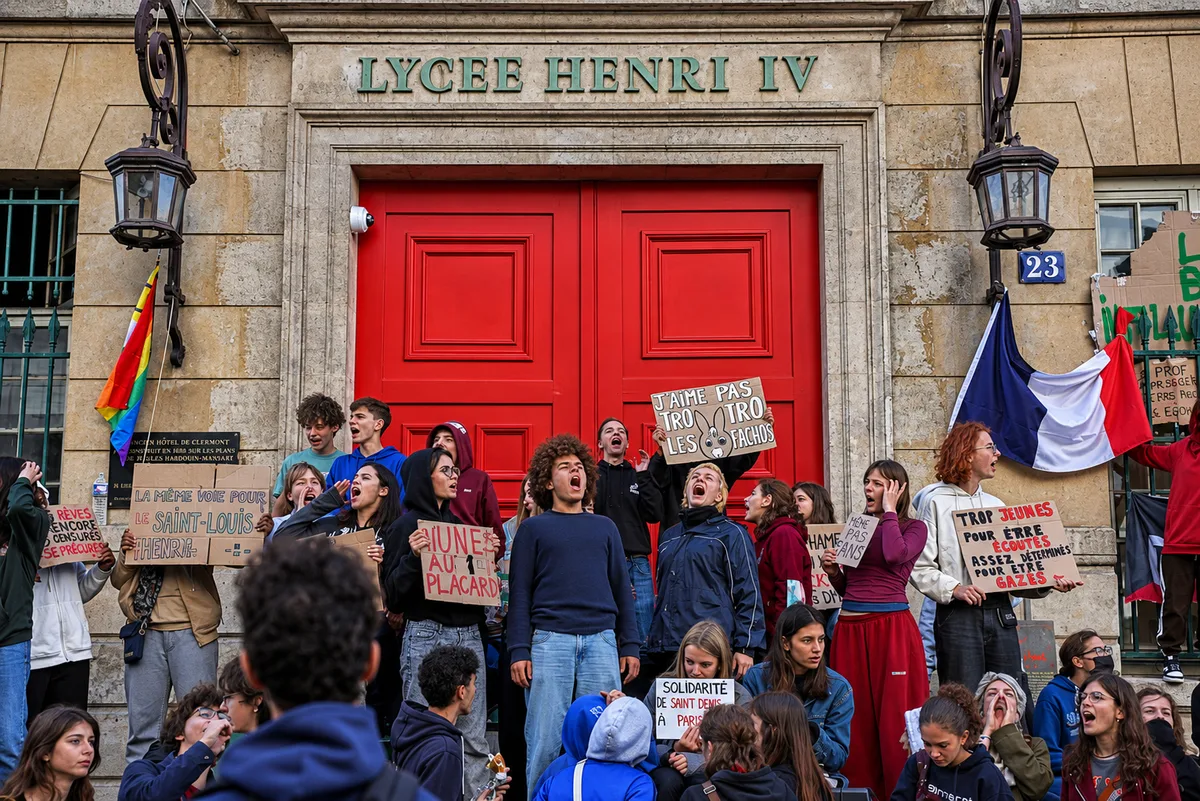
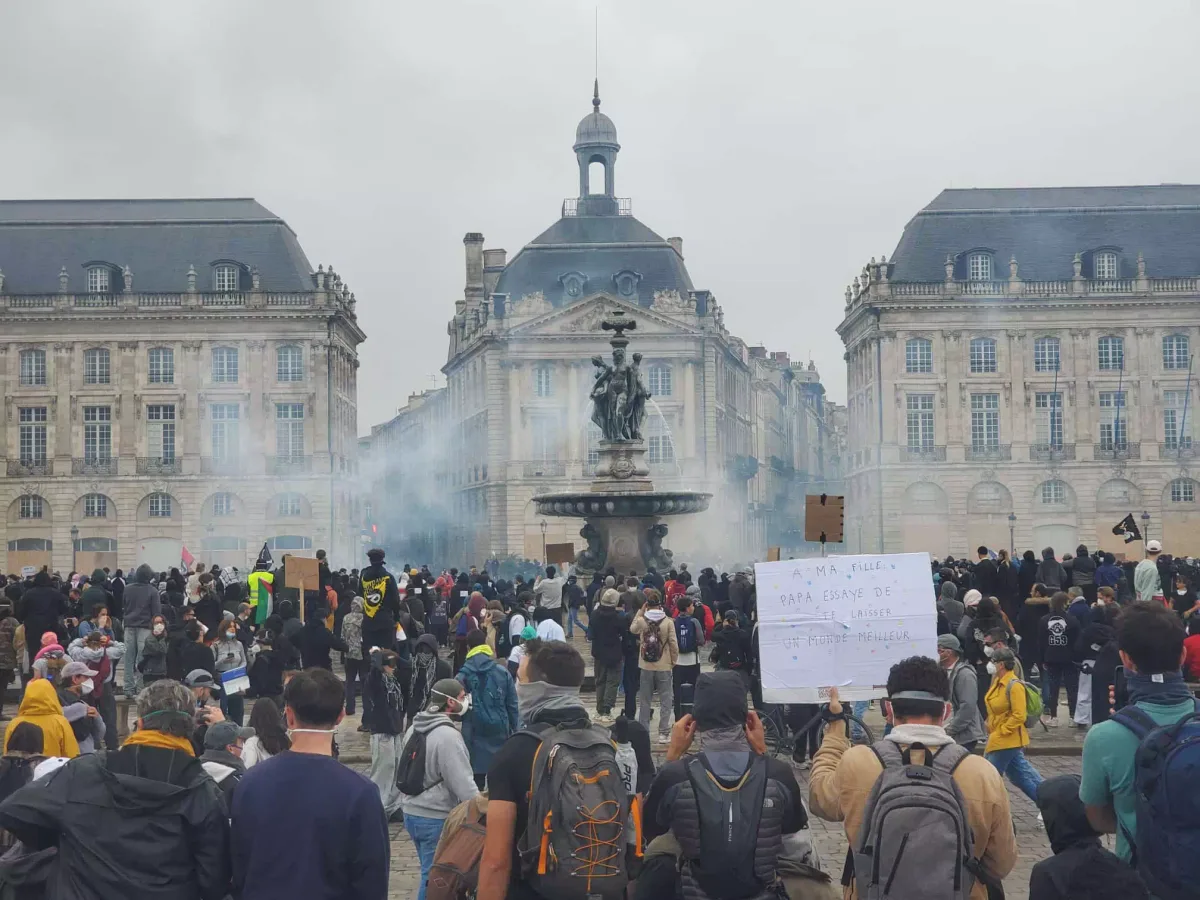
Through the international press, France looks like it is burning: the town hall of Limoges collapsing in flames, riot police in tear gas outside Paris high schools, curfews, looting, and thousands of arrests.
Those images are real, but on their own they tell a different story.
I myself did most of my schooling in the French system, though not in France: at the Lycée Français de Madrid, I sat the same baccalaureate as the pupils now blockading their schools, and went through the same Parcoursup stress.
Today I study political science at the University of Amsterdam, and every evening my phone shows me two Frances: the one burning on international news, and the one my friends describe and show me through messages, pictures, and videos. However, only one of them is getting airtime.
To get past the headline, I interviewed three students mobilised at very different institutions: a left-wing campus in the Paris suburbs, a famously conservative law faculty in the Latin Quarter, and an elite grande école in Brittany.
What they describe is not a mob. It is a generation arguing, with the state, its institutions and itself, about what French schools owe their pupils.
The movement did not begin with a riot. It began on the 21st of September at the Lycée Antoine-de-Saint-Exupéry in Creteil, a working-class suburb of Paris, days after its teachers went on strike over staff shortages.
Pupils walked out because they felt abandoned: posts left vacant, classes of 32 to 36 students, rooms without enough tables or chairs.
The grievances that spread from there are mundane, and that is the point. Teachers who are never replaced; one pupil reportedly went seven months without a French teacher in the year of her French Baccalauréat exam.
School days run from 8 am to 6 pm, with classes on Saturdays. Temporary classrooms that freeze in winter and reach 40°C in heatwaves. And Parcoursup, the university-admissions platform that turns the final year of school into a year of anxiety.
When the Union Syndicale Lycéenne issued its national call, it named four precise demands and explicitly asked protesters to stay peaceful.
However, foreign coverage has mainly focused on Paris and its “banlieues” (the suburban areas surrounding French cities, often associated with working-class and immigrant communities), even though this was a national movement. On a single day in early October, the education ministry counted more than 1200 of France’s roughly 3700 Lycées disrupted.
That includes around 700 pupils marching through Saint-Brieuc in Brittany, around 950 of the 5000 lycée pupils in the Alpes-de-Haute-Provence, and blockades stretching from Pornic to Saint-Nazaire, from Quimper to Annecy.
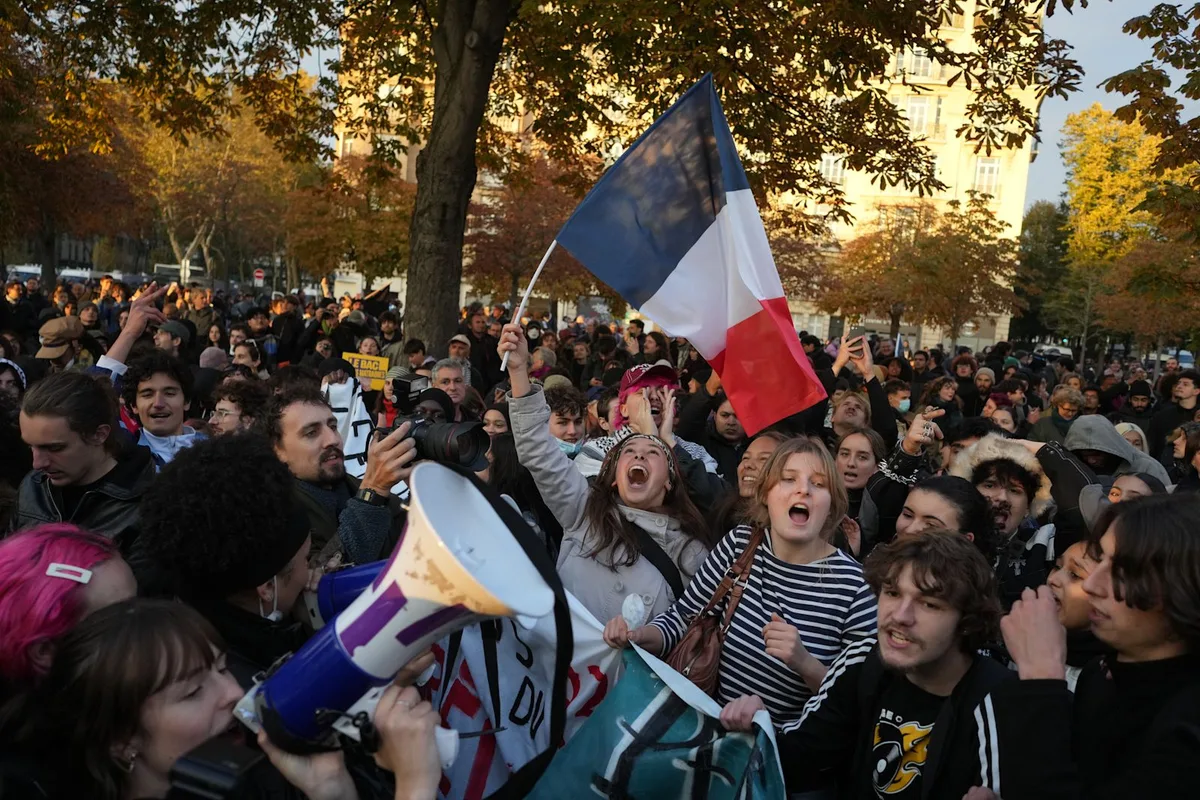
The crisis of French public education is not a ‘banlieue problem’. It is a national one. And the pupils were not alone. Teachers’ unions called strikes in support. The FCPE, France’s largest parents’ federation, recognised their demands as legitimate and called for dialogue rather than escalation.
Every major labour confederation joined, as did the small farmers’ union, the Confédération Paysanne. A poll for Le Figaro found that 62% of French people considered the movement justified. Even on the 17th of October, the authorities acknowledged that most of roughly 550,000 demonstrators had marched peacefully.
In a country often described as fractured, a sixteen-year-old’s complaint about freezing classrooms became a cause that a farmer, a rail worker and a primary-school teacher all chose to carry.
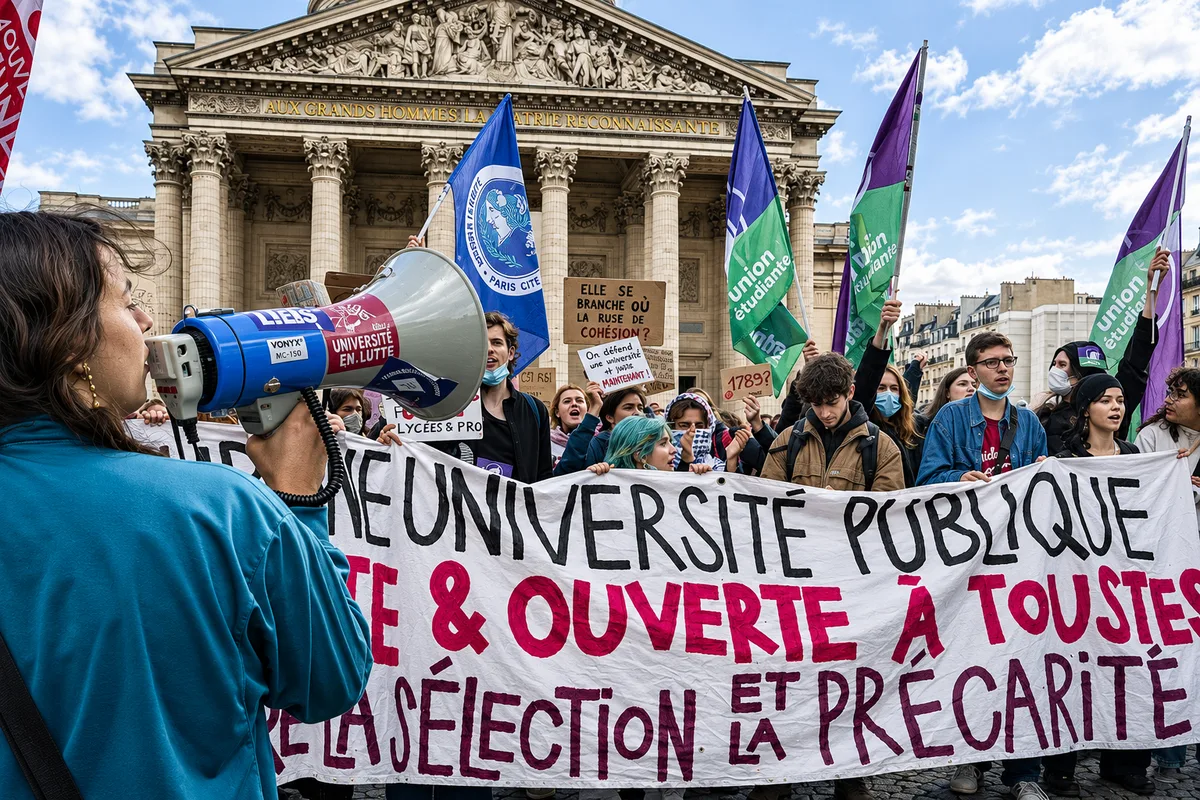
At Paris Nanterre, where May 68’ began, decisions are taken in an AG autonome, a general assembly that no union runs, organised through open commissions that anyone can join. Only a communication commission may take photos inside the occupied building, for safety reasons.
Students there already count the occupation, which they call an ‘open, self-managed university’, as a victory. Their non-negotiable is clear: exams must be adapted so that no one is penalised for the movement’s existence.
At Pantheon-Assas, a law faculty known for being apolitical at best and right-leaning at worst, the few decisions taken were voted on by a show of hands and coordinated over online group chats.
The Student I interviewed refused to reduce the demands to one sentence.
He listed school days from 8 am to 5 pm from middle school onwards, chronic teacher absence in disadvantaged areas, and a Parcoursup that rewards the big Parisian lycées with better formation and preparation. Victory, for them, he said, means rethinking the whole system, as Nordic countries have, for example, teaching fewer hours and getting better results.
The student at the École normale supérieure in Rennes has a more nuanced approach. He calls the demands ‘necessary social claims’ and wants deep reform of a system he sees as failing on several fronts. He refuses to say what he would negotiate, because he represents no one but himself, and credits his own dean with genuinely trying to build dialogue.
Three campuses, three cultures, one diagnosis.
All three told me that students who are not mobilising still support the movement. All three described peaceful demonstrations and a harsh police response; the Rennes student said he had been tear-gassed and kettled several times ‘with no reason given’.
They aren’t naive about politics. The Assas student watched La France Insoumise (LFI) put itself at the head of their blockade: ‘a bit of recuperation’ they admitted, but one that gave the movement more weight. The Rennes student was blunter: every party, to different degrees, is instrumentalising the situation.
The most under-reported fact about this movement is that it is actually accomplishing things.
In October, the government sent more than 3000 replacement teachers into the hardest-hit lycées, dropped plans for tuition fees on some technical and preparatory programmes, and opened a consultation that drew over 100,000 contributions from nearly 3,000 high schools.
Then on October 26, Prime Minister Sébastien Lecornu announced a package that would have been unthinkable in August. Parcoursup will be reformed from 2027 and replaced in 2028.
Secondary school classes will be capped at 28 pupils from 2027 in the less advantaged half of lycées and everywhere from 2028. Higher education gets 15,000 extra places, and 500 lycées will be helped to cope with heat.
Is it enough? The movement says no, and it has a point.
Student and pupil unions are asking for ten emergency measures worth €10 billion, from a nurse and psychologist for every 500 pupils to an end to selection by algorithm, and call the offer crumbs. A pupil marching in Lyon pointed out that her class has 37 students and that most of the promises fall due in 2028, when this government will be gone. So the streets filled again on the 5th and 10th of November.
Still, a minister who, at the end of August, called unreplaced teachers a ‘marginal’ phenomenon has since promised to scrap Parcoursup.
However, none of this excuses what went wrong.
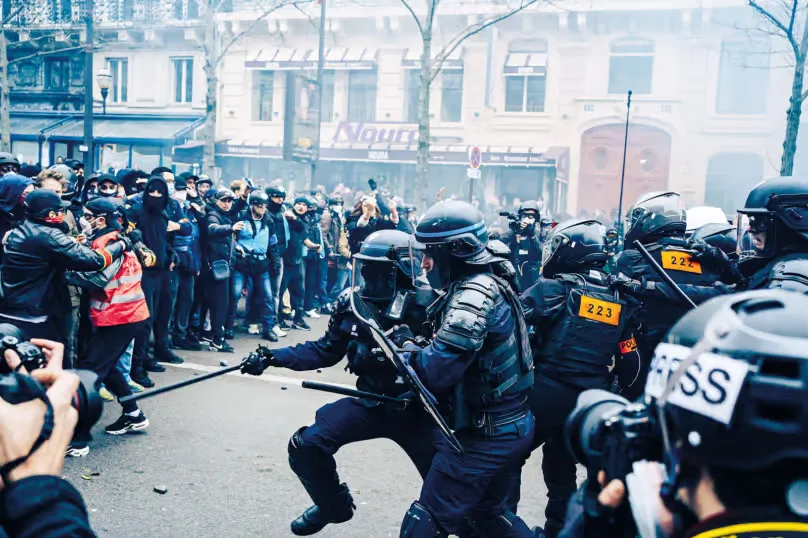
Two dozen schools were burned or ransacked in the first two weeks alone. Headteachers were hit by fireworks, assaulted, firefighters were attacked, and Limoges saw its town hall burn down. Several school heads confirm the masked groups setting fires were not pupils at all, but a minority were.
The state’s response deserves just as much attention. More than 6,800 people have been taken into custody, most of them minors. A sixteen-year-old in Tours lost the use of an eye, a fifteen-year-old in Lens lost a hand, and a fourteen-year-old had his jaw shattered.
Amnesty International, Human Rights Watch and the UN Human Rights Office have all raised concerns about the disproportionate use of force against children, while the Interior Minister holds that the response was proportionate in almost every case.
The students themselves disagree on where the line sits.
The Assas student argued that no action is counterproductive when it answers what they see as the institutional violence of the system. The Nanterre student defended spontaneous action, even against the assembly’s vote. The Rennes student drew the line at proportionality.
It is an uncomfortable debate, but a real one. It should not let a few burning gates drown out the actual demands of hundreds of thousands of pupils.
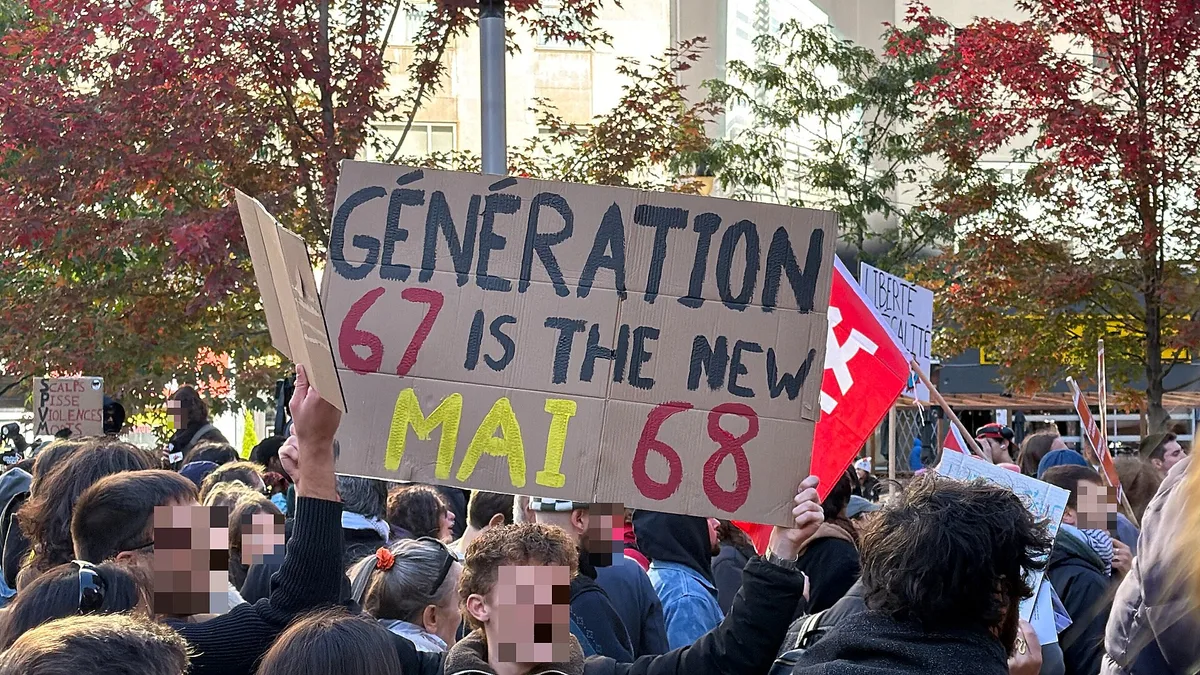
But the most striking thing about this movement is that it did not stay French. Within weeks, pupils were blockading schools in Liège, Brussels and Charleroi. Italian students marched in Milan, Rome and Bari against crumbling buildings, Greek students pitched tents in Syntagma Square over the cost of student housing, and pupils in Tirana took their anger to their own education ministry.
Each movement has its own causes. But the spark, and the method, came from France.
In May 1968, the revolt at Nanterre became the emblem of student uprisings across the world. France has never had a monopoly on revolt, but it has a habit of setting the example.
Myself being both French and Spanish, I have always looked at France from one step away: close enough to feel it, far enough to see it as a whole.
From there, what I see this autumn is not a country falling apart, but a generation refusing to accept that things are simply the way they are. These pupils read budgets, wrote demands, and forced the government to shift its priorities, thus rewriting its plans.
Whatever one thinks of their methods, they have reminded the rest of Europe, Spain included, that democracy is not only something you inherit, but something you practice.
As the economist Amartya Sen argued, “A country does not have to be deemed fit for democracy; rather it has to become fit through democracy”.
SOURCES
Author's interviews. 2026. Interviews with three students mobilised at Université Paris Nanterre, Université Paris-Panthéon-Assas and École normale supérieure de Rennes, November. Names withheld at the interviewees' request.
Canard, Erwin. 2026. “Grève du 5 novembre : professeurs et lycéens ont manifesté nombreux malgré les annonces du gouvernement.” Le Café pédagogique, November 6. https://www.cafepedagogique.net/2026/11/06/greve-du-5-novembre-professeurs-et-lyceens-ont-manifeste-nombreux-malgre-les-annonces-du-gouvernement/
de Puget, Amélie, and Marine Ilario. 2026. “Parcoursup, bâti, enseignants, bourses : les réponses du gouvernement à la mobilisation lycéenne.” L'Etudiant, October 26. https://www.letudiant.fr/lycee/parcoursup-bati-enseignants-bourses-les-pistes-du-gouvernement-pour-repondre-a-la-mobilisation-lyceenne.html
Euronews. 2026. “Students Block High Schools in France to Press for Reform ahead of General Strike.” Euronews, November 3. https://www.euronews.com/2026/11/03/students-block-high-schools-in-france-to-press-for-reform-ahead-of-general-strike
FCPE. 2026. “Les revendications de la jeunesse doivent être entendues.” Fédération des conseils de parents d'élèves, November 4. https://www.fcpe.asso.fr/actualite/les-revendications-de-la-jeunesse-doivent-etre-entendues
Gouvernement de la République française. 2026. “Parcoursup, classes, bourses : ce qui change pour les lycéens et les étudiants.” info.gouv.fr, October. https://www.info.gouv.fr/actualite/lycees-cinq-chantiers-pour-ameliorer-les-conditions-d-apprentissage-et-la-vie-scolaire
LCP. 2026. “‘144 lycées en situation très problématique’ : Édouard Geffray annonce le déploiement de 3000 professeurs dès vendredi.” LCP, October 8. https://lcp.fr/actualites/144-lycees-en-situation-tres-problematique-edouard-geffray-annonce-le-deploiement-de
Public Sénat. 2026. “Blocus des lycées : ‘une fois sorti du tube, le dentifrice ne rentre plus’.” Public Sénat. https://www.publicsenat.fr/actualites/politique/blocus-des-lycees-une-fois-sorti-du-tube-le-dentifrice-ne-rentre-plus
Sen, Amartya. 1999. “Democracy as a Universal Value.” Journal of Democracy 10 (3):3-17. https://muse.jhu.edu/article/16979
SNES-FSU. 2026. “Annonces sur le remplacement : un leurre de plus !” SNES-FSU, October 12.https://www.snes.edu/article/annonces-sur-le-remplacement-un-leurre-de-plus/
Solari, Estelle. 2026. “Comment Mai 68 a basculé du mouvement étudiant à la grève générale.” Sud Radio. https://www.sudradio.fr/societe/comment-mai-68-a-bascule-du-mouvement-etudiant-a-la-greve-generale
Union Étudiante. 2026. “10 mesures d'urgence pour la jeunesse.” L'Union Étudiante. https://union-etudiante.fr/10mesures/
Uzan, Rafaela. 2026. “What's Behind the Protests and Riots in France, and What Comes Next.” Council on Foreign Relations, October 28. https://www.cfr.org/articles/whats-behind-the-protests-and-riots-in-france-and-what-comes-next