The Populism of Anti-Populism
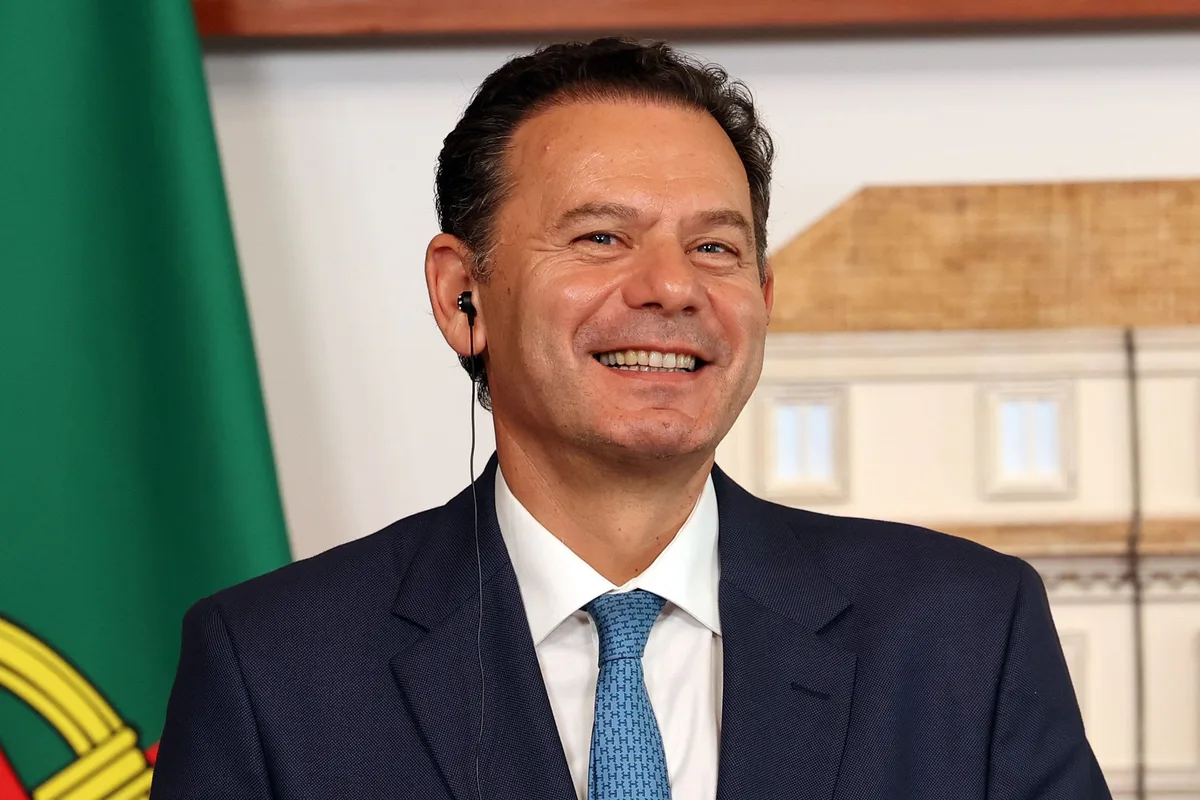
The question of what populism is has been asked a million times over in academia.
The truth is, there is no cookie-cutter answer.
In a book written by Ernesto Laclau, “On Populist Reason”, philosophical undertones are used to explain how populism develops and the reason it works.
Laclau makes it well known throughout his book that the ambiguity of “populism” actually awards it a lot of conceptual value.
On the notion of a whole, Laclau states that populism is not just mere rhetoric. Indeed, viewing any political phenomenon as mere rhetoric would be reductionist because the rhetoric would not —in and of itself— work in a vacuum. There would need to be a status quo viewed negatively by a large group of people for some sort of demagogue to be able to sway large swaths of their country’s population.
Often, this negative status quo is materialized by political entrepreneurs through discourse, images, and exclusion.
That is where the rhetorical aspect of populism often outshines every other facet of the purposefully vague concept.
As will be explained in this article, the conceptual ambiguity of populism allows it to be applied to both right-wing and left-wing politics, to rich and to poor societies, to the educated and undereducated alike.
In a way, it supersedes partisan squabbles and works like a tool that can be used under the right conditions.
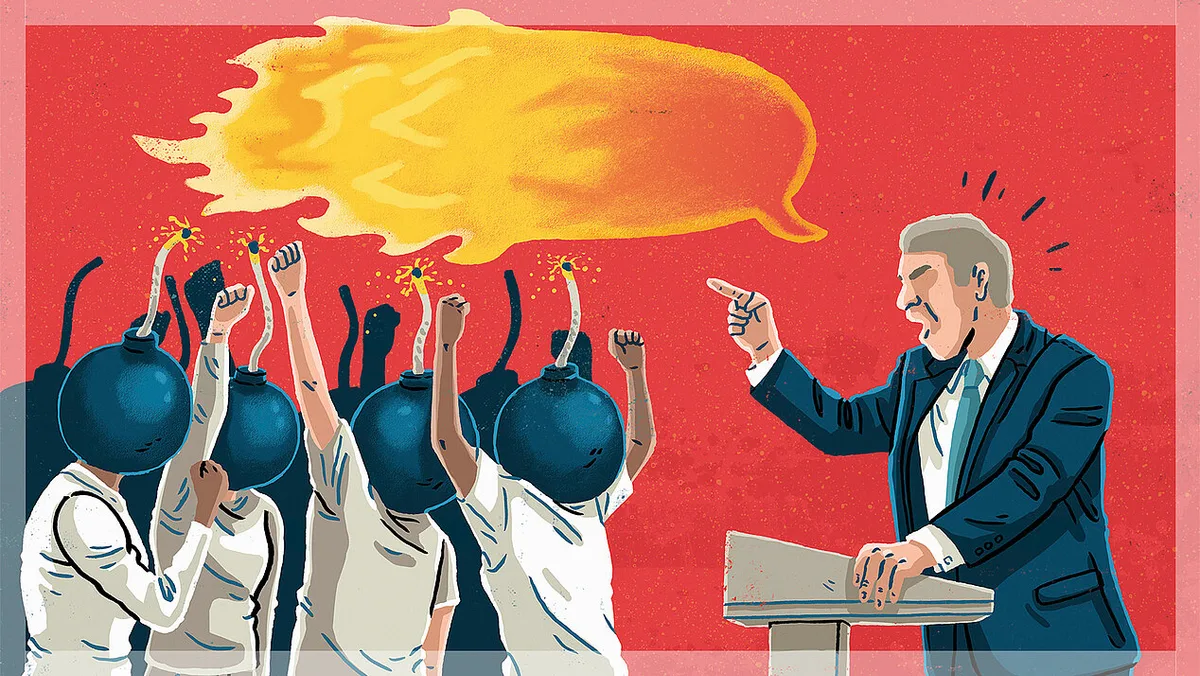
It is precisely the heterogeneous nature of societies that stands in the way of populism.
Laclau states that political entrepreneurs can circumvent this conundrum by drawing antagonistic frontiers between the population, creating deep cleavages that separate an in-group from an out-group.
To do this, the populist in question would use two key mechanisms. Underlying these two mechanisms is discourse. Laclau discusses discourse through a philosophical lens.
He states that things get meaning through relations with one another and that meaning does not exist by itself. Take, for example, a traffic light where green only means go due to the existence of red, which means stop. Yellow stands as a midpoint between the two; it doesn’t mean red or green, it just means get ready because one is about to travel to another.
This logic also applies to people in that a human being is a human being regardless of ethnicity, race, education, vocation, or class. Because of this simple fact, Laclau states that it is nigh impossible to find the “edge” of a whole.
Imagine trying to point to different things in your room, explain them/their function as objects in relation to other objects all while trying to find an outlier that should exist outside your room. The exercise would be pointless. The edge of the whole and what comes from outside the whole is constructed —a lot of the time artificially, that is, convincing people of other people as the source of their problems— through exclusion. The creation of an out-group that is subsequently scapegoated through words, imagery —the aforementioned discourse— and actions.
Secondly, equivalence denotes the process of homogenizing the previously discussed heterogeneous public. The mechanism behind this is very simple and follows widely regarded psychological logic.
Against the excluded group, everyone becomes alike. Additionally, by presenting everyone’s concerns as equal, a political entrepreneur can avoid making any commitments to any specific issue, broadening their supporter base in what can be considered catch-all political doctrines.
The only discrepancy with this is that eventually, differences will start to take shape. Two self-interested individuals with completely different backgrounds and different views on what a whole/nation should look like will eventually collide, and the populist’s supporter base will start to splinter.
It goes without saying that the optimal course of action would be to get their supporters angry about something else. This could be an explanation as to why news cycles in politically affiliated news agencies remain short.
At the end of this entire process lies a hegemon. An individual or collective that claims to stand for and represent the whole. This is obviously seldom the case.
Obtaining a monopoly on the perception that you represent the whole is what garners you legitimacy. In Europe, there is no shortage of perceived legitimacy for radical populist leaders.
Research shows that since Brexit, right-wing populism —despite populism being an impartial phenomenon devoid of being on the left-right spectrum— has been on the rise in the EU.
Many within academia and in the general populace of these countries attribute their misfortune to being led astray by a corrupt elite or an unresponsive bureaucracy. Couple this with the exclusion practices and scapegoating, and what you have is a house rather than a cleavage or wall.
Politicians that promise to protect you from the corrupt elite punching down at you — the roof of the house— and whoever else they claim is causing you problems —the walls of the house, usually other disenfranchised members of the population such as immigrants or racial minorities— encapsulating you in a fortress of comfort and blame.
Once this has happened, what Laclau calls empty signifiers take hold. These are words/ symbols —remember discourse— that rally people and they achieve this by purposefully being vague and stretched thin to the extent they could mean anything.
Words like “freedom” often evoke a sentimental reaction from supporters, but in the end, what does it mean? Freedom from what?
An oligarch would tell you it means freedom from progressive taxation, while the layman would tell you it means freedom from the bureaucratic overreach that supports the oligarch.
This illustrates further why populism is able to transcend class and left-right spectrums. We see now Laclau’s repeated mention of the intrinsic value of ambiguity awarded to populism and the instrumental potential the vagueness has.
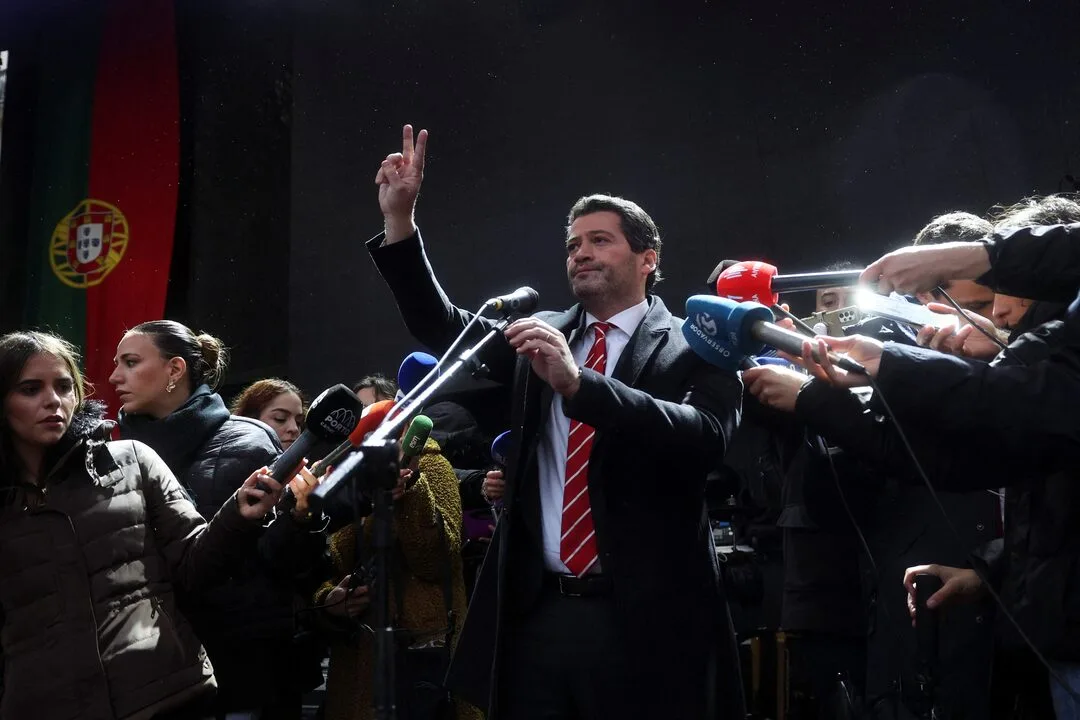
In the following half of the article, we will take a look at the previous election manifestos of two of the most prominent political parties that are currently in power in Portugal.
Regardless, this ambiguity is what allows parties like Portugal’s PSD and CDS-PP to thrive. The PSD, despite its name, is not a social democratic party. Instead, it behaves far more like a center-right party espousing the virtues of liberal-conservatism.
It is a pro-market political party with aims to gradually reform Portugal, citing the golden age of socio-economic growth as 20 years prior. In its 2022 election/campaign manifesto, in a section titled —rough translation— “The Reason for Our Country’s Backwardness”, it lists:
Unsustainable income tax for personal and corporate entities.
High external debt, both public and private.
Weak links between universities and R+D companies, weakening innovation. - State overreach in society and the economy.
Public sector employment continuing to grow rapidly along with personnel expenses (hinting at corruption and nepotism) while the quality of public services decreases.
The worsening of the unprepared national health service (SNS) that was crippled entirely by the pandemic. The document also underlines the overall lack of quality.
Despite a growth in spending towards secondary education, there is a critical shortfall of teachers in schools in some teaching groups. Also cites the Ministry of Education and its inability to adequately address day-to-day problems.
These are issues that encapsulate a large variety of people. The document even addresses inequality gaps and lack of wealth redistribution. Critically, however, the document also invokes a stance against populism itself.
On the surface, the PSD’s 2022 manifesto is the least populist document imaginable. It states that there is “no such thing as good or bad populism” and describes populism as the invocation of a “people” mobilized against democratic institutions.
That is almost exactly Laclau’s own definition, just with a negative connotation attached. It even admits that populism thrives where elites have ceased to value their social base of support.
The truth is, the party fights populism with populism’s own tools. The manifesto opens with a whole that has failed, a “Portugal adrift, without purpose or clear direction”. It then draws a frontier. On one side stands “the Portuguese people”, a phrase repeated over thirty times.
On the other side stand “oligarchies”, “clientelism”, “kinship” and “certain financial elites”. Against these, the teacher, the young emigrant and the patient on a surgery waiting list all become alike.
“Portugal first”, which the party insists is not merely a slogan. It is, however, an empty signifier and a particular party claiming to stand above “any interest, be it partisan, corporate, economic, cultural or familial” or, in layman’s terms, a hegemon.
Ironically, the same document condemns the proliferation of empty concepts while leaning on “reform”, “trust” and “the national interest” consistently throughout.
The CDS-PP is a party that sits farther right than the PSD. It describes itself as a Christian and conservative entity. It is also a member of the ruling coalition in Portugal, the “Democratic Alliance”.
It is also far less subtle than the PSD. It declares that the political right protects, liberates, and fights. It also names an enemy in its 2022 election manifesto: a state hijacked by the political and intellectual left and kept alive by socialist nepotism.
It also speaks about the countryside and the need for farmers to be protected from legislation and bureaucratic overreach from people who do not know how the countryside works.
Does any of this sound familiar yet? In essence, this is drawing an antagonistic frontier —or a wall— between the left and the right, as well as between the farmer and the state.
The CDS-PP also makes an effort to discredit things such as political correctness and gender ideology as things which have been imposed upon them from above. In the case of the CDS-PP and the PSD, the antagonistic frontiers follow similar trends as other European countries where the right is once again on the rise. The anger is aimed at elites and ineffective governments. In the case of the CDS-PP, the roof of the house is politically charged and aimed at the left, giving it thin walls and whispers of an antagonistic frontier ready to materialize.
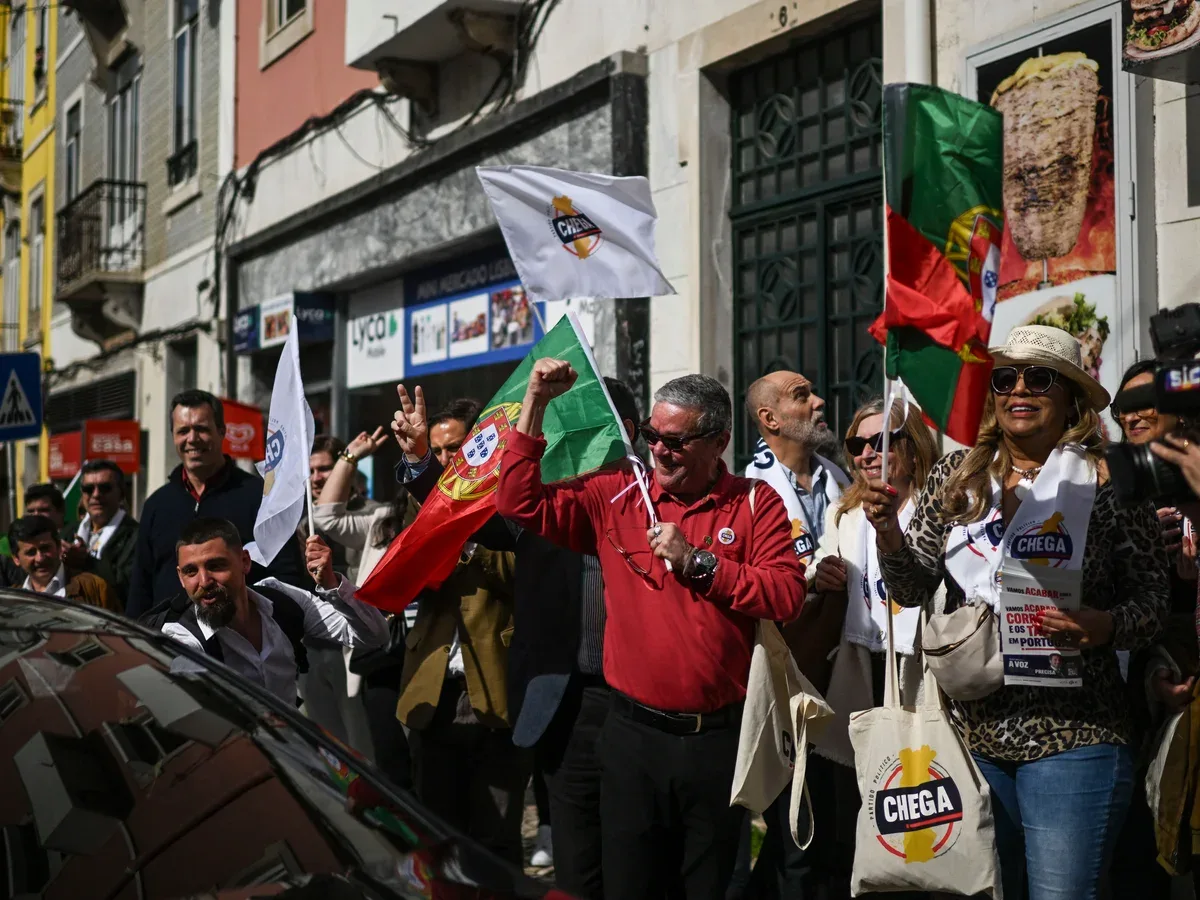
However, as of this date, any outwardly exclusive rhetoric towards racial minorities remains relatively muted in Portuguese politics except for the “Chega” —Portuguese for “Enough”— party, which espouses anti-Romani sentiments.
If even those who condemn populism rely on its methods, perhaps the real question is not which politicians are populists, but how easily populism can disguise itself as ordinary politics.
After all, the line between representing the people and claiming to be the only voice of the people is often thinner than we think.
SOURCES
CDS–Partido Popular. 2022. Compromisso Eleitoral: Legislativas 2022 [Electoral Commitment: Legislative Elections 2022]. Lisbon: CDS–PP.
Laclau, Ernesto. 2005. On Populist Reason. London: Verso.
Partido Social Democrata. 2022. Novos Horizontes para Portugal: Programa Eleitoral, Legislativas 2022 [New Horizons for Portugal: Electoral Programme, Legislative Elections 2022]. Lisbon: PSD.
Wike, Richard, Jonathan Schulman, Jordan Lippert, Sofia Hernandez Ramones, Andrew Prozorovsky, Chris Baronavski, John Carlo Mandapat, and Janakee Chavda. 2026. “Right Wing Populism in the Decade Since Brexit.” Pew Research Center, May 28.
The Guardian. 2025. “Portugal’s Far-Right Chega Party Ordered to Take Down Posters Targeting Roma People.” The Guardian, December 22.