A Nation Whose People Are Decisionmakers, Not Just Voters
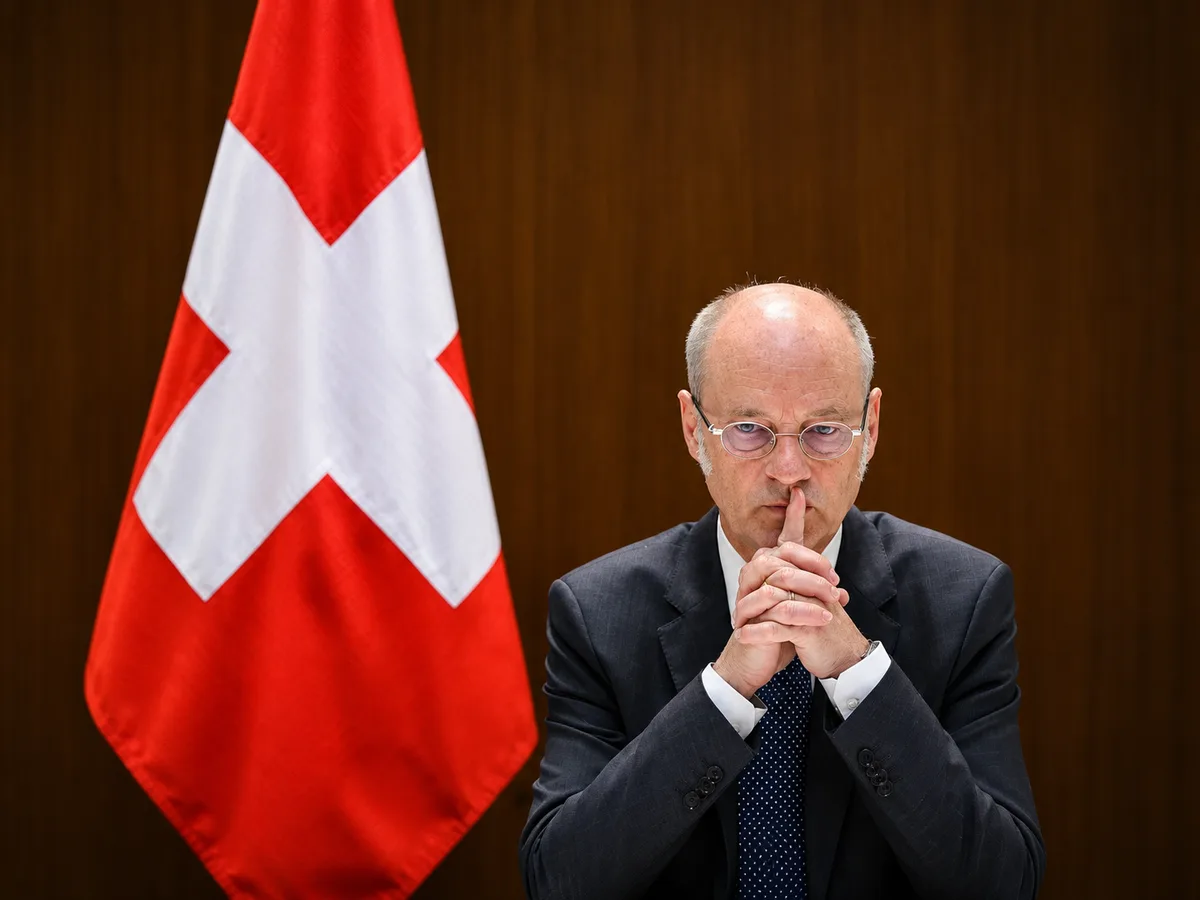
If you were offered six weeks of paid holiday a year, would you say yes? Most people wouldn’t even hesitate. But in March 2012, when Swiss voters were offered exactly that, they said no. Not narrowly, either: 66.5% voted against it.
Four years later, they were asked whether every resident should receive an unconditional basic income. Almost 77% said no.
To an outsider, this looks bizarre. Who turns down free time?
But to understand why, you have to understand something unusual about Switzerland: it is a country where ordinary citizens make the final call on national laws several times a year.
And once you give people that many choices, psychology starts to matter just as much as politics. How does it feel to have that kind of power? Does it make people happier? And why, when given the chance to change things, do the Swiss so often choose to keep things as they are?
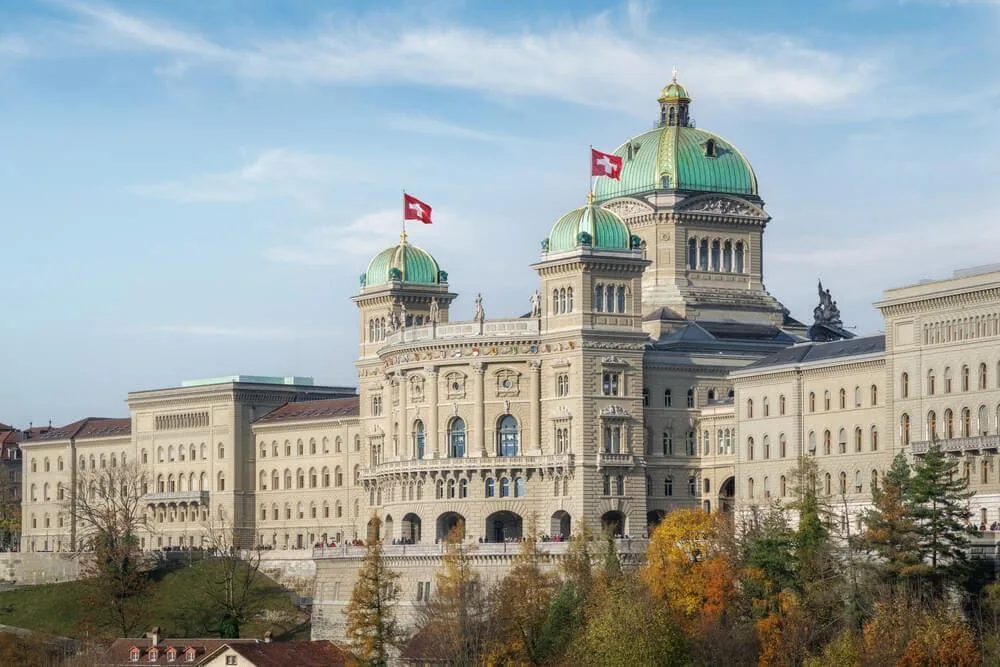
Most democracies ask their citizens one question every few years: who should represent you? Switzerland asks them that too, but it also asks them about the laws themselves, and almost nothing is off the table.
In 2002, Swiss voters chose to join the United Nations with 54.6% in favour. Only 16 years later, 75.7% had rejected the idea. In 2023, 59.1% voted for a climate law committing the country to net-zero emissions by 2050. They have even voted on whether farmers should get extra payments for letting their cows keep their horns (narrowly no, in 2018).
Since the Swiss constitution was written in 1848, voters have had the final say on national issues more than 600 times; on average, three to four times a year.
There are two main tools that make this possible.
The first is the popular initiative. Any group of citizens that collects 100,000 valid signatures within 18 months can force a national vote on changing the constitution.
The second is the optional referendum. If 50,000 people sign within 100 days, any new law passed by Parliament must be put to the people before it can take effect.
For an initiative to pass, it needs a “double majority”: a majority of voters nationwide and a majority of the cantons, Switzerland's 26 states. This means a proposal has to win over both the population and the regions.
The result is a system where politicians propose, but citizens decide. And that raises a question psychologists have studied for decades: what does it do to people to have this much choice?
In a famous experiment, psychologists Sheena Iyengar and Mark Lepper tested exactly this. They set up a jam-tasting stand in a supermarket, sometimes offering 24 flavours and sometimes just 6.
The bigger display attracted more curious shoppers, but far fewer of them actually bought anything: only 3% with 24 jams, compared with 30% with 6.
Their conclusion: too many options can make people freeze instead of decide. This became known as choice overload.
Psychologist Barry Schwartz took the idea one step further. In his 2004 book The Paradox of Choice, he argued that more options do not just make deciding harder. Even when people do choose, a long list of alternatives can leave them more anxious and less satisfied with what they picked.
If that were the whole story, Switzerland should be a nation of exhausted, unhappy voters. But the evidence is less clear-cut. In 2010, Benjamin Scheibehenne and colleagues combined the results of 50 choice-overload experiments and found that, on average, the number of options made very little difference. Choice overload happens in some situations, but it is not a universal rule.
So the research leaves an open question, and Switzerland is the perfect place to test it: does constant choice wear people down, or lift them up?
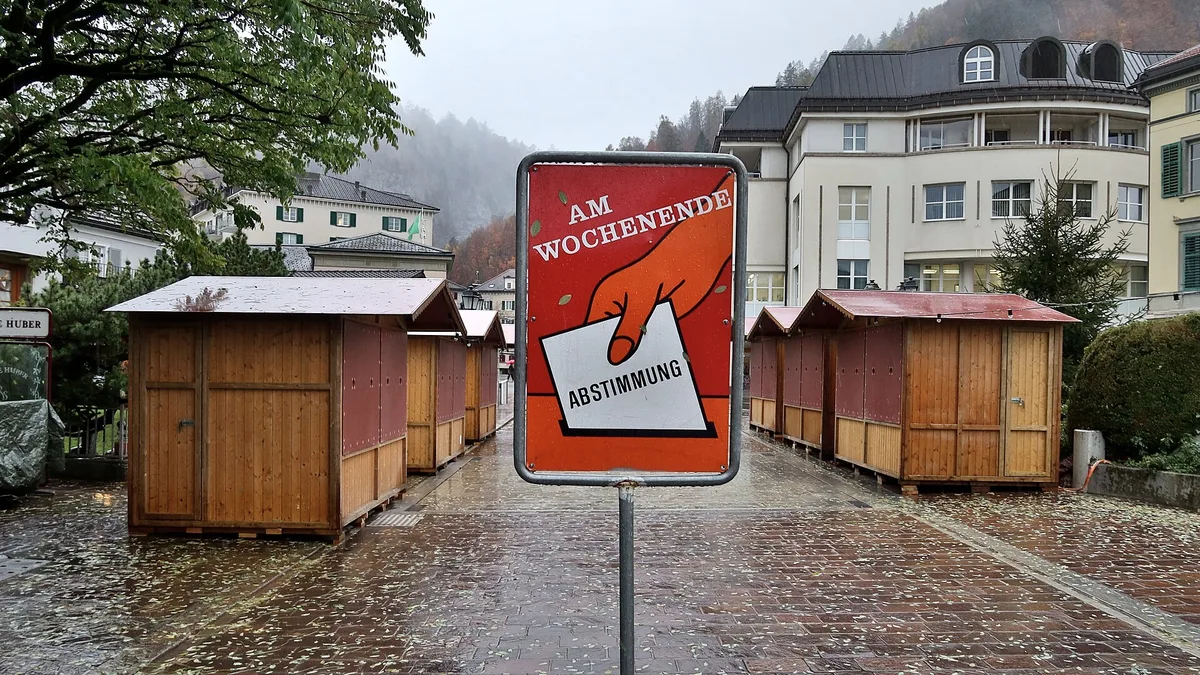
In the year 2000, two economists at the University of Zurich, Bruno Frey and Alois Stutzer, decided to test whether having a say actually affects how people feel about their lives.
Switzerland was the ideal laboratory. Every canton gives its citizens a different amount of direct-democratic power. In some, people can easily call votes on local laws and budgets; in others, it is much harder.
To measure this, the researchers scored each canton on a scale from 1 to 6, where 1 means citizens have very few ways to force a vote and 6 means they have the most. The score reflected things like how many signatures citizens need to launch a cantonal initiative or referendum, how long they have to collect them, and how much new public spending can be challenged at the ballot box. Basel-Land scored 5.69, near the top of the scale; Geneva scored just 1.75, near the bottom.
Frey and Stutzer surveyed more than 6,000 people across all 26 cantons and compared their life satisfaction.
The result: the stronger the direct-democracy rights in a canton, the happier its residents.
A resident of Basel-Land, one of the cantons with the most participation rights, was about 11 percentage points more likely to say they were "completely satisfied" with life than someone in Geneva, one of the cantons with the fewest.
The most interesting part was who benefited. The effect was noticeably smaller for foreigners living in the same cantons, who enjoy the same public services but cannot vote. This suggested happiness did not just come from better outcomes (good schools, low taxes). It came from taking part.
Frey and Stutzer called this procedural utility: people value not only what they get, but how decisions are made. In their words, this effect is "independent of the outcome of the political activity itself".
Psychologist Tom Tyler found something similar in a completely different setting. Studying how people respond to courts and police, he showed that people are far more willing to accept a decision they dislike if they feel the process to choose said decision was fair and they had a voice. Psychologists call this procedural justice.
This may help explain another Swiss statistic. In an OECD survey of trust in public institutions, 61.9% of people in Switzerland said they had high or moderately high trust in their national government, the highest share of all participating countries.
Of course, a correlation is not proof. Switzerland is also wealthy and stable, and researchers still debate how much of this trust comes from direct democracy itself. But the psychology points in a clear direction: being asked matters.
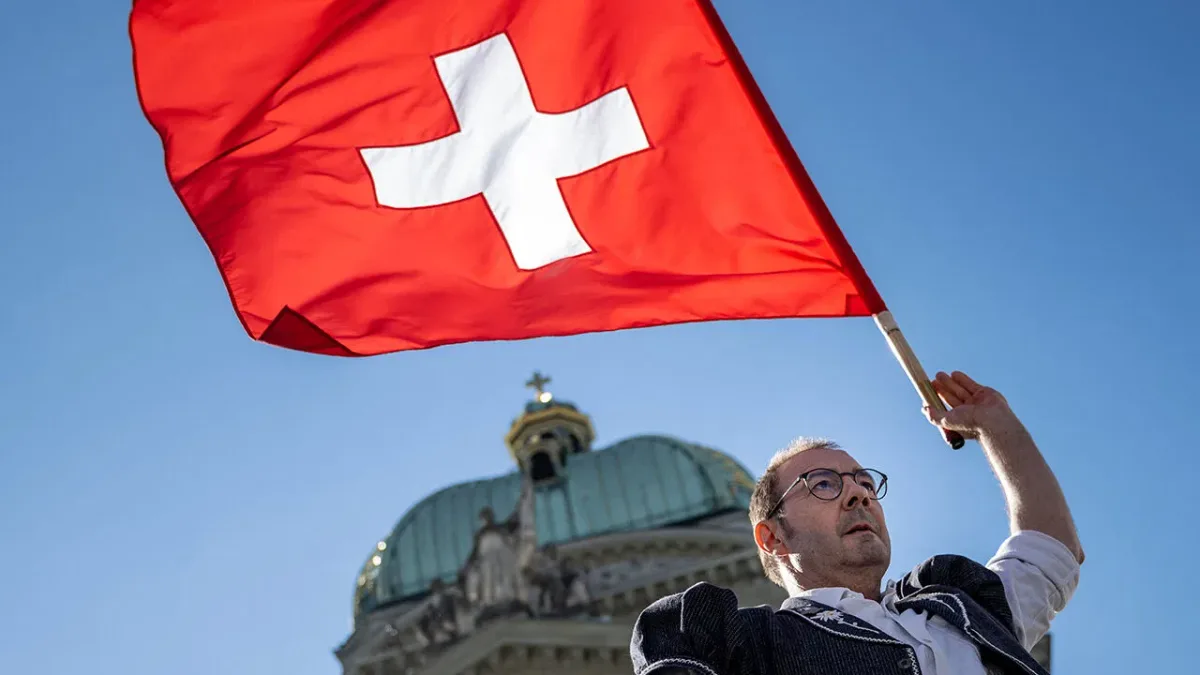
Here is the paradox. If having a say makes people happier, you might expect the Swiss to use it to change things constantly. They don't.
Between 1891 and 2024, only 26 popular initiatives were accepted, roughly one in ten. The list of rejected proposals reads like a wish list most workers would sign: a 40-hour week (rejected by 78% in 1976), a lower retirement age (79.4% against in 1978), six weeks of holiday (66.5% against in 2012), and a basic income (76.9% against in 2016).
The pattern continued this year, on proposals coming from very different directions. In June 2026, 54.8% of voters rejected the "No to 10 million Switzerland" initiative, which aimed to cap the country's population. In September, around 70% rejected a proposal to tighten the rules on Swiss neutrality.
Psychology offers one way to understand this. In 1979, Daniel Kahneman and Amos Tversky showed that people feel losses more strongly than equivalent gains, a tendency called loss aversion. Losing 100 francs hurts more than finding 100 francs feels good.
A related effect is status quo bias, described by economists William Samuelson and Richard Zeckhauser in 1988. When people face a choice, they tend to stick with the current option, even when an alternative might serve them as well or better. The current situation feels safe and known, while change brings uncertainty and possible losses.
A ballot initiative is, by design, a proposal to change the status quo. Voters are asked to weigh a known present against an uncertain future, and many lean towards what they already have.
This does not mean Swiss voters are simply biased. Many of these "no" votes also reflected careful thinking about costs, the economy, or how a proposal would work in practice. Psychology does not replace those reasons; it helps explain why the bar for change is high.
And the Swiss do say yes when they are convinced. In March 2024, voters approved a 13th monthly pension payment, with about 58% in favour, a rare yes to an initiative that expanded social benefits. And in September 2026, voters in the canton of Vaud approved a citizens' initiative to cut cantonal income and wealth taxes by 12%, with 53% in favour, even though the cantonal government had opposed it.
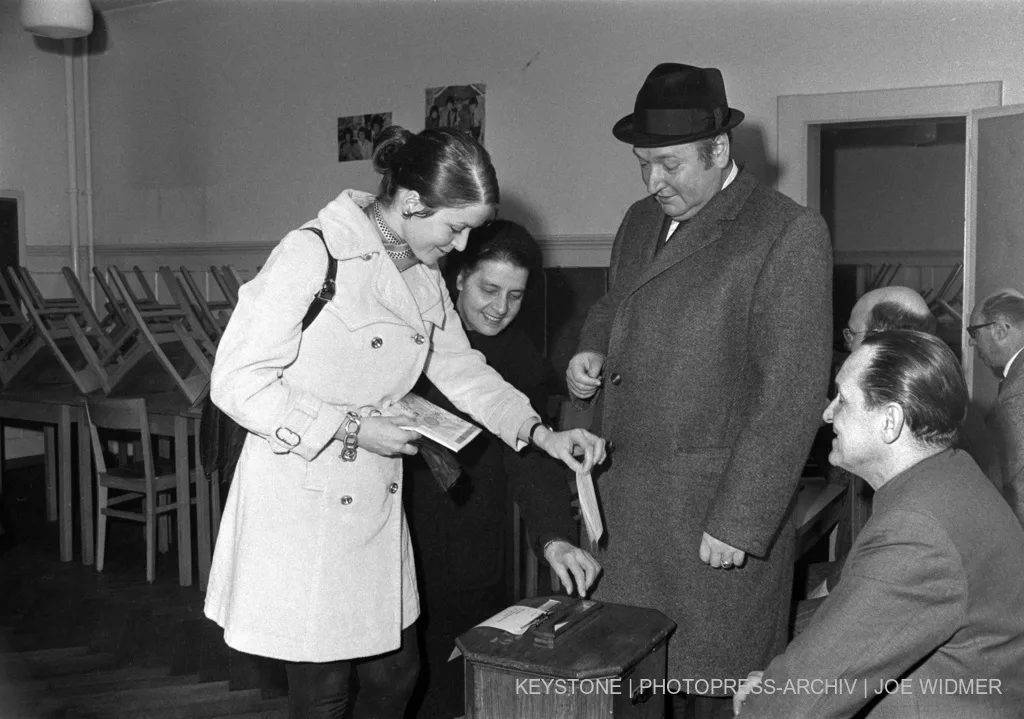
The same caution that protects stability can also slow down change that, looking back, almost everyone now agrees was overdue
In Switzerland, giving women the vote required a vote, and only men could cast it. In 1959, male voters rejected women's suffrage at the national level by 66.9%. It took until 7 February 1971 for 65.7% of male voters to approve it, decades after most other European countries.
At the local level, it took even longer.
In the small canton of Appenzell Innerrhoden, men voted against women's suffrage in cantonal matters three times: in 1973, 1982 and April 1990.
In the end, it was not voters who changed the rule but judges. On 27 November 1990, the Federal Supreme Court ruled that excluding women broke the constitution's guarantee of equality.
Women in Appenzell Innerrhoden voted in their canton for the first time in April 1991.
This history shows the other side of psychology. When a decision is made by those who already hold power, keeping the status quo costs them nothing. Loss aversion and status quo bias don't only protect people from risky changes; they can also protect existing inequalities.
It is also a reminder of why Switzerland's system has more than one layer. Direct democracy works alongside a constitution, courts, and Parliament. When one choice fails some citizens, another part of the system can step in.
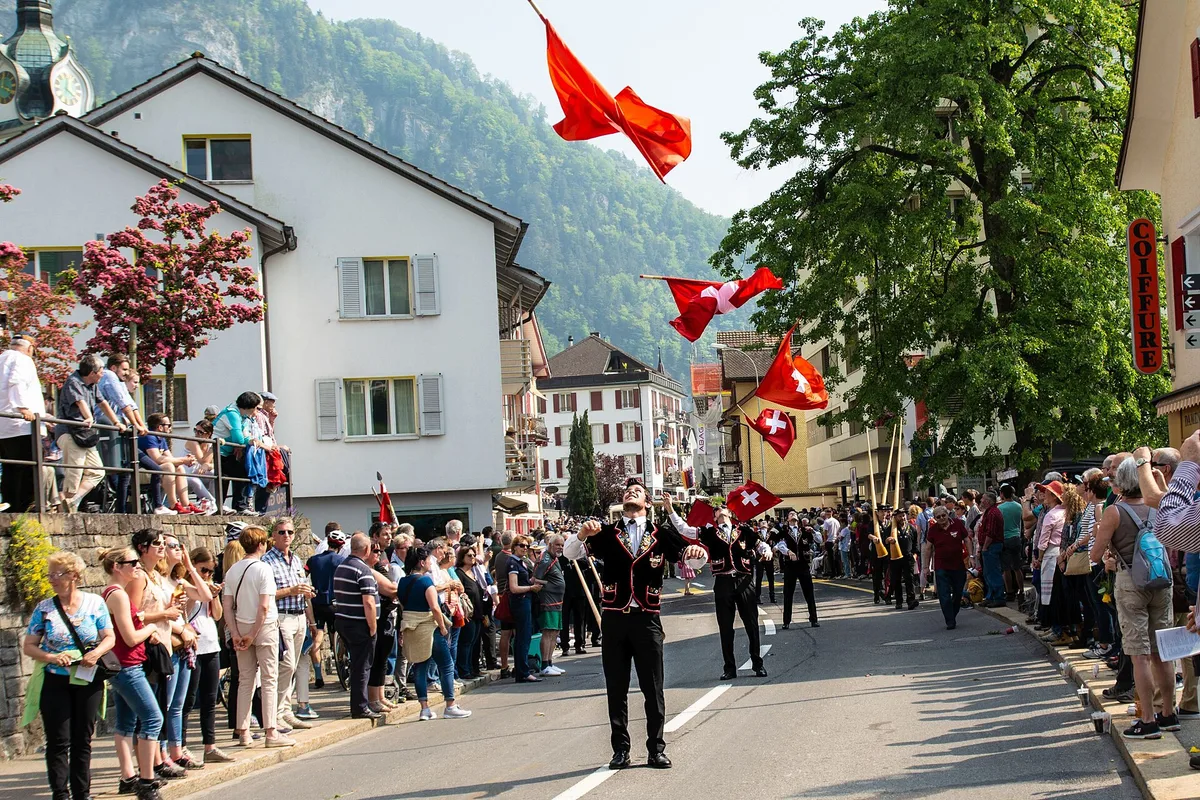
So, is Switzerland a country of happy decision-makers, or of cautious ones who rarely change anything? The research suggests it is both.
Being asked seems to make people feel more satisfied and more trusting. At the same time, being the one who decides makes people careful, and caution can mean saying no to a longer holiday, or saying no for far too long to equal rights.
Perhaps the most important Swiss choice was not any single vote, but the decision, made in the 19th century, to keep asking.
Every few months, citizens are reminded that the rules of their country are not fixed; they are chosen. Sometimes they choose change. More often, they choose what they know.
Whatever you think of the outcomes, there is something worth learning from a system that treats its citizens not only as voters, but as decision-makers.
As many democracies struggle with falling trust, the Swiss example suggests that how we decide may matter just as much as what we decide.