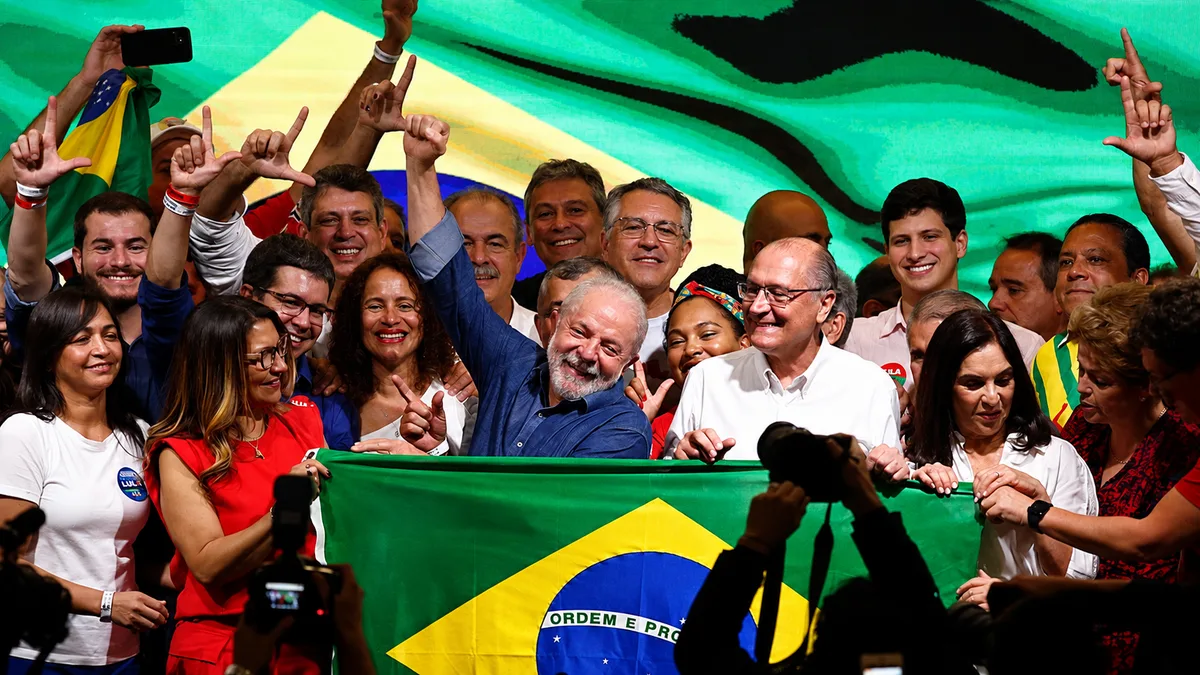
The Blue Tsunami of My Dreams
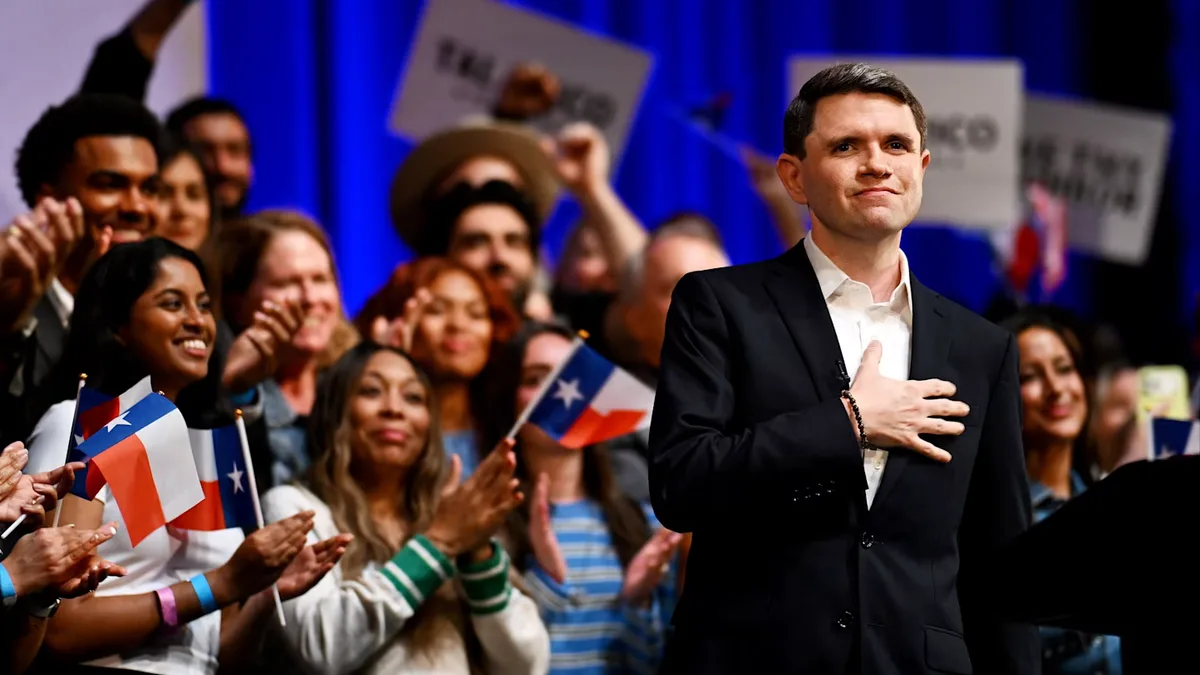
There is only one way to rein in Trump’s catastrophic behavior, and that is to achieve Democratic control over the House and the Senate. On November 3, American voters did exactly that. Many were hoping and pushing for a blue wave, but no one predicted this tsunami of epic proportions.
James Talarico, who won Texas by double digits.
Abdul El-Sayed of Michigan, who is now the first Muslim senator in US history.
Troy Jackson, who overturned the 30-year long Maine republican political dynasty known as Susan Collins.
Annie Andrews, who defeated a long-running South Carolina family legacy candidate.
Chris Pappas of New Hampshire, who will be the first openly gay man to serve in the Senate.
Adam Hamilton, who is the first Democrat Senator elected in Kansas in 94 years.
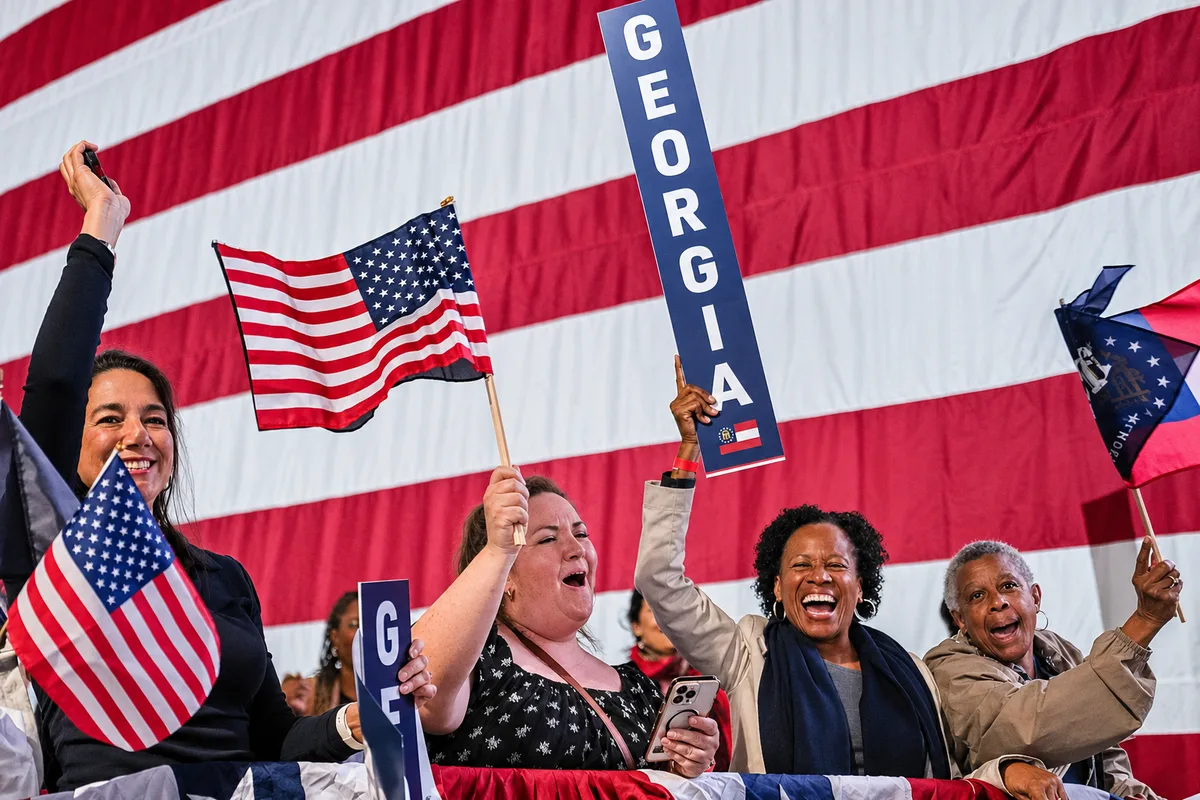
Jon Ossoff of Georgia, Josh Turek of Iowa, Roy Cooper of North Carolina, and likely Alaska winner Mary Peltola.
I never thought I would ever write such a long sentence, and that doesn’t even capture the multiple historic wins in the House and at the state and local levels.
In the US, Congress is divided into 2 chambers: the House, whose members serve two-year terms, and the Senate, whose members serve 6-year terms. Midterm elections fall midway into a 4-year presidential term and often serve as a referendum on the president’s performance and popularity.
Congress functions as a check on executive power and plays a crucial role in limiting or enabling a president’s policy agenda. The party that controls the majority of each chamber thus has immense power over the federal budget, foreign policy, political appointments, and passing or vetoing the president’s proposed legislation.
From an outside perspective, it might seem like Trump was able to commit all of his crimes individually. While much of what he’s done is illegal, it was also greenlit by the current Republican-controlled Congress.
They were responsible for approving Trump’s nominations of Pete Hegseth and RFK Jr., approving the billions of dollars in military aid to Israel and to ICE, approving of the catastrophic tariffs that have tanked the global economy, and approving of the Iran war that has had disastrous impacts at the household level in nearly every country on earth.
In short, it is very important to understand that the elections that happened last week are equally as significant and impactful on your life and on mine, if not moreso, than the presidential elections.
This is not to say that Trump won’t fight back hard against the Democratic majority, considering he has already called himself “Mr. Veto.” Presidents do hold veto power against any decision made by Congress, but that veto can be overridden by a supermajority, or two-thirds vote, which would allow the bill to become law without the president’s approval.
However, the “bluenami” appears to be inciting a period of reflection even for Trump himself, who revealed on Sunday night that his immigration policies may have been “too tough” - a stunning admission of wrongdoing by a man who has never once admitted to a mistake before.
The final two years of Trump’s “lame duck” presidency will hopefully be characterized by aggressive pushback from these new Senators, almost all of whom have promised to prosecute the widespread corruption and political quid-pro-quo of the Trump administration, to abolish ICE, to end the illegal war in Iran, and to finally pass Medicare For All in the richest country in the world.
It’s difficult to predict what concrete wins our new blue warriors will deliver for us in the next 2 years, and it may not be much - but blocking as much of Trump’s illegal activity as possible is an amazing place to start.
The beauty of the midterm elections is that this new class of Senators will be in power until the end of the next president’s term, so we have plenty of time to hold them accountable to their campaign promises and push them to stop military aid to Israel, finally abolish ICE for good, and prosecute Trump and his allies for their crimes.
These results also shine a newfound light on the road to 2028. A week ago, it was tough to imagine that a true progressive (think AOC) could have a shot at winning a presidential primary; now, I and others are starting to feel the first twinges of hopecore return to our bristly shell of liberal beliefs.
When looking at the spectre of American democracy, Trump’s first win is widely understood as racist backlash against our first Black president. Americans have been living in the push-and-pull between Obamaism and Trumpism since one passed the baton to the other in 2016.
Both men are still their party’s most powerful figureheads, and both still represent the warring factions of society that have defined America for the last decade. After 8 years of Obama’s charisma, popularity, and historic legislative successes, his exit from government created a power vacuum that left Democrats weaker than ever before, and wholly unable to live up to his potential.
Until now.
The Democratic Party has never been so back.
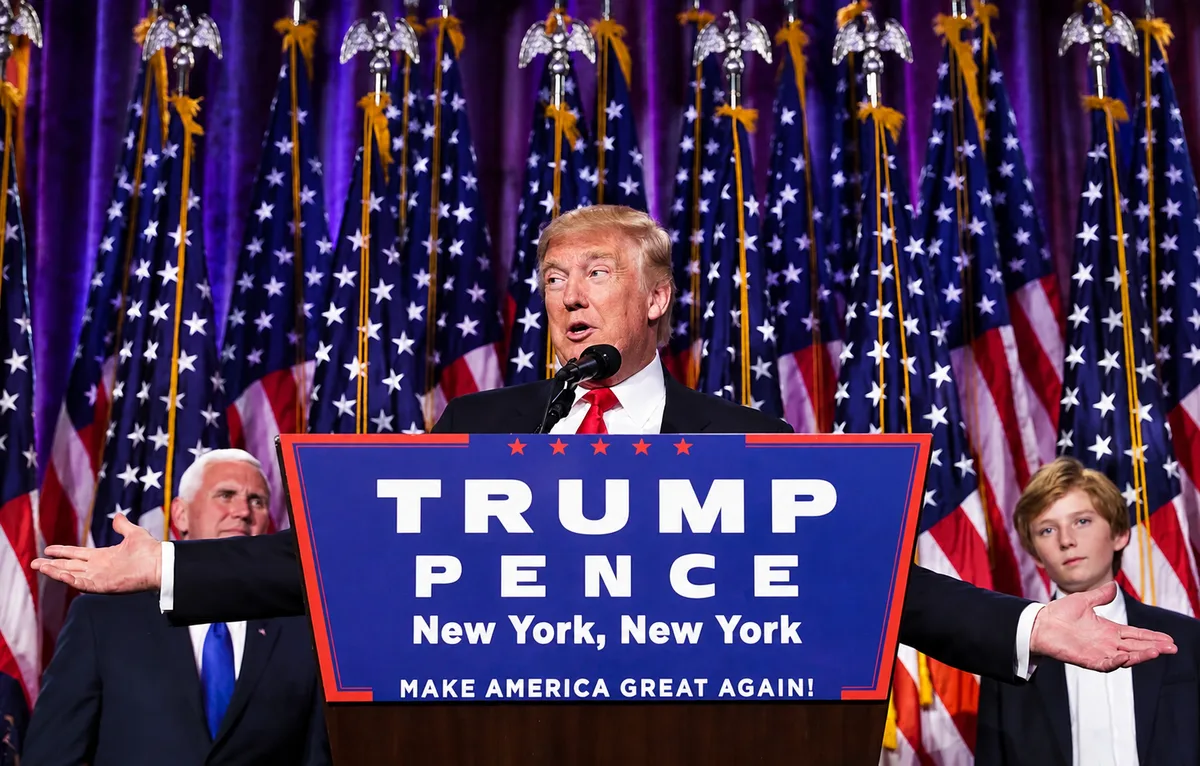
The first election I was eligible to vote in was in 2016, and I still have a visceral memory of the despair, confusion, and anger I felt as a young, budding feminist watching Hillary Clinton lose.
I came of age during the first Trump administration, and that fear and confusion I felt in November 2016 slowly hardened into anti-electoralism, cynicism, and political disengagement over the course of a decade.
I can’t say that I stopped believing in American democracy, because I never had the chance to develop a belief in it at all. I felt no connection to my country or its politics, because I saw no reflection of my own values and beliefs anywhere.
As soon as I got the chance to take my first steps into my own ideological and political growth, all the lights were switched off around the party, and I was over.
But more troublingly, my political framework grew around the idea that my own people were not to be trusted. I did not and could not understand that there were people just like me who somehow believed that this was all okay, and it pushed me even further away from American political engagement.
When the 2024 presidential election came around, I woke up the day after feeling nauseous for two reasons: because I didn’t see it coming, and because I didn’t do anything to stop it.
Fast forward to August of 2026. I had been really sitting with the multiple ways my own life had been touched by the Trump administration and the US government at large: losing my job when USAID was dismantled, accepting that I will never be able to buy a home in America, drowning in student loan debt, absorbing the constant fear of a public shooting, losing federally protected reproductive rights, and grappling with the real possibility that the Supreme Court might repeal my right to get married, which is all just a fraction of the examples I could share.
Amidst all this anger and resentment, I also felt shame, because I had not done everything I could to get Kamala Harris elected in 2024 and put a stop to the Trump administration’s wreckage.
I grew tired of feeling the government’s punching bag, and I started to seriously consider the way my rejection of electoralism might be just as damaging as some other right-wing conservative beliefs.
So I moved to Maine and started to work for Troy Jackson’s campaign.
Almost exactly 10 years had passed since the night my political identity started to harden around that cataclysmic loss, and after all this time I finally caught a small glimpse at what 18-year-old-Emma had always wanted: a candidate I truly believe in, who puts the real concerns of regular people first, who shirks corporations and billionaires, and who isn’t afraid to say what needs to be said.
I threw myself into his campaign, but I held my breath until the very last second. I didn’t think I could handle another progressive loss; I didn’t really trust the American people to do the right thing, and I worried that there was nothing we could do to overcome the insidious poison of MAGA.
I’ve never been so happy to be wrong about something.
It turns out that Americans actually are fed up with the corruption, the gas prices, the brutal caging and killings of innocent people, and another senseless and illogical war in the Middle East (since Iraq and Afghanistan, the American appetite for war has been incredibly low and will likely stay that way).
Our political institutions and electoral traditions actually are resilient, and the will of millions of people actually is coming to fruition. I wish I wasn’t as shocked as I am, but can you blame me?
It was the honor of a lifetime to push forward the bluenami, and it healed something in me that I lost 10 years ago.
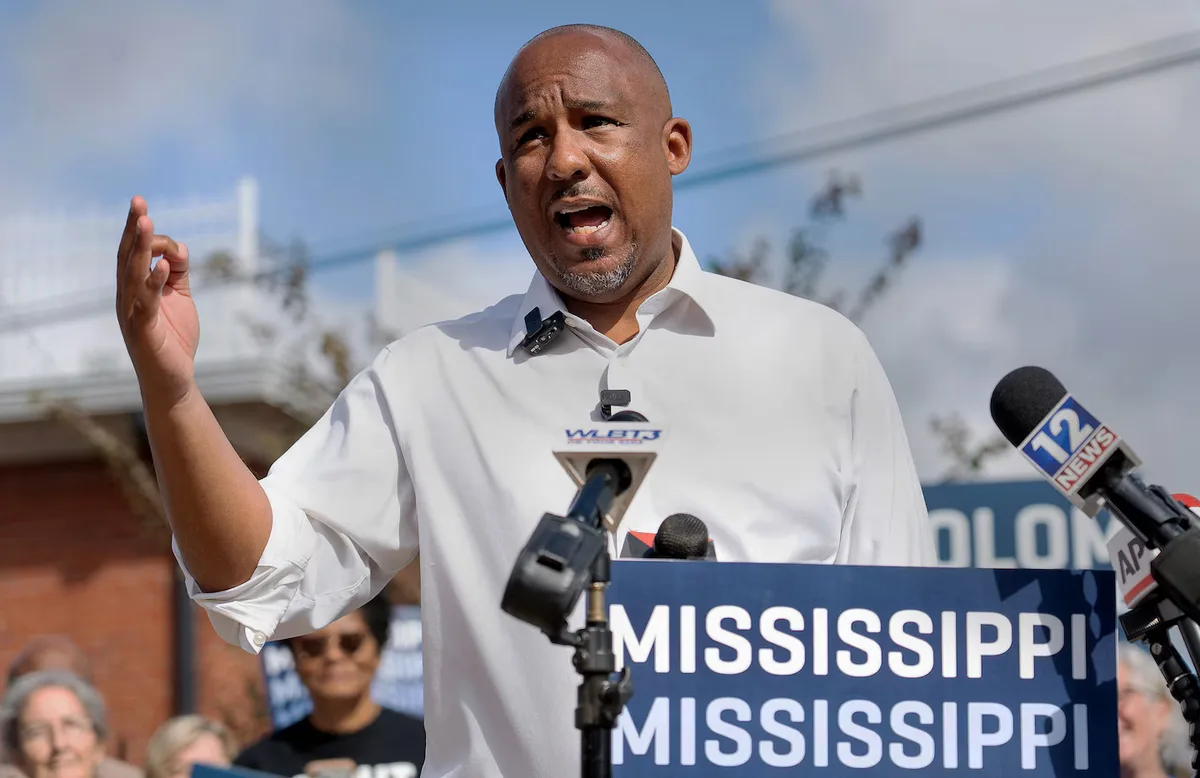
Although strides of historical magnitude have been made, the fight is still not over.
I had traveled from Maine to Mississippi the day after Troy Jackson officially won the Senate race there to help out with the ballot counting process, because the blue wave wasn’t over yet.
I spent all day last Saturday driving down backroads in rural Mississippi with a list of addresses to visit. These belonged to people whose votes for Democrat Scott Colom were being contested for minor issues, such as a mismatched signature or an administrative error. I had to make sure they knew how to fix their ballot before the state’s Tuesday deadline.
While driving between the 3rd and 4th house on my list, I tuned into a Zoom call with Colom and other supporters as they discussed all the people fanned out across the state, making sure every eligible vote was counted as his fragile 3,000-ballot lead grew.
I looked out the window at passing Confederate flags, crumbling log cabins, and thick wooded fields, and realized he was talking about me.
Mississippi has the strictest voting laws in America, which is both a relic of the Jim Crow era and its living, breathing permutation today. Mississippi also has the highest percentage of Black residents of any US state, about 38%, and has not elected a Black senator since 1881.
Structural barriers to political participation in the Deep South are intentional, calculated, and generationally entrenched, which is why Scott Colom’s victory is so monumental. On Friday, I was sitting in a district attorney’s office as they counted, accepted, and rejected ballots, and a local volunteer told me that “Mississippi is not a red state, it’s a suppressed state.”
The numbers that Colom pulled ahead by represent only a fraction of his true popularity, because political disenfranchisement in the Deep South is baked into every step of the electoral process: the students at the University of Southern Mississippi who were incorrectly told they were voting in the wrong precinct, the thousands of Black voters whose registrations inexplicably disappeared between the June primary election and the November 3 general election, the people living on the poorer side of town whose homes have been gerrymandered/”re-districted” so many times that they stopped believing their vote mattered at all.
I spoke to a young Black woman on Saturday who was told her ballot would be disqualified because she moved to a new apartment between June and November and had no idea if there was a way to fix it.
She went to the town office a few days ago to certify her residency and ensure her vote for Colom would be counted. A few days later, Scott Colom officially won the election. That it required an out-of-state volunteer to individually support a disenfranchised voter through the electoral process is a brutal indictment of the depth and breadth of systemic political suppression in America.
Colom’s victory gave the Democrats a historic 55-seat majority in the Senate, and every time we helped someone fix their ballot, we protected the viability of a blue Mississippi and the strength of the blue tsunami sweeping the country. Colom will join an all-star lineup of newly minted Democrat politicians.
These victories represent historic progress, but they are only the beginning of a much longer struggle.
We have a long way to go, but I can finally say that we have leaders who represent our best interests, and I can finally see my own values and beliefs reflected in the government.
It’s a new era for America (and by extension, the world), and I’m so excited for what’s to come. See you in 2028, maybe.