Ukrainian-Hungarian Relations are Healing, But it Takes Time
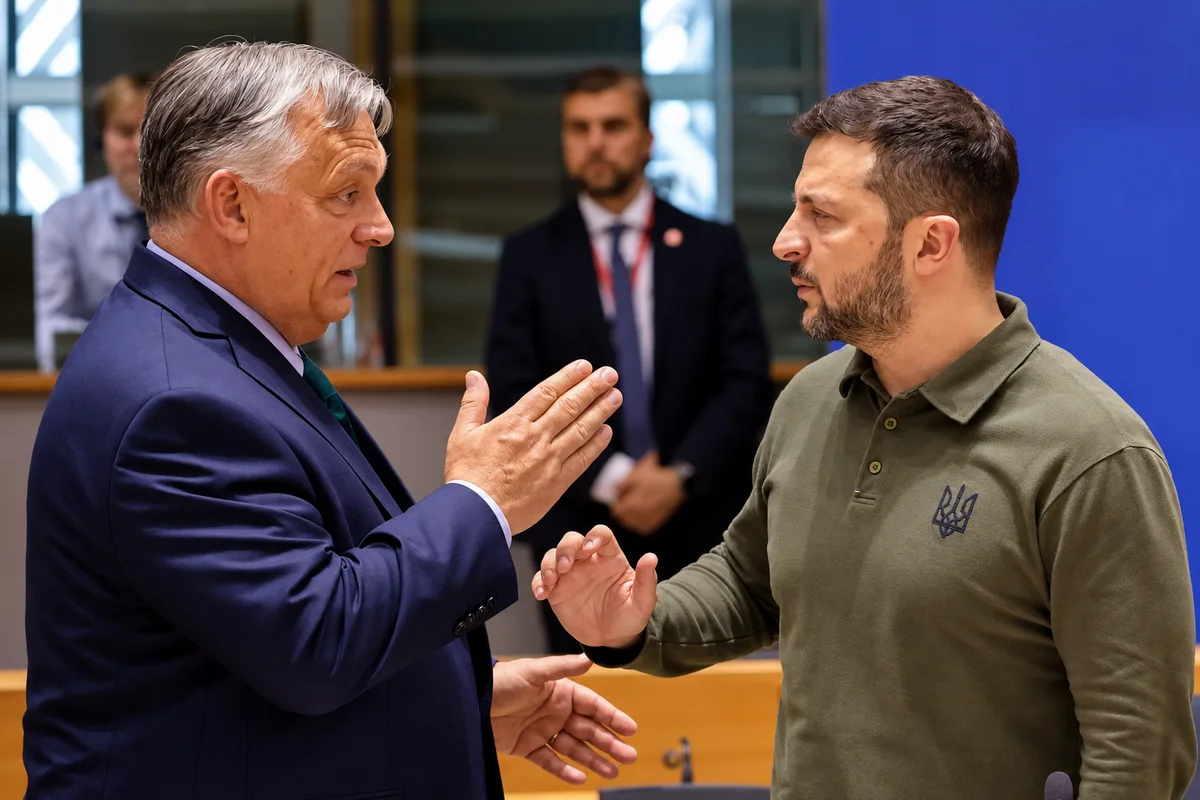
A diplomatic relationship between Hungary and Ukraine has always been present, considering they share a land border. While Hungarian foreign policy towards Ukraine in the past wasn’t as bad as it would eventually become during the 2022 Russo-Ukrainian war, it wasn’t overly dovish either.
The 2014 Euromaidan uprising in Ukraine became a flashpoint that either intensified or modified foreign policy stances of many European member states. Ukraine had been striving for EU association and a free trade agreement with the Union, yet the former president of Ukraine, Viktor Yanukovych, eventually refused to ratify these agreements, surprising most of Europe, which had aimed to cultivate a European Ukraine.
Yanukovych had refused to sign due to an alleged Russian counter-offer, which had far better prospects for Ukraine in his eyes than an EU association would. The result was a violent and bloody protest where state police known as the “Berkut” used live ammunition on protesters, and Yanukovych fled from Ukraine to Russia.
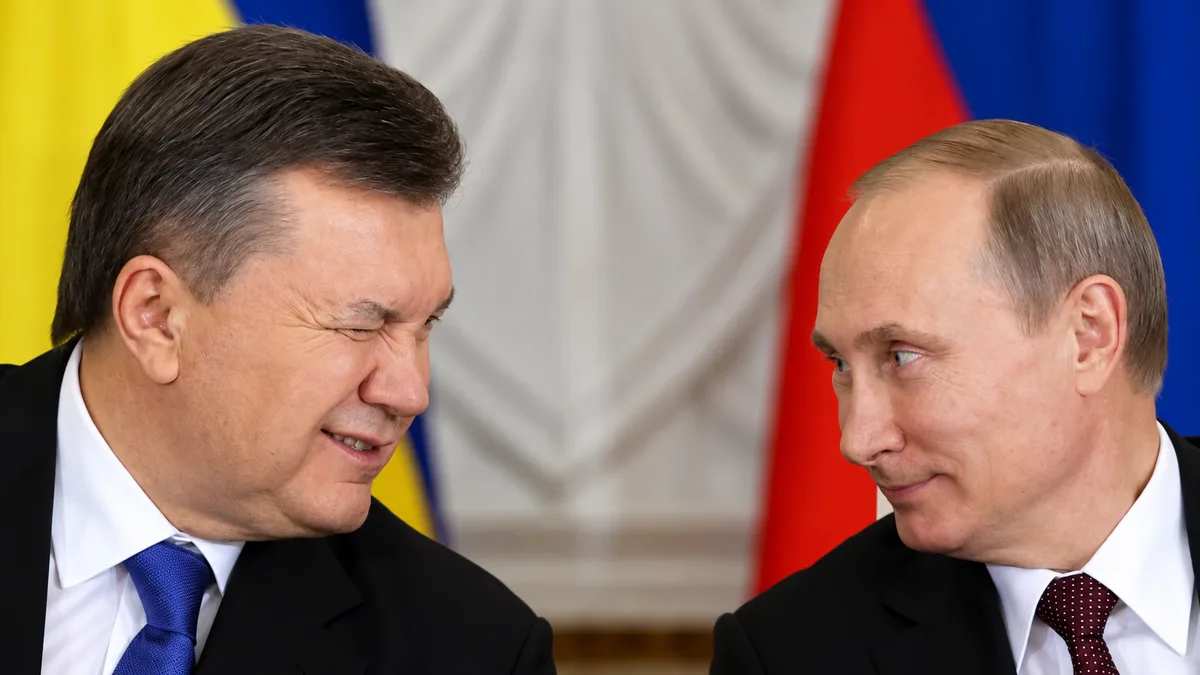
Before the Euromaidan disaster, Hungary had subjected itself to an “Eastern Opening,” which was designed to create stronger ties with Russia and stemmed from the Hungarian government taking notice that powerful Central European states such as Austria and Germany had embraced similar ties that revolved around mutually beneficial economic gain.
The problem with this was that Hungarians erroneously assumed the nature of this relationship would bring absolute gains, when in reality, it would result in a further entrenchment of Hungarian dependence on Russian oil and gas.
Hungary’s gains are relative to Russia’s because they positively influence domestic politics and economic performance but negatively impact Hungary’s legitimacy within the EU —something which the Orbán regime had depleted almost entirely— and the capability for the EU to undertake a unified response in support of Ukraine because Hungarian hands are tied by Russian pipelines.
A distinction needs to be made between the actions being undertaken by foreign policy and the rhetoric that comes with those actions. Orbán’s Fidesz government has always been good at walking the tightrope between the two, especially when it comes to Ukraine.
In an opening speech made by Orbán before entering a meeting at the European Council about the proxy war in the Donbas that ensued after the Euromaidan protests, he stated:
“And there are, of course, our customary issues – such as Ukraine. The Hungarian position is that there must be visa-free travel for Ukrainians. The policy that we are currently pursuing on this matter – that, while the Ukrainians have met all the conditions, we still won’t grant them visa-free travel – is morally untenable.”
This statement not only advocates for Ukrainians to get visa-free travel within the EU, but also attacks European foreign policy towards Ukraine, denouncing it as morally untenable. The notion of morality gives the Hungarian rhetoric normative value. However, this kind of rhetoric is undermined by Orbán’s actions towards Ukraine. Two years before making this statement, Orbán’s government announced that it would stop reverse gas flow into Ukraine after receiving it from Russia. This announcement was made shortly after officials from Gazprom visited Budapest.
The excuse that was given to the EU and Ukraine by the Orbán government was that it had forgotten to refill its reserves and that the oncoming winter would require all new incoming gas to replenish the reserves.
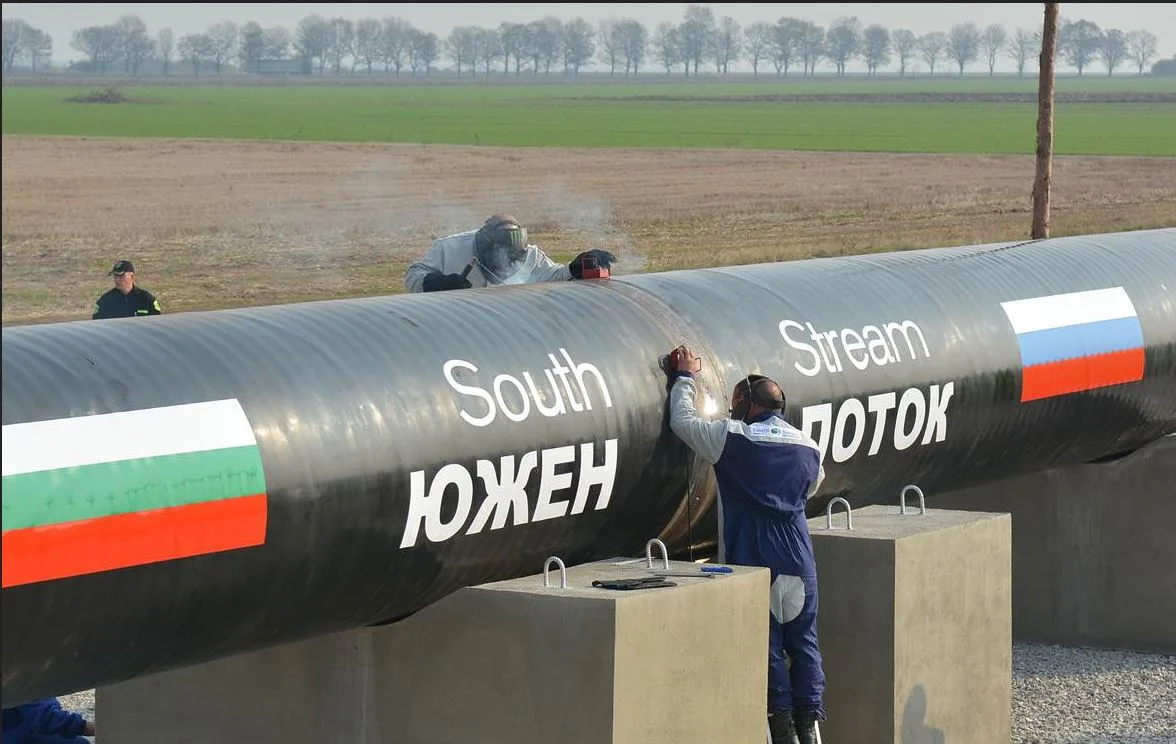
Despite the rhetoric, we can derive one vital foreign policy paradigm: if Ukraine remained under Russian influence, Hungary maintained positive relations and gas flows with Ukraine. Yet, when Ukrainian leadership changes, Hungary is less willing to aid Ukraine or maintain a positive relationship with it at all. Hungary is able to walk the tightrope between Ukraine and the EU on one side, and Russia on the other through pipelines and subtly sabotaging a joint European response.
Orbán's government has maintained this reliance on Russian fossil fuels since. As a result of the 2022 Russo-Ukrainian war, Ukraine has closed the tap on Russian pipelines sending gas to the EU through Hungary because it understood that purchasing Russian gas means funding their war effort.
As a result, Russia built TurkStream, a pipeline that leads to a terminal on the Bulgarian-Turkish border, where it is then sent into Europe through the BalkanStream pipeline. Hungary is a large recipient of this gas and is able to continue receiving it due to loopholes in European competition law allowing Russian gas to enter Europe through this route. This demonstrates Orbán's commitment to continue demonizing Ukraine and driving a wedge into EU support.
It is a conservative and anti-innovation/green energy prerogative that benefits fossil fuel giants (in this case Gazprom), which also awards benefits to the populists themselves. The most important of which is high domestic approval ratings. Put simply, people react to the price of day-to-day essentials, and Orbán is not sacrificing cheap energy that keeps his constituencies happy in exchange for support to Ukraine.
Cheap gas additionally has obvious economic benefits to boot. Hence, the concept fits in quite neatly when explaining why Hungary’s relationship with Ukraine has deteriorated to such a large extent. The apex of this negative relationship arrived when Hungary vetoed a 90 billion euro loan to Kyiv. It was at this point that a 2025 survey found that 68.9% of Ukrainians had a negative sentiment towards Hungarians.
Protecting Hungarian minorities in Western Ukraine has been a talking point of Orbán for a very long time. He stated in 2014 that Ukraine could not be democratic if it did not give its minorities (including the Hungarian ones) adequate rights and relative autonomy. Many in Ukraine and the EU viewed this as subtle support for Russia’s claim of protecting ethnic Russians and Russophones in the Donbas region during the ongoing proxy war.
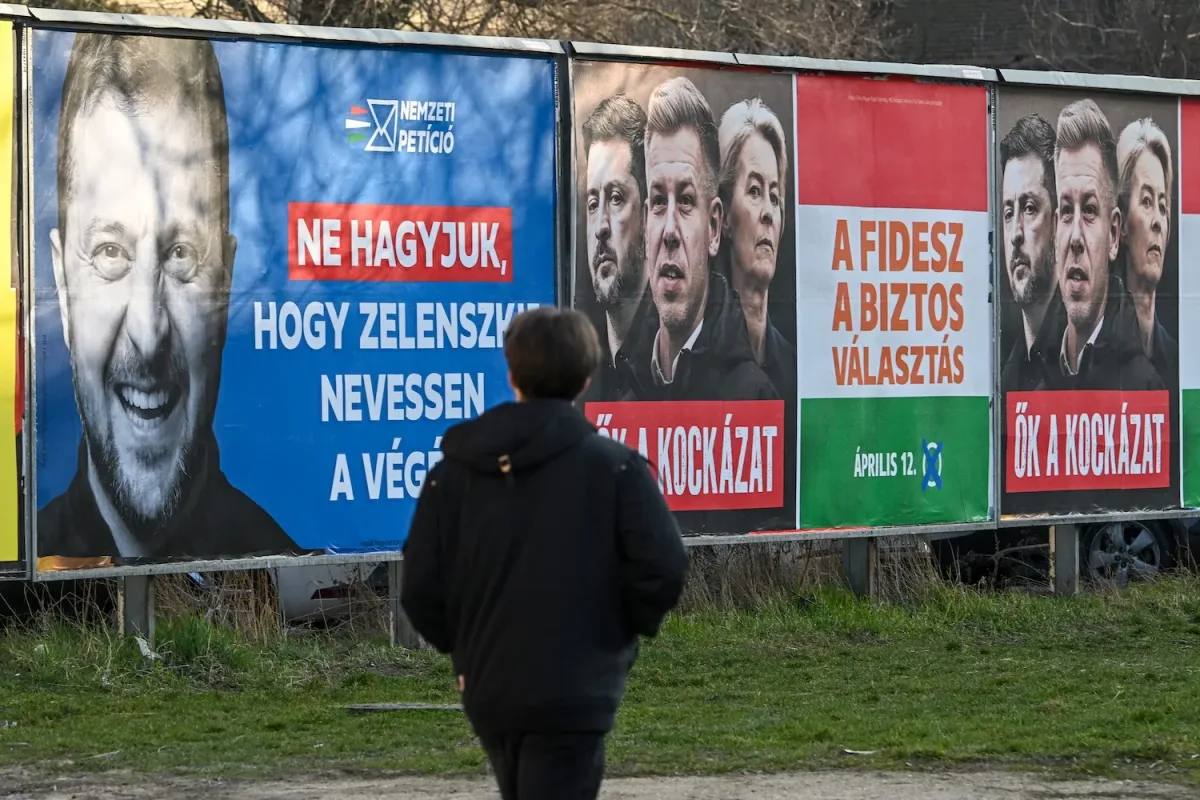
It has now been almost half a year since the Hungarian elections that turned an entire nation on its head. Péter Magyar’s Tisza party won in a landslide election with results that surprised even the most well-informed.
In essence, ousting the formerly incumbent Viktor Orbán, forced the closure of the media apparatus that supported Orbán in perpetuating a nationwide consumption of skewed media and drove Orbán's Fidesz party to the margins of the Hungarian government, where they hold 52 of 199 seats in parliament.
Much of today’s policy analysis is inward-looking and can best be described as a prologue of Hungarian electoral reconstruction. But what are some of the implications for the Hungarian-Ukrainian relationship?
The new Tisza government fixed its foreign policy vis-á-vis Kiev to reflect a middle ground between Brussels and Fidesz. They’re doing this because, despite winning the elections, they are aware of a lingering grasp that 16 years of media control by the Fidesz government in rural areas has on a large portion of the nation.
The Tisza government hasn’t incorporated a small share of loyal voters with distinct political opinions; they’ve incorporated a heterogeneous melting pot of voters with different political opinions on Ukraine that voted for Tisza with the sole aim of ousting the Orbán regime. Therefore, the foreign policy shift to favour Ukraine needs to remain gradual and needs to emphasize the fact that Hungarians come first in order to remain popular.
That is why foreign policy between Budapest and Kyiv has shifted from being limited by Russian control through gas to being rebuilt through concessions regarding Hungarian minority rights in the Zakarpattia region. This issue was something Orbán has struggled to reach a consensus on with Kyiv for over a decade.
The first domino to fall was when the minister of foreign affairs Anita Orbán stated:
“Hungary is committed to the sovereignty and territorial integrity of Ukraine. At the same time, the consistent protection of the rights of national minorities in our bilateral relations is our first task”.
This quote underlines the direction the new government is willing to take. This new foreign policy direction is built on a foundation of consensus between both governments in order to mutually benefit themselves.
If Kyiv were to make concessions on the rights of the Hungarian minority group in Zakarpattia, Budapest would quickly depart from its role as a Russian proxy and European veto on everything to do with Ukraine.
Conceding more rights for ethnic Hungarians in the Zakarpattia region would be a risky move considering fighting a war against Russia requires a strong sense of national identity. The action would also legitimize Russian demands for ethnic Russians to have more autonomy in the Donbas.
However, negotiations were successful, and bilateral meetings between Hungarian and Ukrainian authorities were able to make concessions with one another. Anita Orbán has stated that Hungary will no longer impede EU aid packages or initiatives towards Ukraine in what is part of a wider Hungarian distancing effort from Russian influence further into the camp of the EU.
The new Tisza government has also announced that it will discontinue Fidesz’s policy of vetoing EU sanctions against Patriarch Kirill of Moscow, a prominent Russian Orthodox clergy member who has espoused pro-Russian sentiment during the 2022 invasion.
In return, Kyiv struck a deal with the Tisza party in June that would seek to expand the linguistic, educational, cultural, and political rights of ethnic Hungarians living in the Zakarpattia region of Ukraine.
This represents a shift from two member states butting heads to throwing one another a bone. This may be the new paradigm for Kyiv-Budapest relations for the foreseeable future.
SOURCES
Cabinet Office of the Prime Minister. (2016). Prime Minister Viktor Orbán’s doorstep statement before the meeting of the European Council [Speech transcript].
Council of the European Union. (2026). Russian gas imports: Council gives final green light to a stepwise ban.
Gerasymchuk, S., & Yurchyna, I. (2026). De-Securitizing the Hungary-Ukraine Agenda From minority rights to a wider context.
Gyarmati, I. (2015). Central European Responses to the Russia-Ukraine Crisis German Marshall Fund of the United States (Hungary:). German Marshall Fund of the United States.
Németh, F. (2026). Hungary’s Blitz of Change.
Sheftalovich, Z. (2026). Hungary announces deal with Ukraine on minority rights, clearing Kyiv’s path to EU entry talks.
Tynkkynen, V.-P. (2026). The Fossil Populists of Europe (Draining Fuel from the Russian War Machine). International Centre for Defence and Security.
Walker, S. (2014). Russia cuts off gas supply to Ukraine after talks collapse.
Zsiros, S. (2026). Hungary and Ukraine clash over Zelenskyy’s new regional forum.