Spain’s Youth is Desperately in Search of Representation
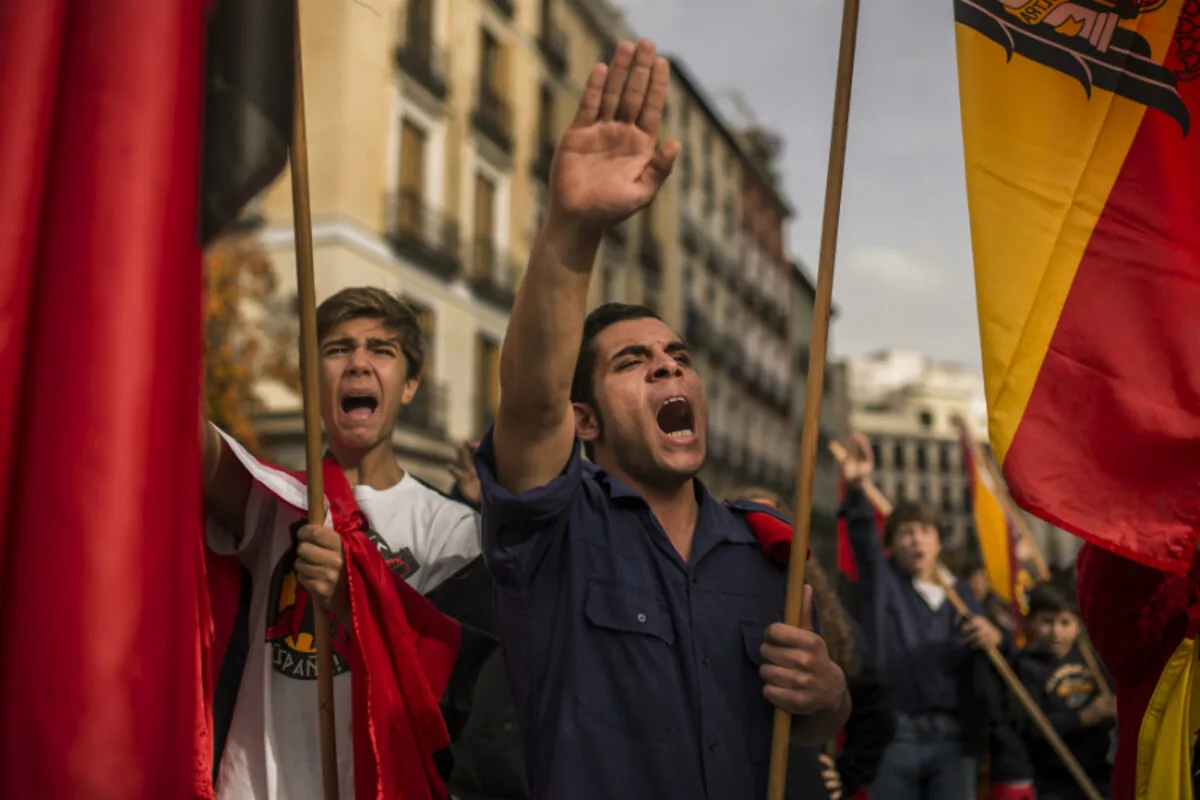
Almost half of Gen Z men and a quarter of Gen Z women in Spain say they plan to vote for the far right in the upcoming elections. Once seen as a driving force in Spain's transition from fascism to democracy, young people in Spain are now increasingly drawn to illiberal radical politics. What exactly happened?
Most research explains populist support through major political shocks (2008 crisis, 2014 immigration, 2017 secession, 2020 pandemic) or traditional socioeconomic factors (income, education level, gender), but these approaches struggle to explain why young Spaniards across all income levels, regions, genders, and educational backgrounds are increasingly backing populist parties.
Instead, we must take a look at the larger political, cultural, social, and economic shifts that have developed specifically during Gen Z’s timeframe that are driving this exceptional support for populism.
A major study in the Political Science world is The Populist Zeitgeist by Cas Mudde, the leading scholar of populism. In this study, Mudde proposes several generational shifts that he believes best explain why the youth are turning to populism at unprecedented levels. He proposes a framework of 5 key reasons explaining the rise of populism in the West. In reference to Spain, three key points stand out as most significant.

A major trend shaping Spain’s Gen Z is a growing dissatisfaction with democracy and the institutions designed to uphold it. Political scientists often distinguish between specific support, meaning satisfaction with how democratic institutions are currently performing, and diffuse support, a deeper belief that democracy is the best political system overall.
Generally, research finds that diffuse support for democracy (the belief that democracy is the best political model) is not affected by declining specific support (discontent with the current performance of one’s government). However, young Spaniards appear to be breaking this trend, as Gen Z shows lower diffuse support for democracy than older generations.
In other words, young Spaniards are not just frustrated with their politicians or parties; they are becoming less convinced that democracy is the best political system. A loss of commitment to democratic values creates fertile ground for populist parties with centralized, charismatic leadership who promise to bring power from the elites to “the people”.
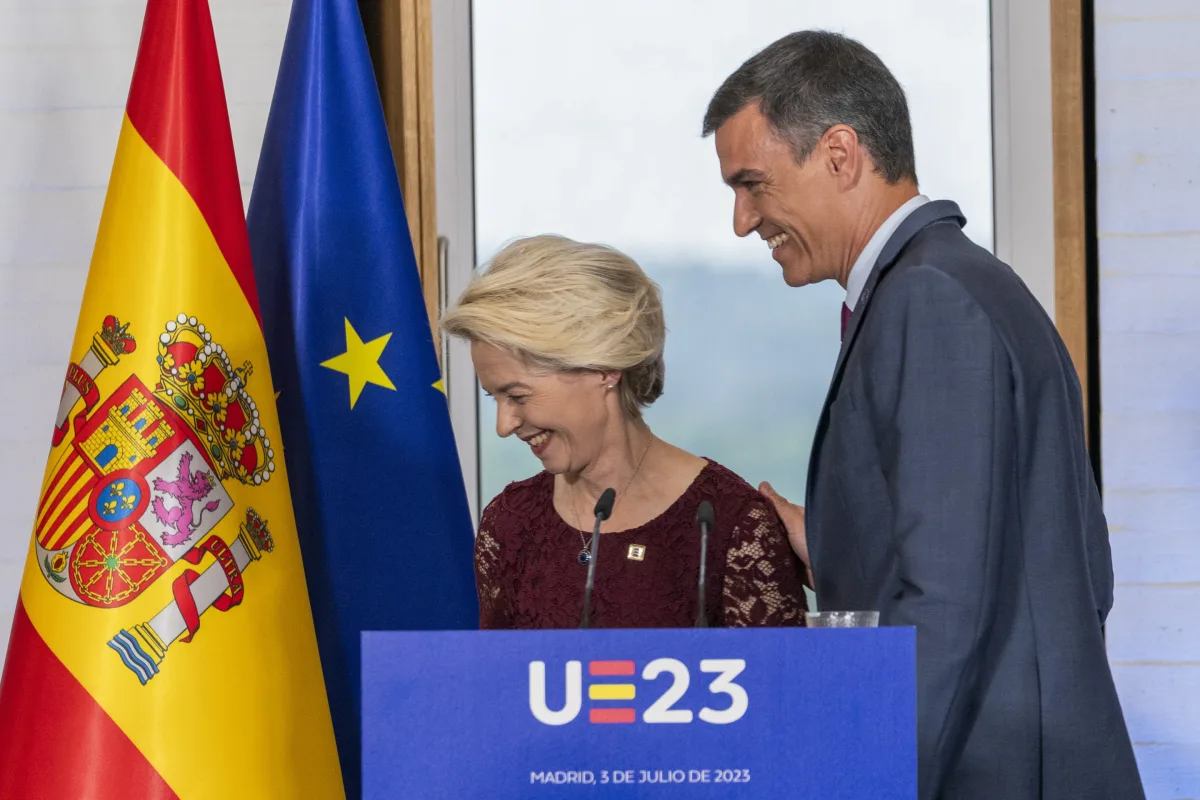
Another important force shaping Spain’s Gen Z is the growing influence of the European Union and the broader shift toward technocratic politics. In simple terms, more political decisions are now made beyond the national level, often by institutions that feel distant, technical, and difficult for ordinary citizens to influence or feel a part of.
There is a growing sensation amongst Gen Z that politics is no longer fully decided through national elections or public debate, but through complex institutions that they do not feel represented by or believe they can influence.
As more authority moves to organizations such as the European Commission or the European Central Bank, key policy choices can feel removed from everyday democratic contestation. For young voters, this deepens the impression that liberal politics are unresponsive, inaccessible, and incapable of representing their concerns.
In Spain, this sense of distance from the EU appears especially relevant among younger generations, as Eurobarometer data also shows that only around a third of Spaniards aged 15 to 24 believe their voice counts in the EU. This perceived loss of political agency makes space for populist parties, which claim to return decision-making to, once again, “the actual people”.

Lastly, informational media has been democratized. Today anyone can produce, consume, and share any type of political information they desire. Although this has made political information more accessible, it has also created a sensational and unfiltered informational climate that naturally favors the growth of scandalous and divisive rhetoric.
Media algorithms that favor engagement over accuracy often reward content that is emotional and extreme, content that receives more likes, comments, and shares, ultimately making “us versus them” populist narratives more prominent.
Young Spaniards encounter politics through personalized feeds, viral clips, and emotionally charged content that is often absorbed quickly and without much discussion. This gives parties that know how to dominate online spaces a major advantage in capturing young voters.
Research suggests that Vox and Podemos are among the most visible and engaging parties in the online political environment young Spaniards are exposed to. When most Gen Z Spaniards now rely on social media as their main source of political news, and populist parties seem to be the ones making the most noise on them, it becomes easier to understand why they have such great success among young voters.
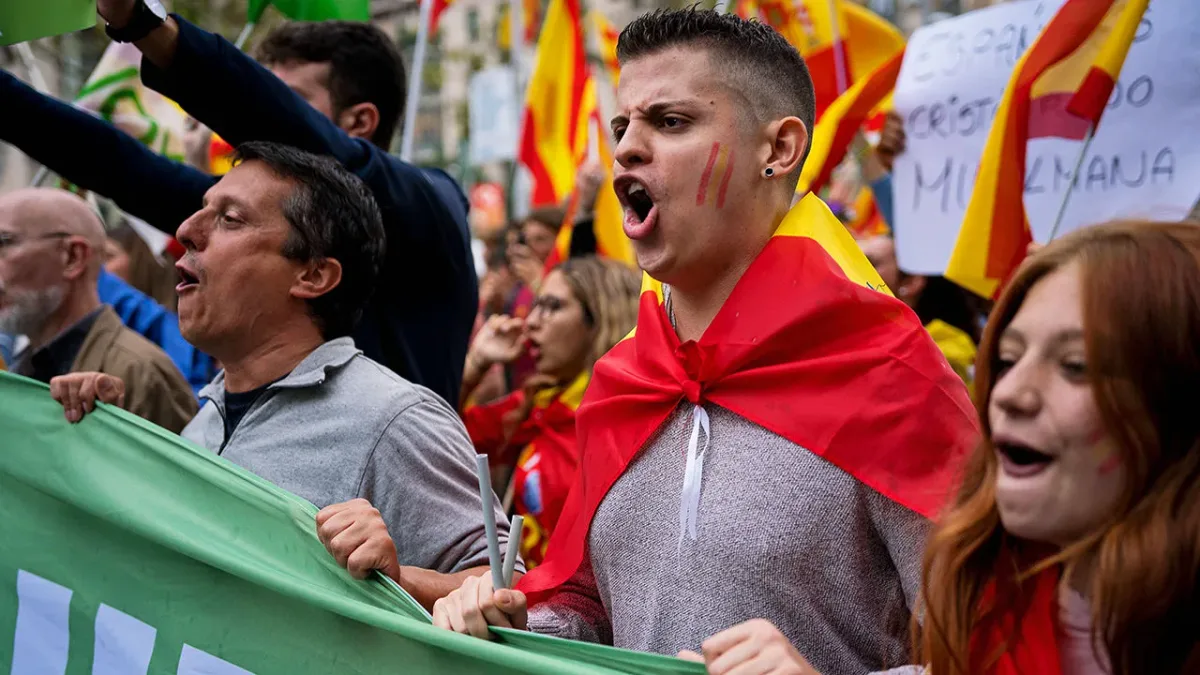
By isolating the structural developments in Gen Z’s formative context that are closely linked to populist support, we can prescribe policy that more meaningfully combats the rise in radicalization and affective polarization.
The transformation of the media landscape, the democratic disillusionment, and the perceived loss of political agency young people are experiencing are three areas that are rapidly mobilizing support for radical populism, and that are definitely worth looking into for policymakers.
These concerns call for policies such as online safeguards and educational programs aimed at enhancing digital literacy among younger cohorts, teaching them how to navigate such a polarized and unfiltered informational climate. They also call for changes in democratic representation, opening the door to more direct and participatory forms of democracy, or educational curricula that emphasize the importance of democracy and what it looks like when it is gone, which is something the Spanish youth seems to be forgetting.
SOURCES
Agerberg, Mattias. 2017. “Failed Expectations: Quality of Government and Support for Populist Parties in Europe.” European Journal of Political Research 56(3): 578–600. doi: 10.1111/1475-6765.12203.
Agüero, Belén, and Celia Zafra. 2024. “Entre el amor y el ghosting: la juventud española ante Europa.” Madrid: Talento para el Futuro and Polétika. https://assets.zyrosite.com/AGBrQBlpDBcknbEW/poletika--entreelamoryelghosting-A85ppq9aWXHM98N4.pdf
Andrino, Borja, and Kiko Llaneras. 2025. “¿Quiénes son los nuevos votantes de Vox? Datos por edad, sexo y clase social.” El País. https://elpais.com/espana/2025-09-14/quienes-son-los-nuevos-votantes-de-vox-datos-por-edad-sexo-y-clase-social.html.
Bader, V., & Maussen, M. (2023). “Associative Democracy and the Crises of Representative Democracies” (1st ed.). Routledge. https://doi-org.proxy.uba.uva.nl/10.4324/9781003412885
Manjón, M., & Otero, J. M. (2022).” El voto radical entre los jóvenes españoles: Los casos de Unidas Podemos y Vox “. Revista Internacional De Pensamiento Político, 17(1), 31–50. https://doi.org/10.46661/revintpensampolit.7489
Cervi, Laura; Marín-Lladó, Carles (2021). “What are political parties doing on TikTok? The Spanish case”. Profesional de la información, v. 30, n. 4, e300403. https://doi.org/10.3145/epi.2021.jul.03
Comisión Nacional de los Mercados y la Competencia (CNMC). 2025. “La CNMC mide por primera vez cómo se sigue la actualidad: redes sociales para jóvenes, televisión para adultos.” Nota de prensa, Noviembre 28. https://www.cnmc.es/prensa/panel-medios-informacion-20251128
de Nadal, L. (2021). “On populism and social movements: from the Indignados to Podemos. Social Movement Studies”, 20(1), 36–56. https://doi.org/10.1080/14742837.2020.1722626
European Parliament. 2024. Socio-Demographic Trends: National Public Opinion (Edition 10, 2007–2023) Spain. Brussels: European Parliament. Available at https://www.europarl.europa.eu/at-your-service/files/be-heard/eurobarometer/2024/socio-demographic-trends-national-public-opinion-edition-10/es-sociodemographic-trends-2024.pdf
European Social Survey (ess). 2022. “ESS Round 10 Data (2022). Data file edition 3.0.” Sikt Norwegian Agency for Shared Services in Education and Research. https://doi.org/10.21338/NSD-ESS10-2020.
Emanuele, V. (2015). “Dataset of Electoral Volatility and its internal components in Western Europe (1945-2015)” (Version 1.0.0) [Data set]. GESIS, Cologne. https://doi.org/10.7802/1112
García-Albacete, G., & Lorente, J. (2019). “La juventud después de la austeridad. Comportamiento y actitudes políticas.” Revista Internacional De Sociología, 77(4), e141. https://doi.org/10.3989/ris.2019.77.4.19.004
Guth, J. L., & Nelsen, B. F. (2019). “Party choice in Europe: Social cleavages and the rise of populist parties.” Party Politics, 27(3), 453-464. https://doi.org/10.1177/1354068819853965
Lorente, Javier, and Irene Jiménez-Bravo. 2025. “A Future of Authoritarian Citizens? Explaining Why Spanish Youth Are Losing Faith in Democracy”. Frontiers in Political Science 7: 1553307. https://doi.org/10.3389/fpos.2025.1553307.
Marcos-Marne, Hugo. (2024). “Euroscepticism and Populism on Europhilic Soil: The 2024 European Parliament Elections in Spain.” In: 2024 EP Elections under the Shadow of Rising Populism. (eds). Gilles Ivaldi and Emilia Zankina. European Center for Populism Studies (ECPS. October 22, 2024). https://doi.org/10.55271/rp0084
Mudde, Cas. 2004. “The Populist Zeitgeist.” Government and Opposition 39(4): 541–63. doi: 10.1111/j.1477-7053.2004.00135.x.
Mudde, Cas. 2021. “Populism in Europe: An Illiberal Democratic Response to Undemocratic Liberalism (The Government and Opposition/Leonard Schapiro Lecture 2019).” Government and Opposition 56(4): 577–97. doi: 10.1017/gov.2021.15.
Pinedo, Emma, and David Latona. 2025. “Far-right uptick in Spain raises spectre of Franco 50 years after his death.” Reuters, November 19. https://www.reuters.com/world/far-right-uptick-spain-raises-spectre-franco-50-years-after-his-death-2025-11-19/.
Rooduijn, Matthijs. 2018. “What Unites the Voter Bases of Populist Parties? Comparing the Electorates of 15 Populist Parties.” European Political Science Review 10(3): 351–68. doi: 10.1017/S1755773917000145.
Rama, José, Lisa Zanotti, Stuart J. Turnbull-Dugarte, and Andrés Santana. 2021. “VOX: The Rise of the Spanish Populist Radical Right.” Abingdon, Oxon; New York, NY: Routledge. https://www-taylorfrancis-com.proxy.uba.uva.nl/reader/download/70902633-ae38-4552-ad74-8b95973f4a8f/book/pdf?context=ubx
Schaver, Cristina. 2021. “Political Polarization after Democratization on the Iberian Peninsula.” V-Dem (Varieties of Democracy) Graph of the Week, May 25. Accessed January 22, 2026. https://www.v-dem.net/weekly_graph/political-polarization-after-democratization-
Wirthwein, Kilian, and Javier Carbonell. 2023. “Youth Support for Democracy in Spain: Democracy in the Face of Disadvantage”. Brussels: Foundation for European Progressive Studies; Madrid: Friedrich-Ebert-Stiftung and Fundación Felipe González. https://feps-europe.eu/wp-content/uploads/2023/12/Youth-Support-for-Democracy-in-Spain-EN.pdf.pdf
Zagórski, Piotr et al. 2025. “Generation Z: Pessimistic and Populist? A Conjoint Experiment on the Determinants of Populist Voting in Spain.” European Political Science Review 17(2): 202–20. doi: 10.1017/S1755773924000237.