The UN Matters Way More Than You Think
Go to your Google search bar and write “is the UN still…”. Take a look at what the suggested searches are.
The very first suggested search that appears will not be concerning any of the UN’s 193 delegations, or its 71 peacekeeping operations ever carried out. It won't be regarding the 2,828 resolutions passed by the Security Council, or even about any of the official UN buildings located across the globe.
The first option is: “Is the UN still a thing?”.
The UN, an institution which less than a century ago was hailed as civilization’s greatest achievement, as the end of history, is now an organization which people doubt whether it even continues to exist.
How exactly does that happen?
It makes sense that we struggle to believe that our framework to prevent the use of illegitimate force is still in place after looking at Russia’s full-scale invasion of Ukraine. I don’t blame those who doubt the existence of an international peacemaking body when they look at the U.S., the pioneer and birthplace of the UN system, killing 120 children in one strike on the first day of a war that will soon reach its seventh-month mark.
The frequency, intensity, and duration at which conflict across the globe is growing make it difficult to stress the urgency of the UN.
However, it is those of us who were born in a world already shaped by the UN’s victories that struggle to see anything past its failures. Today’s geopolitical turmoil is not a product of the UN, but a result of the states that make up the UN becoming increasingly unwilling to abide by the very rules and principles they themselves agreed to uphold.
It is precisely because of this rise in conflict that we should be turning more towards the UN, instead of away from it. Here’s why.
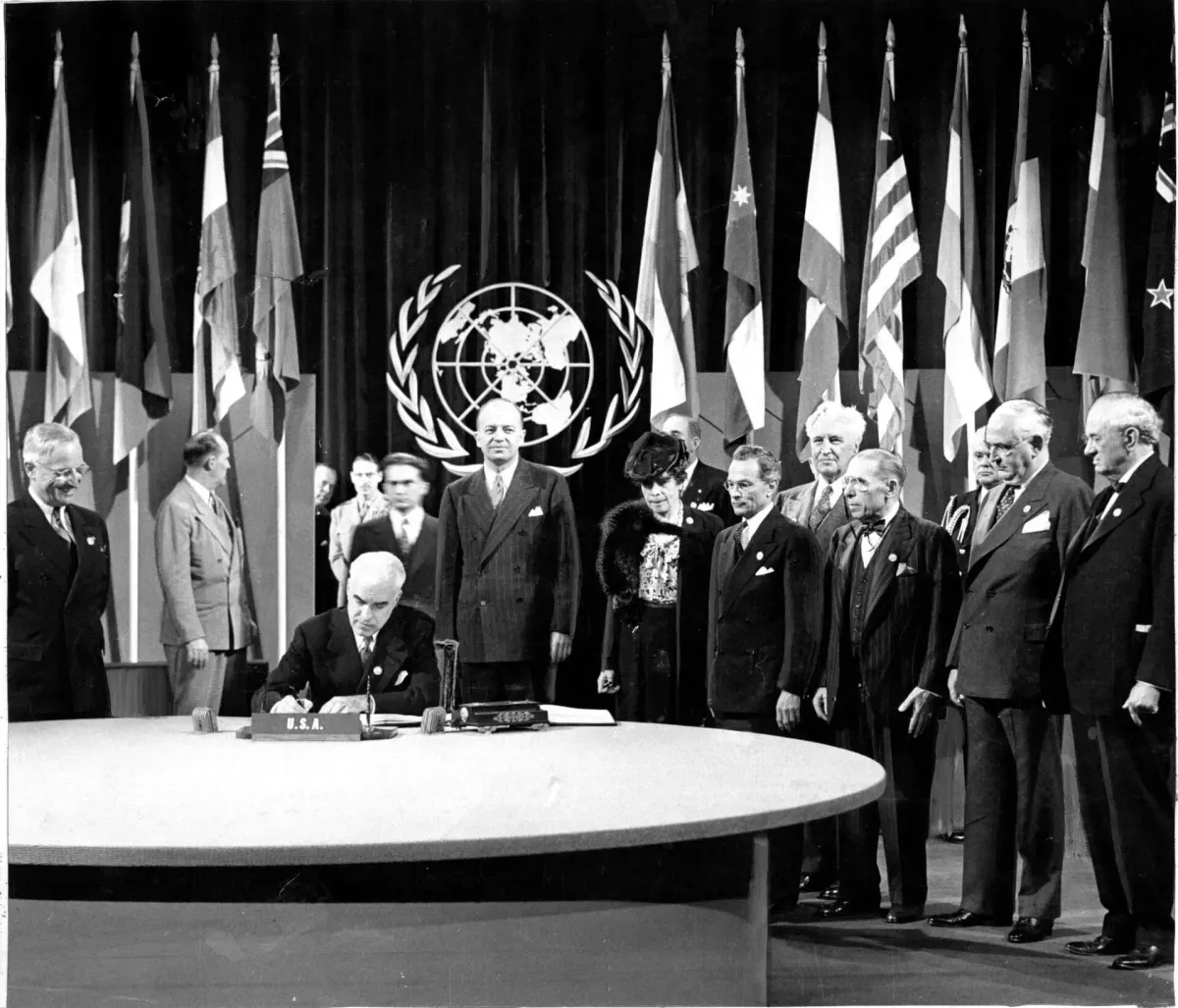
Before 1945, the year the UN was born, war was seen as just another tool at a government’s disposal; a continuation of politics through other means.
Conflict was the norm, not the exception. Violent, destructive, and undesirable, but not preventable; just the way things are.
In 1945, the UN was born as the centerpiece of a movement that aimed to counter this very belief. After the most brutal 31 years in human history, we had to set up the right institutions and forums to prevent this from ever happening again.
And it worked.
Since 1945, international warfare has been historically uncommon. Interstate wars, battle-related deaths, great-power wars, and nuclear weapon use have all dramatically gone down or disappeared.
Countries have increasingly been subjected to international judicial scrutiny, states under colonial rule have received independence at unprecedented rates, and democracy has become the most prominent political model.
It is not to say the UN should take sole credit for these improvements, or that it has solved global conflict in its entirety, but it is to say that the UN is the cornerstone and key symbol of the idealist, liberal project that created this unprecedented geopolitical reality.
The UN Charter codified and laid out the rules of the new era, and continues to be the guiding framework for international behavior.
When one leader fails to uphold the values of the UN Charter, we are quick to say it has lost all relevance, but we fail to see another 100 leaders using the same language and values of the Charter itself to reprimand that very act.
Whether it is through the realist fear of diplomatic isolation, through the liberal logic that cooperation is less costly than conflict, or through the constructivist creation of a behavioral standard, the UN sits at the core of a framework that has brought civilization an unprecedented degree of peace and stability.
One key fundamental, and often difficult to measure, reason why international conflict has declined is greater communication.
The security dilemma, the Thucydides trap: every political scientist's favorite terms. Used to explain conflict since ancient Greek times, all the way to Xi Jinping, recently asking Trump for their nations to not fall into it.
The first describes how one country’s attempt to make itself safer can make everyone else feel less secure; the second, how the rise of one power can generate fear in an established one and push both toward confrontation.
At the heart of both lies the same danger: uncertainty, mistrust, and failed communication. When states stop meeting, signaling their intentions, and negotiating, fear fills the informational void. Foreign policy is then driven by cynical expectations, as opposed to informed verdicts made with transparency.
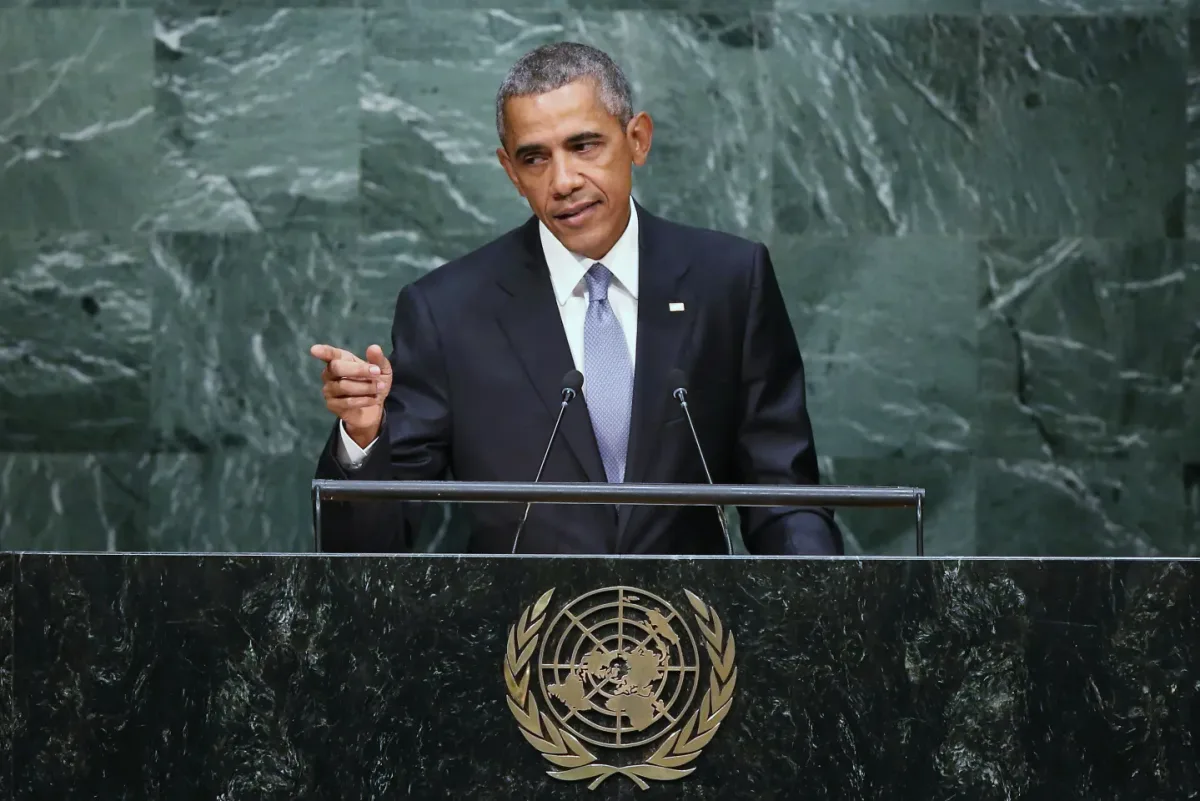
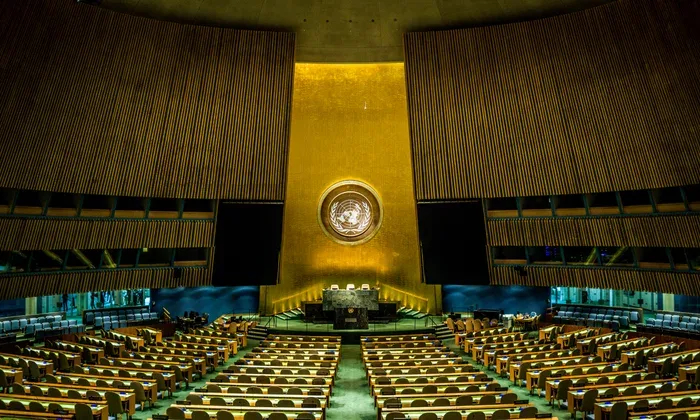
The UN is the world’s forum. It gives every country a place to meet and voice their perspective. From Gaddafi, to Castro, to Thunberg, to Obama, to Trump, everyone gets a turn, whether we like it or not.
Most recently, for the 80th General Assembly yearly gathering, every single member state sent their representatives, most being their highest leadership. Even Mahmoud Abbas, president of the PA who was denied a U.S. visa, spoke by video instead.
The UN still draws the world’s highest political leadership into one room; it remains the main arena for diplomacy and global messaging.
From public speeches to bilateral discussions to independently verified nuclear intelligence, the forum the UN provides reduces the uncertainty and mistrust that has brought our nations to battle since the dawn of human civilization.
This institutional logic is visible in the data too, showing that countries that share international organization membership are significantly less likely to enter into militarized disputes with one another.
For skeptics, it is more convenient to point at conflicts that have occurred despite the UN forum existing than it is to imagine how many more would have happened if it didn’t exist in the first place.
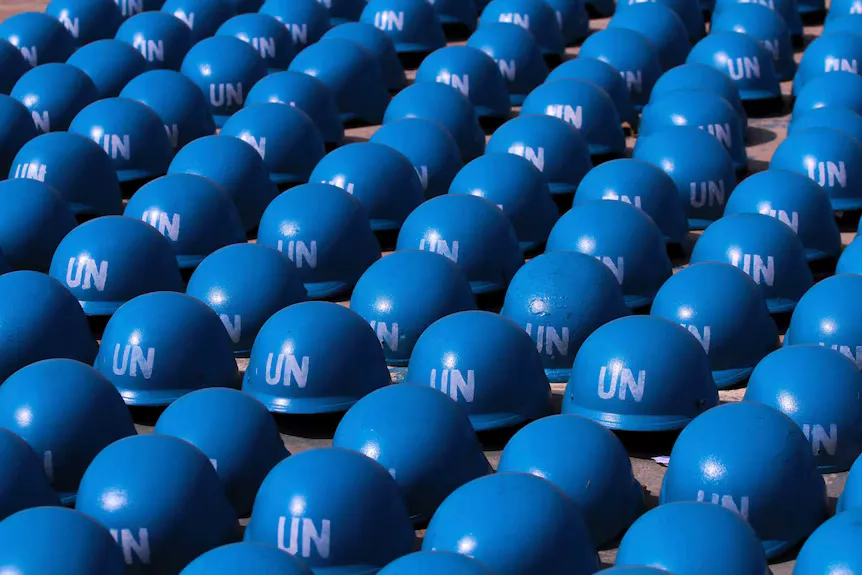
Dialogue is fantastic, but action is even better. Too often it is said that the UN’s only form of maintaining a stable and peaceful world is through strongly worded letters; that couldn’t be further from the truth. The coordination platform that the UN provides directly reduces conflict and improves affected lives.
Studies find that the presence of UN peacekeepers in areas of conflict not only reduces the rates of civilian deaths but also decreases the chances of renewed war by 75-85%. Evidence also shows that post-conflict zones that receive coordinated international support have significantly lower risks of renewed civil war.
The UN also facilitates coordination in areas one would never even associate with the UN system, yet are vital parts of our daily lives.
Your mobile data and international calls? That’s the ITU.
The weather forecast on your phone? Thanks to the WMO.
The rules of the ships that transport 90% of global trade? The IMO.
International aviation and e-passport regulations? ICAO.
Making sure your food is not contaminated? FAO.
The list goes on. In such a fluid world, coordination is extremely difficult; in political science, this difficulty is called transaction costs, the friction of the international system. International institutions, namely the UN, help reduce this friction by providing a platform to negotiate agreements and monitor state compliance.
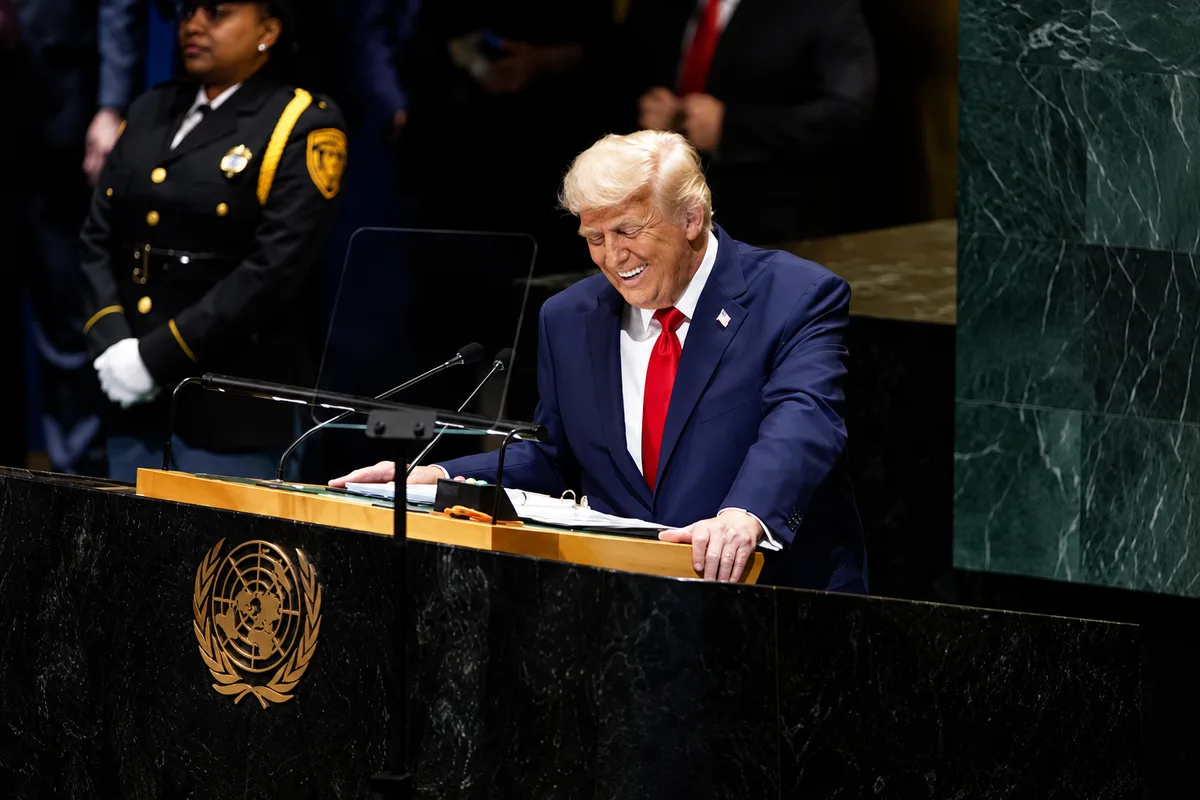
Ultimately, it is often the sharpest critics of the UN themselves who undercut the organization’s ability to act effectively.
The Trump administration’s withdrawal of U.S. funding to the UN has in part led to peacekeeping operations cutting staff by 25%, the World Food Programme cutting emergency food assistance to 17 million people, and the World Health Organization having a salary gap of up to 650 million dollars.
It is precisely when there is too little food, too little health, too little peacemaking, and too little discourse that conflict arises, and it is when conflict arises that people blame the UN for inefficiency.
It is not because of the UN that we find ourselves in this hostile geopolitical reality, but because of our failure to support its work and the values that it was built on. It is now that we have to turn to the UN the most, and stop wondering if it is still even a thing.
It would be equally as naive to ignore the shortcomings of the UN, and its urgent need for restructuring if it seeks to maintain credibility on the global stage. It could have saved millions of more lives if it had acted more decisively in certain situations.
Today, the gridlock in the Security Council as a result of the veto system, reminiscent of a political reality that is slowly becoming a thing of the past, will continue to block meaningful and necessary action if not properly addressed.
In the face of these limitations, instead of finding ways to gradually adapt the UN system into a more responsive and representative body, many simply choose to render it obsolete. Doing so ignores the advancements the UN has brought, and discards an effective tool for peace right when we most need it.
If the UN has become “irrelevant”, it is only because its member-states have let it become so; it is member-states who have forgotten what the UN once was, and in turn ignore what it can be.
But perhaps the UN becoming “irrelevant” means that it did its job. Its successes are invisible: peace becomes normal, and cooperation becomes routine, until we start wondering why we even needed these institutions in the first place.
It almost compels me to thank Putin, Trump, and all other warmongering leaders of our time for giving us a much-needed reminder. It seems that we only understand the importance of rules and dialogue when we meet the chaos that thrives in their absence.
SOURCES
Busby, Joshua, Alexander Cooley, Karl Friedhoff, Craig Kafura, Suzanne Nossel, Paul Poast, Cécile Shea, Julián Ventura, and Leslie Vinjamuri. 2025. “The UN Is Turning 80. Is It Still Relevant?” Chicago Council on Global Affairs, September 22. https://globalaffairs.org/commentary/analysis/un-turning-80-it-still-relevant.
Hegre, Håvard, Lisa Hultman, and Håvard Mokleiv Nygård. 2019. “Evaluating the Conflict-Reducing Effect of UN Peacekeeping Operations.” The Journal of Politics 81 (1): 215–232. doi:10.1086/700203.
Nichols, Michelle. 2025. “UN to Slash a Quarter of Peacekeepers Globally over Lack of Funds.” Reuters, October 8. https://www.reuters.com/world/un-slash-quarter-peacekeepers-globally-over-lack-cash-2025-10-08/.
Russett, Bruce, John R. Oneal, and David R. Davis. 1998. “The Third Leg of the Kantian Tripod for Peace: International Organizations and Militarized Disputes, 1950–85.” International Organization 52 (3): 441–467. doi:10.1162/002081898550626.
World Food Programme. 2025. “Food Security Impact of Reduction in WFP Funding.” World Food Programme, July 22. https://www.wfp.org/publications/food-security-impact-reduction-wfp-funding.
World Health Organization. 2025. “WHO Director-General’s Opening Remarks at the Member State Briefing on the Programme Budget—22 April 2025.” World Health Organization, April 22. https://www.who.int/news-room/speeches/item/who-director-general-s-opening-remarks-at-the-member-state-briefing-on-the-programme-budget---22-april-2025